The seven churches – Laodicea

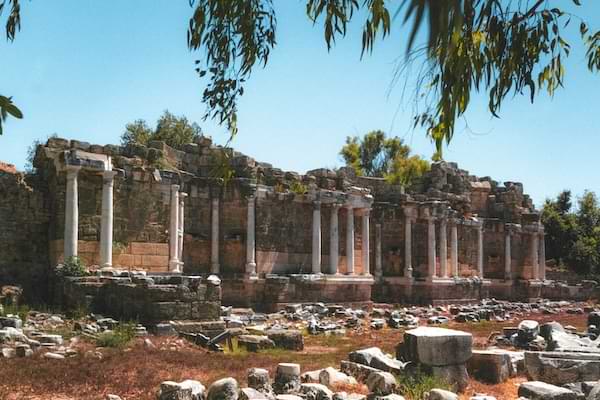
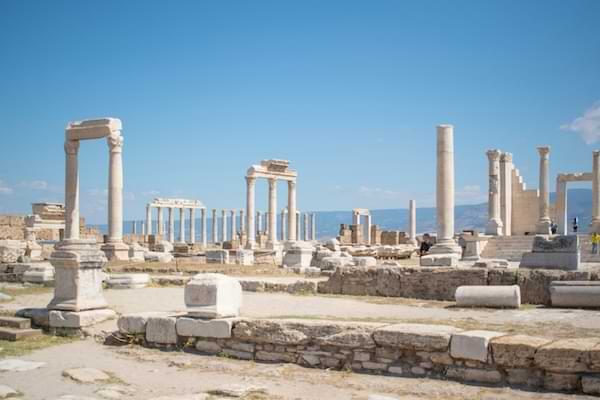
The seventh and final church Jesus addresses in the Revelation is the church in Laodicea. Laodicea was located near Colossae and Hierapolis in the fertile Lycus valley. A major Roman road ran from Ephesus straight through Laodicea, making it an important center for trade, commerce, and banking. The city was known for its much sought-after black wool and eye ointment for healing. It was also known for its great wealth, its large market, a medical school, and, additionally, for its inferior water supply. 

Despite its abundant wealth and possessions, Laodicea had terrible water. The city received its water from an aqueduct about six miles long. The water came from a hot spring in the south or a natural spring of cool water. Regardless of the source, once the water traveled six miles, it arrived in Laodicea lukewarm and of poor quality.

Jesus compared the Christian church in Laodicea to their water, saying the spirit of the people there was “lukewarm” as well.

What do the words of Jesus, the “Amen, the faithful and true witness,” teach Christians today?

Why is lukewarm faith undesirable to God?

Jesus was our example of a faithful, true witness for God. He was and is God himself and has been with God from “the beginning of God’s creation” (Revelation 3:14). Those in Laodicea and today can know that his words are accurate and of God. Jesus told the church, “I know your works: you are neither hot nor cold, I will spit you out of my mouth” (Revelation 3:15).

God wants us to be passionate about what we believe and to serve him with that passion. Living with an expressionless faith means living a life that doesn’t serve God or his kingdom purpose. Apathy does not lead others to know God or become his children.

I’ve often said it’s easier to lead a person to faith if they are antagonistic rather than apathetic toward the gospel message. It’s challenging to have a meaningful conversation with a person who politely listens but doesn’t really care one way or the other. I’d rather argue with someone than have them pretend to agree when they don’t. A genuine faith relationship with God has passion. 

Jesus told them, “I know your works.” Do our actions point clearly to our faith, or do people wonder what we genuinely believe? Do we believe the Bible to be God’s perfect truth, or do we consider some parts of it as possible suggestions for our choices? Does God find our works undesirable?

Our definitions for success compared to God’s

The people in Laodicea didn’t have great drinking water, but they were comfortable in almost every other way. They had better food, clothing, housing, and medical care. The residents felt prosperous, not needing anything. But Jesus told them they didn’t realize that in God’s eyes, they were “wretched, pitiable, poor, blind, and naked” (Revelation 3:17).

God always sees our “works” with an eternal perspective. It’s normal to measure our lives using earthly standards. If we have worked hard, saved, and tried to spend well, we probably have been able to afford medical care, a home, a car, and many other things we acquire to enjoy our lives.

Jesus would want us to ask ourselves, “What have I done that has produced eternal benefits?”

Do our works last for a finite time on this earth, or can God reward them as treasure in heaven? Have we received all our praise from people around us, or will we receive praise from God on our day of judgment? The praise we should strive to seek is “well done, my good and faithful servant” (Matthew 25:21). 

Jesus told the church in Laodicea, “I counsel you to buy from me gold refined by fire, so that you may be rich, and white garments so that you may clothe yourself and the shame of your nakedness may not be seen, and salve to anoint your eyes, so that you may see” (Revelation 3:18). Jesus was likely referring to the banking industry from which the people accumulated their unrefined “gold.” He spoke to the popular “black wool” they enjoyed wearing, telling them they needed his garments of white to clothe themselves in forever. And they needed his “salve” for their eyes so they could truly see what matters. 

Then Jesus told them that God would never be “apathetic” in his relationship to them.

God’s discipline is our great help

Jesus said, “Those whom I love, I reprove and discipline, so be zealous and repent” (Revelation 3:19).

Apathy and earthly wealth had caused even the Christians in Laodicea to become “lukewarm” and passionless in their faith. That can be, and usually is, still true for Christians today. God doesn’t want to spew us from his mouth, so he will continuously do whatever is necessary to bring us back into a right relationship, a relationship of passionate faith with himself.

Jesus said he will “stand at the door and knock.” In the original language, he said, “I will knock and keep knocking.” When we repent, we stop doing life by our own standards and begin to live by the biblical standards of our faith. God doesn’t give up on us until we are living a life that he is able to bless. When our works produce eternal rewards, we will have allowed our discipline to bring about the necessary changes we need for his blessed approval.

Why should we live with passionate faith and for eternal reward?

Jesus said, “If anyone hears my voice and opens the door, I will come in to him and eat with him, and he with me. The one who conquers, I will grant him to sit with me on my throne, as I also conquered and sat down with my Father on his throne” (Revelation 3:20–21).

Jesus told the church that the greatest blessings now and eternally will come from the works produced by our passionate, genuine, obedient faith. Genuine repentance brings us back into the presence of Christ now and eternally.

“He who has an ear, let him hear what the Spirit says to the churches” (Revelation 3:22).

When you have time, reread the direct, eternal teaching of Jesus’ words to the seven churches in Revelation, chapters 2 and 3. Revelation is the only book in the Bible that promises a blessing to the person who reads and obeys its words. “Blessed is the one who reads aloud the words of this prophecy, and blessed are those who hear, and who keep what is written in it, for the time is near” (Revelation 1:3).

Which of the seven churches most spoke to your personal needs? Which did you find most convicting? Jesus wants us to know his words to the churches because they clearly define the strengths and weaknesses that can impact our faith journeys.

Jesus knows our works, too. Even now, he stands at the door to our lives and keeps knocking until we allow him to enter, sit with us, and live in his Presence. We are blessed beyond measure to have these words from the book of Revelation. 

To those who have an ear, hear what the Spirit has said to each of these seven churches. May we all adjust our lives to his perfect, eternal teaching.
The seven churches – Philadelphia

The ancient city of Philadelphia was about thirty miles southeast of ancient Sardis and located along a critical Roman highway. Philadelphia was established on a plateau in a river valley and became a fertile agricultural region. The area was known for producing many of the grapes used for making wines and other important agricultural crops. Unfortunately, this beautiful area was also known for its frequent earthquakes. A devastating earthquake in 17 AD destroyed most of the city. The emperor Tiberius assisted in the rebuilding efforts, and in gratitude, it was renamed Neocaesarea in his honor. The city’s leaders dedicated a temple in his name to commemorate his support further. 

We cannot be sure who first established the Christian church in Philadelphia, but we know the church there had a long history of faithfully serving the Lord. Eventually, the entire country fell to Muslim control, yet the city of Philadelphia was able to maintain a Christian population until 1392. Interestingly, many Christians are allowed to live in that region today.

The open door that Jesus would provide

Jesus told John to tell Philadelphia that the words to them were “the words of the holy one, the true one, who has the key of David, who opens and no one will shut, who shuts and no one opens” (Revelation 3:7). Jesus wanted the church to understand that his message to them was borne of his holy character as their Messiah.

Jesus then praised them saying, “I know your works. Behold, I have set before you an open door, which no one is able to shut. I know that you have but little power, and yet you have kept my word and have not denied my name” (Revelation 3:8). Jesus had admonished the church in Sardis for straying from the whole truth, but those in Philadelphia had remained true to the words of Christ and the gospel message. Even though others did not consider them powerful, Jesus would establish “an open door” in Philadelphia, which no one could shut. In other words, Philadelphia would always be a place for people to come and find the truth about how to enter heaven, a truth that would be eternal.

My husband was touring the ancient ruins of Philadelphia several years ago when a government official, a Muslim, handed him a copy of the letter from the Revelation to the church of Philadelphia. This government worker had been provided copies by a Christian organization that asked him to pass them out to those visiting. Philadelphia was still an “open door” more than two millennia later!

The “hour of trial” that will come to the unbelievers

Jesus praised the Christians in Philadelphia for keeping the faith, but then gave a clear warning to those persecuting them. Jesus said, “Behold, I will make those of the synagogue of Satan who say that they are Jews and are not, but lie—behold, I will make them come and bow down before your feet, and they will learn that I have loved you. Because you have kept my word about patient endurance, I will keep you from the hour of trial that is coming on the whole world, to try those who dwell on the earth” (Revelation 3:9–10).

There was a synagogue in Philadelphia, and apparently, the Jewish people in the city had said and done evil things to the Christians in God’s name. Jesus referred to them as a “synagogue of Satan” because their actions were not of God but prompted by Satan. Jesus assured those in Philadelphia that these Jewish believers would one day bow before them and learn that Jesus loved his followers because they had “kept” his word and patiently endured.

Theologians interpret Jesus’ following words (v. 10)  differently because we can’t be sure what the “hour of trial” means. We know that the day will come to the whole world and will be a day of judgment. Jesus said that those in the church would be spared the judgment that would come upon the unbelievers. This may be the judgment that occurs at the final coming of Christ, but could also point to the judgment that occurs for everyone upon entering heaven. We know this: Jesus promised that those who believe and faithfully endure on earth will be spared on that day because they are beloved.

Jesus said, “I am coming soon.”

The letter of Revelation was given to John toward the end of the first century. Many of the early Christians had passed away and had even been killed because of their faith in Jesus. So, why did Jesus say, “I am coming soon,” and we are still waiting two thousand years later?

That question will be asked until Jesus returns for the final time. According to historical records, Christians lived in Philadelphia as late as 1392. How many of them took their last breath on earth only to open their eyes and see Jesus coming to take them to heaven! 

The older we get, the faster the years seem to speed by. That fact is worrisome to many, but Christians can be encouraged. Jesus gave us this advice about waiting. He said, “I am coming soon. Hold fast what you have, so that no one may seize your crown” (Revelation 3:11). Could it be that “holding fast” in times of suffering will provide us our greatest rewards in heaven? One day, our faithfulness in our most challenging difficulties could be the blessings of our eternal crowns.

To the one who conquers . . .

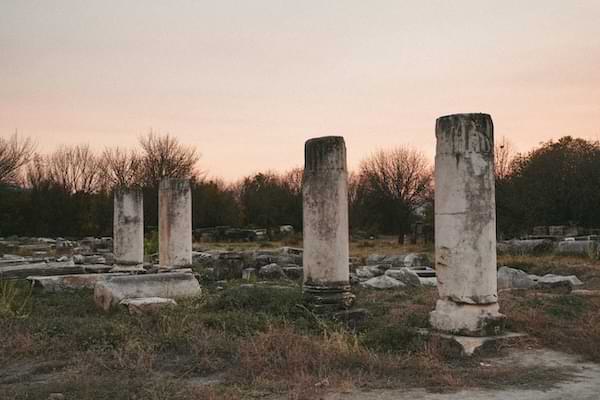
If you were to visit the ancient ruins of Philadelphia today, you would see very little. Most of the ancient ruins are buried underneath the current, modern city of Alasehir in Turkey. The frequent earthquakes either ruined or buried much of the ancient city. Interestingly, several of the pillars the city was famous for remain standing. These pillars were constructed by carving and stacking one piece upon the next. When the ground shook, the pillars moved with the earth and either remained standing or were able to be rebuilt by stacking the original pieces. 

Jesus told the believers in Philadelphia, “The one who conquers, I will make him a pillar in the temple of my God. Never shall he go out of it, and I will write on him the name of my God, and the name of the city of my God, the new Jerusalem, which comes down from my God out of heaven, and my own new name.  He who has an ear, let him hear what the Spirit says to the churches” (Revelation 3:12–13).

The early Christians of Philadelphia were promised an “Open Door” that, against all odds, remains open today. AI reports, “While modern-day Alaşehir is primarily a Muslim city, there are still some Christian communities, including both Orthodox and Roman Catholic, and a growing number of evangelical Protestants. The city is also a titular see of the Roman Catholic Church, which indicates its historical significance as a Christian center. Additionally, the ruins of the ancient city, including the Church of St. John, are still preserved and visited by Christian pilgrims.”

The “open door” that Jesus promised remains open today in the Muslim country of Turkey! Many will one day enter heaven because Jesus wrote God’s name and character on them, and now they belong in the “new Jerusalem,” which comes down from God out of heaven. Christians carry the name of Christ now and eternally. 

Jesus will come soon. It may turn out to be the final day on earth or our final day on earth. Either way, Jesus will come for us. When he does, we will face the judgment day without fear because we are saved. For now, we are called to remain steadfast in our faith and look forward with hope to the reward we will receive for our “patient endurance” during this lifetime. 

Until that day, may our lives lead people to that “Open Door” that Philadelphia was promised. How many people will be in heaven forever because they knew you on earth? Our calling is to obey his word and keep his name. That is how we lead people to that “Open Door,” the gospel message, that no one can ever shut!

The seven churches: Sardis

When you were ready to choose a church to join, how did you decide which churches to visit? Did your choice follow an internet search, a friend’s advice, or maybe the congregation’s history of success? Jesus’ words to the church of Sardis speak to the importance of having a genuine, active faith and witness to the world, rather than simply relying on an appearance or a past reputation of faith.

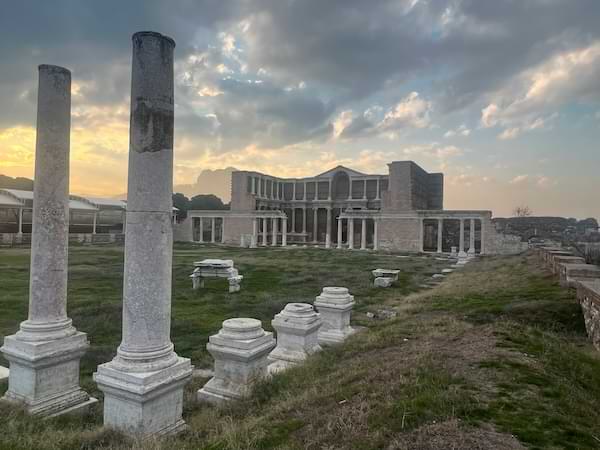
Sardis was about thirty miles south of Thyatira and an important city for commerce and strategic military defense. A road ran through it, and because of its topography, it was used as a refuge when the people were threatened. Historically, the city had only been taken captive twice because natural, almost vertical rock walls surrounded it on three sides. The region was wealthy because of its commerce and trade, especially wool and other fabrics.

Sardis boasted an acropolis dedicated to Artemis and a large necropolis, or burial ground, just a few miles from town. Sardis was a strong city for the first two hundred years of Christian history, but was likely showing signs of decline when John received the Revelation.

Jesus identifies himself to the church in Sardis as the one “who has the seven spirits of God and the seven stars” (Revelation 3:1a). Jesus wants the church to know two essential truths: 

  • He controls the seven spirits of God. 
  • His Spirit bestows the blessings, guidance, and judgment upon all the churches.

What did Jesus know about Sardis and want them to do?

Jesus said, “I know your works. You have a reputation of being alive, but you are dead” (Revelation 3:1b). The city of Sardis was practically immune to attack from foreign enemies and comfortable economically. The city’s citizens were thought to be easily successful and generally unafraid. The city had an excellent reputation because of its history, but a closer look revealed the people had grown weak and apathetic because of the ease of their lives.

Apparently, the city’s apathy had also influenced the Christian church. Jesus told that church, “Wake up, and strengthen what remains and is about to die, for I have not found your works complete in the sight of my God” (Revelation 3:2). 

Jesus knew apathy was a greater weakness than people realized. Jesus knew their works, whether they were of God or not. The church’s reputation was good with others, but not with God. 

Why is apathy unacceptable to God?

God’s standards for our lives are much higher than we tend to recognize. So often, we measure the success of our spiritual lives by the standards of those around us. We tend to compare our church programs with those of a sister church in the same city. Reputations are often gained by using earthly standards rather than God’s. Jesus taught Sardis that their works might be good in the eyes of others, but God disapproved of them.

Jesus said, “I have not found your works complete in the sight of my God.” God’s biblical standards are the only standards we can use to measure spiritual success. Our works might earn us a good reputation with others, but if we haven’t been obedient to God’s Spirit-led guidance, our works are “incomplete” in his eyes. Our good ideas can earn us a good reputation, but following God’s plan is the only option for those who want to please him.

What is God’s solution for apathy?

Jesus clearly taught the church in Sardis what they needed to do:

  • “Wake up” and “strengthen what remains and is about to die.
  • “Remember” the teaching they had received and heard.
  • “Obey” and “repent” so they could return to God’s favor and blessing.

Jesus told the church, “If you will not wake up, I will come like a thief, and you will not know at what hour I will come against you.” Jesus wanted them to know that God would judge their lack of genuine, Spirit-led faith if they did not change. They needed to stop accepting what was unacceptable to God. Their reputation was good with others, but it was God’s expectations they were required to fulfill.

What is God’s reward for those who remain strong?

It seems most in the church had relaxed God’s standards for their faith, but not all. Jesus pointed out that the church still had a few people who had not “soiled their garments” and walked obediently with Jesus in a pure way, wearing “white.” Jesus commended these, saying, “They are worthy.” (Revelation 3:4)

No church is filled with saints or hypocrites. Every church has both, and there is grace for the humanity we all wrestle to overcome. We can’t completely avoid sin, but Jesus told us that through his grace and power, we can conquer that sin.

Peter preached the gospel message to the Jewish people who had gathered in the temple portico. They had just witnessed the healing of the lame man at the temple gate called Beautiful. Peter called on them to: “Repent therefore, and turn back, that your sins may be blotted out” (Acts 3:19).

Those who accept Jesus can know their salvation is assured. But our faith can become apathetic over time. Just as Jesus told the church in Ephesus to return to their first love, he also told the church in Sardis that their garments had become soiled. Christians must notice when we have lost our ability to walk with Jesus “in white.” Everyone, including apathetic Christians, needs to repent of the sins we can easily accumulate. Those sins might not impact our reputation with others, but they certainly change our walk with Jesus.

What did Jesus promise those who conquer their apathy?

Jesus said, “The one who conquers will be clothed thus in white garments, and I will never blot his name out of the book of life. I will confess his name before my Father and before his angels” (Revelation 3:5).

The solution to spiritual apathy is to step into a vital faith relationship with Christ as our King. Those who are saved will be clothed in “white” and found “worthy.” A Christian’s name will never be removed from the book of life. And Jesus will stand with us before his Father and before his angels and confess our “name,” our character in Christ, to them.

We can lose the vitality of our daily walk with God. Thankfully, through repentance, we can gain it back. We can never lose our salvation, but we can lose some of the heavenly reward Jesus taught us to “store up” in heaven through our genuine, Spirit-led works here on earth.

Imagine hearing Jesus speak your name to God and the host of angels in heaven saying, “This name is written in the book of life.” Then hear Jesus share with God all you accomplished in obedience to his Spirit. Don’t we all long to hear our Abba say, “Well done, my good and faithful servant.

What do we need an ear to hear?

The Holy Spirit speaks these lessons to the seven churches in Revelation. Every church and every Christian has been given God’s Holy Spirit and his holy standards. We are called to evaluate our lives by those standards

What happened in Sardis still happens today. We judge people, churches, and even ourselves by a “reputation” when we need to use God’s biblical standards instead. We might appear better than some, but the only reputation that matters is where we stand in God’s eyes.

Let’s ask God to show us any areas of apathy in our spiritual lives. Then, let’s repent of our sins, praying for God’s forgiveness. After that prayer, we can put on those clean white clothes and walk closely with Jesus once again.

The seven churches: Pergamum

Why was compromise a wrong choice for the Christians in Pergamum?

Pergamum was about sixty-five miles north of Smyrna but was not a coastal city in Asia Minor. It was located inland, in a highly fertile area. Some considered Pergamum the capital of Roman Asia because of its beauty and wealth. King Eumenes of Pergamum hoped to one day build a library that would exceed Alexandria’s. To hinder that plan, the export of papyrus to the region was cut off to Pergamum. That embargo led King Eumenes to develop parchment, a writing material made from animal skins.

Pergamum was home to famous sculptures, temples to many Roman gods, and at least three temples for emperor worship. Finally, it was unique in that it was the only city that Rome allowed to use capital punishment. Even the Jewish historian Josephus wrote about Pergamum, which had a Jewish community living there.

What was it like for the Christians of Pergamum?

When Jesus gave his message to John about Pergamum, he said, “To the angel of the church in Pergamum write: ‘The words of him who has the sharp two-edged sword. I know where you dwell, where Satan’s throne is. Yet you hold fast to my name, and you did not deny my faith even in the days of Antipas my faithful witness, who was killed among you, where Satan dwells’” (Revelation 2:12–13).

Jesus told the pastor of the Christian church that the words of his message to Pergamum were to be considered a “sharp two-edged sword.” These Christians lived in a city where the Roman leaders were allowed to execute those believed to be criminals. All that is known about Antipas is that he was a faithful witness, and he was killed in a city “where Satan dwells.” In a city that held three temples dedicated to emperor worship, Antipas likely refused to say the words, “Caesar is Lord,” and, as a result, lost his life. Jesus wanted the pastor and the Christians in Pergamum to know that his words would be their weapon, a “sharp two-edged sword.”

But not everyone would stand for their witness as Antipas had done.

Who had compromised their witness in Pergamum?

Jesus said, “But I have a few things against you: you have some there who hold the teaching of Balaam, who taught Balak to put a stumbling block before the sons of Israel, so that they might eat food sacrificed to idols and practice sexual immorality. So also you have some who hold the teaching of the Nicolaitans” (Revelation 2:14–15).

Apparently, some Christians divided the church and distorted the apostolic message by following wrong teaching. Those wrong teachers were compared to those in Old Testament history who misled the Israelites to follow Baal. The church in Pergamum allowed people to preach a compromised message, and many followed their message.

Jesus commended the church in Ephesus because they “hated the practices of the Nicolaitans,” just as he also “hated them” (Revelation 2:6). The Nicolaitans were a heretical group whose message allowed for certain compromises that made living under Roman rule more bearable or pleasant. This unbiblical teaching was understandably popular, but it was not the truth of God. Jesus spoke against the people “who hold the teaching of the Nicolaitans” (2:15).

If Jesus were to write letters to the Christian churches today, what wrong, unbiblical teaching would he point to as false teaching? What issues have Christian churches spoken for or against that do not follow the truth of Scripture? What issues have churches grown quiet about, refusing to address in sermons or Bible study? 

What did Jesus instruct the pastor to tell the compromised in Pergamum?

Jesus instructed those who had fallen away from his truth to “repent,” a word that means to “stop and go the other direction.” Jesus told those who followed the teaching of the Nicolaitans, “Therefore repent. If not, I will come to you soon and war against them with the sword of my mouth” (Revelation 2:16). The words of Jesus, our Scripture, is a “two-edged sword” which means it cuts in every direction. Jesus taught that a Christian’s most potent weapon in a culture of multiple gods is the truth of God.

Aren’t we seeing that in our own culture today? The quiet and softened messages from the pulpit might not ruffle feathers, but they also don’t stir the waters of the baptistry with people who understand their need to “repent” and be saved. Truth doesn’t have to be a weapon. Still, as the writer of Hebrews makes clear: “The word of God is living and active, sharper than any two-edged sword, piercing to the division of soul and of spirit, of joints and of marrow, and discerning the thoughts and intentions of the heart” (Hebrews 4:12). The powerful word of God leads people to seek repentance when they understand their great need of salvation.

Most preachers don’t want to “step on toes,” but let’s face it: a GREAT sermon cuts to our hearts and causes us to consider our own thinking and intentions. It makes us want to repent, turn from wrong habits and ideas, and turn toward God instead.

He who has an ear . . .

Jesus said, “He who has an ear, let him hear what the Spirit says to the churches. To the one who conquers I will give some of the hidden manna, and I will give him a white stone, with a new name written on the stone that no one knows except the one who receives it” (Revelation 2:17).

Jesus told those who would hear, understand, and obey that they could “conquer.” The truth isn’t just powerful for the Christians who will speak it, but also for those who will accept it. Listening to Jesus and following his word means, as Paul pointed out, “in all these things we are more than conquerors through him who loved us” (Romans 8:37).

Jesus told the church in Pergamum that he would give them “some hidden manna” and “a white stone, with a new name written on the stone.” We don’t know exactly what Jesus meant, but it’s possible that he was referring to the manna that Moses “hid” in the ark of the covenant to remind God’s people of his abiding grace, power, and faithfulness. 

A white stone was often used in the first century as an invitation to a wedding, banquet, or important gathering. Only those with the correct white stone were allowed to enter. Jesus will place a new name and identity on the person who accepts his “invitation.” It’s possible that Jesus was saying to those who would repent and faithfully follow the new covenant gospel that they could now walk daily knowing that Jesus will hand us a “white stone” that invites us into heaven, our new home.

To those who “have an ear to hear,” will you allow Jesus’ word to Pergamum to be a “sharp two-edged sword” that you will faithfully obey, share, and teach as his word of truth? We live in a culture that worships personal truth more than perfect, biblical truth. Compromising biblical truth wasn’t the right choice for Pergamum and isn’t the right choice for Christians today.

The seven churches: Smyrna

Imagine what it would be like to be a member and attend worship at the largest Christian church in Tehran. That is comparable to what it was like to be a Christian church member in Smyrna.

Smyrna was a beautiful seaport city about forty miles north of Ephesus in what is now modern-day Turkey. The city was rich and famous for its advanced learning, especially in science and medicine. Smyrna was also known for its undivided loyalty to the Roman Empire. 

It was also the first city to build a temple to honor a Roman emperor. Smyrna passed a law requiring every citizen to present a pinch of incense at the temple and speak, “Caesar is lord.” The Christian confession of faith has always been, “Jesus is Lord.” Understandably, most Christians refused to obey Smyrna’s temple law and honor Caesar. The resulting persecution was miserable, often resulting in a sentence of death for many of the Christians in the city.

The Source of their faith

Jesus’ message to the Christians of Smyrna:

Jesus was identifying his divine nature when he told John, “The words of the first and the last, who died and came to life” (Revelation 2:8). Jesus wanted the people in Smyrna who were suffering great persecution to remember that they had chosen to believe in him, the One who had always existed and the One who had died and then came back to life. The Christians in Smyrna had witnessed or experienced the persecution a faithful Christian could face, and Jesus reminded them that they were followers of the Son of God. Their faith was in the truth: “Jesus is Lord.” Jesus’ resurrection was proof that he had always been Lord and always would be.

Jesus then told John to write this message to the pastor, “the angel” in Smyrna: “I know your tribulation and your poverty (but you are rich)” (Revelation 2:9a). Jesus told the pastor and the people that he knew what they were enduring. 

Sometimes pain, grief, or persecution for our faith can cause us to feel isolated and different from everyone else. When Christians refuse to believe what is popular truth because we choose instead to accept the clear truth of Scripture, we can feel persecuted for our faith, too. Jesus would remind us that our faith and our future are secure. Jesus knows you have made him your Lord, and you have chosen to place your faith in him. Jesus wants you to know that whatever your circumstances are here on earth, you are rich as a child of God. You have “set your minds on things above, not on things that are on earth” (Colossians 3:2).

The source of Smyrna’s suffering

It would have been normal for the people of Smyrna to blame the leaders and citizens of Rome for their suffering. Jesus had a different message for the Christians, identifying the true source of their persecution and slander as “those who say that they are Jews and are not, but are the synagogue of Satan” (Revelation 2:9b). 

The leaders and government of Rome were persecuting the people of Smyrna, but the Jewish leaders and the Jewish people were also attacking them. Jesus didn’t blame the Romans or the Jewish people; he blamed Satan, who was their motivator. Jesus taught the Christians to look past the lost people to the one who wants them to be lost. 

Jesus taught the Christians of Smyrna and Christians today to look past the faces who slander us or treat us wrongly because of our faith. Instead, we should see the face of evil, our real enemy. Paul taught a similar lesson saying, “the god of this world has blinded the minds of the unbelievers, to keep them from seeing the light of the gospel of the glory of Christ, who is the image of God” (2 Corinthians 4:4). How might it change our emotions and our actions if we lived with this perspective? How would we treat people if we saw them as lost and usable by Satan to do his work against us?

The Source of our strength

Jesus wanted the Christians in Smyrna to know that he understood how difficult their lives were, but he also wanted them to understand who they should truly blame for their suffering. Then, Jesus told Christians, “Do not fear what you are about to suffer. Behold, the devil is about to throw some of you into prison, that you may be tested, and for ten days you will have tribulation. Be faithful unto death, and I will give you the crown of life” (Revelation 2:10).

Jesus did not promise the Christians that he would end or limit their suffering on earth. Instead, Jesus taught them their suffering would end forever in heaven. This would have been difficult for the people in Smyrna to hear, and it is difficult truth for us as well. Jesus taught Christians not to fear the things of this world because suffering would only be for “ten days,” meaning a short amount of time. Jesus encouraged his children to “be faithful unto death” because the only crown worth pursuing is “the crown of life.” The word “crown” in this verse refers to the crown awarded to a person at the end of a race.

Why did God allow the Christians of Smyrna to suffer such slander and persecution? They suffered “so that” they could be “tested” or purified by their tribulation. Their eternal reward would be a crown that would mark them as victorious in their faith, for all eternity.

According to Open Doors’ World Watch List top 50, 310 million Christians face very high or extreme levels of persecution. According to Christianity Today, “Overall, more than 380 million Christians live in nations with high levels of persecution or discrimination. That’s 1 in 7 Christians worldwide, including 1 in 5 believers in Africa, 2 in 5 in Asia, and 1 in 16 in Latin America.” Those statistics don’t include nations like America. We might feel persecuted at times for our faith, but our persecution doesn’t reach the levels necessary to be considered persecuted by the world’s standards. Hundreds of millions of our Christian brothers and sisters live faithfully every day, knowing their faith could cost them or their loved ones their lives. Jesus didn’t promise them or us an easy life on earth. He promises that our faith can sustain us to live without fear because we are promised an eternity living with a victor’s crown.

Are his promises enough for your pain or suffering today?

Do his words encourage or discourage you today?

Jesus said, “He who has an ear, let him hear what the Spirit says to the churches. The one who conquers will not be hurt by the second death” (Revelation 2:11). Will you listen to and hear the truth of Jesus’ words today?

Jesus taught that our faith is to be grounded in the truth of the Source of our faith. Christians say, “Jesus is Lord,” but we must also make him Lord of every choice and circumstance in our earthly lives. Jesus is our King, and we can’t allow anything else to occupy his throne. When Jesus is truly our Lord, we can overcome slander, persecution, suffering, and all other hardships because we know our best hope is eternal, not earthly. 

None of us will succeed all the time. Only Jesus could claim that. But we can choose what Jesus taught the Christians in Smyrna to choose. Our joy, our hope, our reward rest in things eternal. Are there earthly goals in your life? Are there people you continue to blame, or do you look past their faces and see the evil face of their motivator? Have you ever been motivated by the evil one to slander or persecute someone? 

Those are hard and humbling thoughts, but if the truth leads you to call out to Jesus not just as your Savior but as your Lord, then obedience to Jesus’ words for Smyrna can become your blessing and one day, your eternal crown. We serve a God of grace, but we are called to serve him as our King.

Will you make him your King again today and say with the people of Smyrna, “Jesus is my Lord”?

Do you see the Jesus that John saw?

When you pray, how do you picture Jesus? Most of us would probably see Jesus as the man who lived, ministered in the first century with messages and miracles, and then was nailed to the cross, laid in the tomb, and rose again on Easter.

At Christmas, I picture Jesus as the small babe in the manger or held in Mary’s arms. Occasionally, I picture Jesus at age twelve, speaking to the priests in the temple and astounding them with his questions. I wonder what Jesus looked like when he was baptized by John, and the Spirit descended upon him. Sometimes I see him as the risen Christ, proving his true identity to Thomas and the other disciples gathered in the upper room.

But I rarely picture Jesus the way John saw him that day on the island of Patmos. Jesus made certain we would be able to recognize him now. In the book of Revelation, Jesus told John, “Write therefore the things that you have seen, those that are and those that are to take place after this” (Revelation 1:19). 

The Jesus that John saw that day, is the Jesus that all of God’s children will see someday. He is also the risen Jesus that we should envision today.

The Jesus that John saw is the true identity of our Lord right now.

We need to picture Jesus like John saw him

The first time John saw the ascended Christ, he “fell at his feet as though dead” (Revelation 1:17). There was no mistaking Jesus’s glory then, and we shouldn’t miss it today.

Revelation is the only book in Scripture that promises to bless the person who reads, hears, and obeys its words. Revelation 1:3 says, “Blessed is the one who reads aloud the words of this prophecy, and blessed are those who hear, and who keep what is written in it, for the time is near.” How would it bless your life today to picture Jesus the way John saw him? How would that change your prayers, your worship, and your witness?

John saw Jesus standing amid lampstands, “clothed with a long robe and with a golden sash around his chest. The hairs of his head were white, like white wool, like snow. His eyes were like a flame of fire, his feet were like burnished bronze, refined in a furnace, and his voice was like the roar of many waters. In his right hand he held seven stars, from his mouth came a sharp two-edged sword, and his face was like the sun shining in full strength” (Revelation 1:13–16).

John saw Jesus as he is today, wearing priestly garments, crowned with wisdom, strong and immovable. He heard his words and knew he was hearing the voice of God. Jesus held the servants of God in his right hand, and from his mouth came the powerful truth of God. His face shone with the brilliance that reflected the glory of God’s Presence. John saw the risen Christ as we will see him one day, when he returns at the end of our lives or returns that final time for all who believe.

When you bow your head to pray, is this who you picture listening to your every word?

Why do we tend to picture the Jesus who walked on the earth?

It seems more natural to see Jesus as the man who spat in the mud and spread it on the blind man’s eyes so he could see. It’s more comforting to see Jesus preaching the Sermon on the Mount to the crowds gathered there. It’s exciting to see Jesus walking on the water towards his disciples in that boat. And it’s essential we see the bloodied Jesus who was flogged, crucified, and laid in a borrowed tomb. That blood reminds us we have been “washed clean.” When I think of entering heaven one day, that is the Jesus I picture holding out his arms to me. I want to run toward him, hug that Jesus, and hear his voice greet me.

But, is that who Jesus is now?

John saw Jesus as he is today and fell at his feet in terror. Old Testament Scripture tells us that no one can see God and live. But people did see God when they saw Jesus. They just didn’t realize Who they were with.

Jesus reached out that day and touched his best friend John, saying, “Fear not, I am the first and the last, and the living one. I died, and behold I am alive forevermore, and I have the keys of Death and Hades” (Revelation 1:17–18). 

Jesus wanted every Christian to know why we should know him as he is today. Those who are saved should have no fear. When we see Jesus, he will be very much alive in heaven. He is still the Jesus we worshipped at Easter, the One who died and rose again to live “forevermore.” We need to remember what he looks like today, standing in heaven, holding the “keys of Death and Hades.” 

Why did Jesus want us to picture him holding those keys?

Jesus is “the way, the truth and the life,” and he is the one who will unlock eternity for everyone. Everyone either lives with the hope and promise of heaven, or Jesus will need to unlock the gates of hell for them. Jesus wanted us to know and understand that he holds those keys.

As the book of Revelation continues, the reader is reminded of the number one job for every child of God. Those of us who own the promise of heaven also own the task of being a servant. For now, we serve Jesus by helping others find the hope we have in Christ. The sword we carry is the word of God, and we can teach it to others. The gospel is the “power of God for the salvation of everyone who believes” (Romans 1:16). Jesus told us to “share the gospel.”

Jesus wanted us to picture him holding the keys because he wants us to remember our most important job while on earth. Jesus doesn’t want to unlock the gates of hell; he wants to invite people to their eternal home and unlock that mansion door instead.

How will you picture Jesus today?

Don’t be afraid to see Jesus as John did. John was told to write it all down to make certain that every generation of Christians could see the risen Jesus as he is now. Jesus is shining with his heavenly glory, which he set aside to be born as a small babe in Bethlehem.

We will spend some time in Revelation in the coming weeks. May we all bow our heads and pray, worship, and seek the Jesus that John saw that day. That is the Jesus we are called to share with the world. That is the Jesus we will see in heaven, and like John, we will likely fall at his feet in awe and wonder. Maybe Jesus will touch our shoulder and speak words of comfort and joy. Perhaps then, we will wrap our arms around him and joyfully thank him for saving our souls and bringing us home to heaven.

Take a minute, bow your head, or look to heaven and see the Jesus John saw.

Are you ready for Easter?

Easter is the most important event in Christian history. Jesus knew that, and his ministry in the last week of his life reflects that priority. 

Many in our culture add the story of the Easter bunny into our celebrations, or at least an egg hunt for the kids. Easter, like Christmas, is a wonderful holiday but can become a lot of different things unless we keep our primary focus on God’s word. Like the busy season of Christmas, there is a holiday to plan for, but that final Tuesday of Jesus’ life serves as a message of God’s priorities for Easter.

Stories with a lesson, or parables, were one of Jesus’ favorite ways to teach his disciples. When Jesus was with them on Tuesday of Easter week, he used parables to emphasize what they most needed to understand.

He was still answering their questions about what they had seen happen in the temple earlier that day and illustrating what he meant when he said, “Therefore you also must be ready, for the Son of Man is coming at an hour you do not expect” (Matthew 24:44).

Are we ready for that hour?

The parable of the Ten Virgins

Jesus told his disciples about ten women who grabbed their lamps and went out to meet a bridegroom. Some brought oil with them, and some did not. When the bridegroom arrived, those who hadn’t fully prepared were off looking for more oil and missed his arrival. They missed entering the marriage feast because they found the door had been locked. Jesus taught his disciples, saying, “Watch therefore, for you know neither the day nor the hour” (Matthew 25:13). 

Jesus was teaching them the point of our lives on earth. We are here to prepare for our lives eternal. Some of the women were ready, and others were excluded because they were not. 

Who do we know that isn’t ready for “the bridegroom” to return? How do we help them find what they need? The women who had oil weren’t able to give it away. Like them, we can’t “give away” some of our own salvation so others can use it for their lives. We can only help them find their own salvation, their light before the bridegroom arrives.

The Parable of the Talents

In the Bible, talent was not an ability but a form of money that could easily be invested or exchanged. The word for servants was literally the word for slaves, but the slaves in Jesus’ story were entrusted with “talents” from their master before he went on a long journey. These servants were essential to the Master and his plans. When the master returned, the slaves entrusted with the most had invested the money and increased the amount they could return to the master. The master said to these faithful servants, “Well done, good and faithful servant. You have been faithful over a little; I will set you over much. Enter into the joy of your master” (Matthew 25:23). The servant who had only been entrusted with one talent buried it in the ground and was only able to hand back what he had been given. 

Jesus told his disciples, “To everyone who has will more be given, and he will have an abundance. But from the one who has not, even what he has will be taken away” (Matthew 25:29). The servant who did not serve the Master was cast into the darkness, a place of suffering. Like the virgins who did not “prepare” for the Master’s return, the servant who buried the Master’s gift was not given a place of reward. 

Jesus was about to die, and his death would become the final sacrifice needed for the sins of every person. When I teach this parable to children, I always liken it to tickets at the State Fair. The tickets for their entrance, food, and rides have been purchased, and they are waiting for them at the gate. Those who pick up the tickets are allowed to enter and enjoy all their tickets afford them. Those who refuse to stay in the line because they think it is just too long a wait or think they will just come back later do not experience what God wants to give them.

Who do we know who has refused to do what is necessary to enter God’s kingdom and receive all that he wants to give? In addition, how can we help our brothers and sisters in Christ invest their lives in his kingdom purpose? 

Jesus’ last message that Tuesday is for everyone to understand

You will likely never hear a message on hell for Easter Sunday. You might not want to read the last words Jesus told his disciples Tuesday in his Olivet Discourse. It was Passover, and the gardens would likely have been full of new growth, flowers, and warm sunshine. Jesus could have closed his message to his disciples with comforting words of hope and happiness, but instead, he stressed the one point we all need to think about today.

Jesus said, “When the Son of Man comes in his glory, and all the angels with him, then he will sit on his glorious throne. Before him will be gathered all the nations, and he will separate people one from another as a shepherd separates the sheep from the goats. And he will place the sheep on his right, but the goats on the left. Then the King will say to those on his right, ‘Come, you who are blessed by my Father, inherit the kingdom prepared for you from the foundation of the world’” (Matthew 25:31–34).

Jesus then described people who were hungry, thirsty, naked, sick, and in prison. The people on the right, the sheep, had blessed them with help while the goats had done nothing. Jesus said that how we treat others is directly related to how we treat him. 

Jesus said, “Truly, I say to you, as you did not do it to one of the least of these, you did not do it to me” (Matthew 25:45). The “goats” were sent “away into eternal punishment, but the righteous into eternal life” (Matthew 25:46).

Sheep or goats?

We live in a culture that wants to allow people to believe whatever they want to believe about God, the Bible, and heaven and hell. We enjoy our Easter being about the joy and peace of the resurrection. We appreciate the beauty and celebration of a beautiful spring day filled with faith and family and some Easter meals with candy eggs. ALL that is good and right when you know you are a “sheep.” The truth is, we need to remember our Easter is only a celebration for the sheep. We are ready and waiting for the bridegroom to return! But what about the goats? Jesus, seated with his disciples, made it very clear: Heaven and hell are real. Everyone we meet today is either a “sheep” with an eternal life or a goat with an eternal death. Those are the only two categories that will matter when Jesus returns.

Jesus made that point to his disciples at the end of that Tuesday while sitting with them on the Mount of Olives. We don’t know what Jesus did the next day, Wednesday. Many theologians have speculated that our Lord used that day to prepare spiritually for all that was ahead.

Whatever we do for others today, this Wednesday of Easter week, we do for Jesus. Let’s follow Jesus’ example and get ready for Easter. Let’s be prepared for the bridegroom to arrive. As servants, let’s invest what we have been given in his kingdom purpose. As sheep, let’s be aware the “goats” aren’t coming to heaven with us – yet. 

Easter is a great time to help someone know how to be born again. If we believe Jesus’ message and help others do the same, goats can become sheep.

Have a blessed and holy Easter!

A disciple’s Easter calling

The disciples were beginning to understand the reality of what Jesus had been saying as they sat on the Mount of Olives, listening to him answer their questions. It was late on Tuesday of Passion Week. Jesus had been very blunt with the Pharisees in the temple that day, and there was no mistaking the Jewish leaders’ vehemence. The Pharisees and Sadducees had planned to discredit Jesus that day, and he had turned the tables on them. Jesus had publicly spoken God’s truth into their misguided ministries and motivations.

Now, fearing Jesus’ words about the future, his disciples wanted to know what would happen after he was gone. Jesus had promised his return, and they wanted to know how long they would have to wait for that.

Jesus taught his disciples that he had come to “fulfill” the Law

It’s important to remember that Jesus’ disciples had grown up in the Jewish faith. They knew what the prophets had said about the Messiah and had spent the past three years learning from Jesus, the man they believed was their Messiah. Matthew wrote his gospel to first-century Jewish Christians. The Olivet Discourse, Jesus’ teaching on Tuesday of Holy Week, must be viewed with that perspective. 

Think back to Jesus’ Sermon on the Mount (Matthew 5–7). Jesus said, “Do not think that I have come to abolish the Law or the Prophets; I have not come to abolish them but to fulfill them. For truly, I say to you, until heaven and earth pass away, not an iota, not a dot, will pass from the Law until all is accomplished” (Matthew 5:17–18).  Jewish people had been raised to carefully obey and follow the Law to the best of their ability. The required sacrifices were to provide for their sins when they inevitably failed.

Jesus’ death would fulfill the requirements of the Law because his sacrifice on the cross would be the final sacrifice needed to cover any and every sin for all people who would choose God’s Son as their Lord and Savior.

Every generation has wanted answers to Jesus’ teachings about the last days, the days after his resurrection, and the final day, the Parousia, when Jesus will return to gather the elect for the last time. That Tuesday on the Mount of Olives, Jesus taught his disciples what to know and understand about both.

Jesus taught his disciples what to expect

Jesus wanted his disciples to understand the trials God’s people would face in the “last days,” the years that would follow his resurrection and precede his final coming. His words on the Mount of Olives address both those events.

Matthew 24:15–51 is some of the Bible’s most studied and debated Scripture. Verses 15–28 describe the “abomination that causes desolation” and the following days. Most scholars believe the abomination referred to the time when Antiochus Epiphanes, a Greek king, built an altar to Zeus over the altar for burnt offerings in the Jerusalem temple and then sacrificed a swine on it. Epiphanes, who reigned from 175 B.C. to 164 B.C., also enacted a law that made Judaism a capital offense. Daniel had used the phrase “abomination that causes desolation” in his teaching. Now Jesus, on the Mount of Olives, repeats that phrase about the days that will follow his death. Jesus warned the disciples that when they saw that abomination, everyone should flee immediately from Jerusalem, taking nothing with them. Most scholars believe Jesus is referring to the five-year period of Roman persecution that would culminate with the final “abomination” of the temple. Rome destroyed and desecrated the temple in A.D. 70, and it would never be built again.

Jesus also warned them about false teachers in the last days who would lead people astray, even some of the elect. Many would perform “great signs and wonders” and say they had seen his return, but they would be proven wrong.

The “last days” have continued for over two thousand years; everything Jesus taught us to expect has been a reality. Today, more Christians are persecuted for their faith than ever before. The hope Jesus gave his disciples that day remains our hope today.

Jesus taught time will tell

Jesus also told his disciples about the final day of his return. He said that everyone will experience his final coming at the same time. He said, “For as the lightning comes from the east and shines as far as the west, so will be the coming of the Son of Man” (Matthew 24:27).

Then he described the moment when he returns, saying, “Then will appear in heaven the sign of the Son of Man, and then all the tribes of the earth will mourn, and they will see the Son of Man coming on the clouds of heaven with power and great glory. And he will send out his angels with a loud trumpet call, and they will gather his elect from the four winds, from one end of heaven to the other” (Matthew 24:30–31). Jesus also told them, “But concerning that day and hour no one knows, not even the angels of heaven, nor the Son, but the Father only” (Matthew 24:36).

Everyone who has ever predicted the second coming of Christ has later been proven incorrect. Jesus made this one truth abundantly clear: No one but God knows when Jesus will return. Everyone else is guessing, predicting, and, quite frankly, teaching a false lesson.

When will Jesus return? Only God knows, and only time will tell.

How do we wait well?

Jesus talked about Noah that day. The only thing Noah knew was that the rain was going to come. Noah and his family lived among people who mocked them for building that huge ark. Everyone in Noah’s family went about their day-to-day lives faithfully, waiting for that first raindrop to fall. 

We don’t know when to expect the final storm, either. The lightning will begin, the angels will come, and Jesus will return in glory someday. In the meantime, Jesus taught every generation of his disciples to live faithfully, watching and waiting.

Jesus then asked an important question: “Who then is the faithful and wise servant, whom his master has set over his household, to give them their food at the proper time? Blessed is that servant whom his master will find so doing when he comes” (Matthew 24:45–46).

Feed his sheep

Jesus, after his resurrection, was with Peter when he gave him a calling. Jesus told Peter three times, “If you love me, feed my sheep.”

If you are reading these words, you are still waiting for Jesus to return. We share Peter’s calling as we wait.

Peter told Jesus, “Lord, you know that I love you.” Let’s tell the world we love Jesus today as we faithfully feed his sheep.

It’s common sense to stay off God’s throne

James, chapter 4 begins with two interesting questions. James asks, “What causes quarrels and what causes fights among you?” (James 4:1). Remember, James was writing to the members of his Jerusalem church who had been scattered due to persecution. Most of James’ flock had been born into the Jewish faith but then placed their trust and faith in Jesus as their Messiah.

James asks God’s children, these early Christians, what causes their fights and quarrels. Understandably, people of faith will have issues with people outside their churches, especially if the argument concerns important biblical truth and teaching. But apparently, that wasn’t the only issue among James’ flock.

How would you answer James today? Right now, many Sunday School teachers and preachers are steering clear of politics. Every church has both Democrats and Republicans, and we don’t want politics to become divisive and distract people from important faith priorities.

What causes Christians to fight and quarrel?

Jim and I were young when we went to pastor a small Baptist church in the country. There was a lot of love in the church but not much money. It was almost time for VBS when the only water fountain in the church stopped working. A man came to check it out and announced it wouldn’t be worth fixing. 

We were about to have a LOT of kids for VBS, and we needed a new water fountain. We had a business meeting to vote on spending the money to purchase the new fountain, and those attending quickly approved the purchase. Then someone asked, “What color fountain should we get?” For the next HOUR, the people debated what color fountain we should buy. Finally, at the end of the discussion, it was voted that we would get another brown fountain, just like the one purchased decades earlier. (Just FYI. . . . I did NOT vote for brown because I thought it was outdated looking. However, the pretty blue one I chose raised concerns about showing dirty fingerprints.)

Over the years, I have pictured Jesus on his throne, rolling his eyes at some of our church discussions. Christians have so much in common, especially about the most important things. But Satan seems to hide out in the small stuff and is great at making us think the small stuff really matters.

James answered his own questions, saying, “Is it not this, that your passions are at war within you? You desire and do not have, so you murder. You covet and cannot obtain, so you fight and quarrel. You do not have, because you do not ask. You ask and do not receive, because you ask wrongly, to spend it on your passions. You adulterous people! Do you not know that friendship with the world is enmity with God? Therefore, whoever wishes to be a friend of the world makes himself an enemy of God” (James 4:1–4).

James told his church they were quarreling over their personal wants and needs. Why? Because they hadn’t taken the time to ask God and wait for his answer. Most of the arguments I witnessed in the churches we pastored had nothing to do with what was important to God and everything to do with what was important to certain groups of people. A lot of the quarrels about the contemporary music style were led by the people who sang the “high church” solos. They argued about the merits of contemporary music, but they were concerned with the fact that if the music style changed, they would likely not be asked to do many solos in the morning worship service. (Our services were on TV, which made that an even bigger issue than it should have been.)

Those who know me know that I like the hymns the best. I like the words, the theology, the music, and the tradition of the great hymns. But I’ve also come to appreciate some contemporary music’s joy and praise. I measure music now by one standard: “Does it cause people to praise and worship God?” If yes, then it is good music.

James makes a key statement about quarrels and fights. He said, “Whoever wishes to be a friend of the world makes himself an enemy of God.” Maybe we should ask every contentious person in our churches, “Do you realize you could be making yourself an enemy of God right now?” THAT would likely shut me down. A brown water cooler is just fine if it means I’m choosing God’s side!

Why does God put up with our fights and quarrels?

James wrote, “But he gives more grace. Therefore it says, ’God opposes the proud but gives grace to the humble.’ Submit yourselves therefore to God. Resist the devil, and he will flee from you. Draw near to God, and he will draw near to you. Cleanse your hands, you sinners, and purify your hearts, you double-minded” (James 4:6–8).

God puts up with us because of his grace. He loves us so much he chooses to offer patience to his kids. At the same time, God calls us to do better. How many of the issues in our churches would become a “non-argument” if we realized Satan was behind all of our self-important, self-driven thoughts and desires? Paul encouraged the Ephesian church to remember, “For we do not wrestle against flesh and blood.” If we paused to realize that our arguments were actually helping Satan, we would probably give up a little more quickly on the things that don’t matter eternally.

James said, “Humble yourself before the Lord and he will exalt you” (James 1:10). The answer to almost every Christian argument is to humble yourself. The triune God sits on the throne of heaven, and none of us have been invited to sit beside him. If we humble ourselves, he can exalt us. If we crawl up on his throne, refusing to humble ourselves, God will likely humble us. It’s a LOT BETTER if we take the initiative so we don’t have to accept his discipline.

How do you know if you need a “humble thyself” session with God?

It isn’t difficult to know if you are at odds with some of your Christian family and at odds with God. James gave us a good way to measure ourselves. He wrote, “Do not speak evil against one another, brothers. The one who speaks against a brother or judges his brother, speaks evil against the law and judges the law. But if you judge the law, you are not a doer of the law but a judge. There is only one lawgiver and judge, he who is able to save and to destroy. But who are you to judge your neighbor? (James 4:11–12).

Do you sit in judgment on people who vote differently than you? Do you sit in judgment on people who want only contemporary music while you want only hymns? Do you sit in judgment on your brothers and sisters who dress differently, parent differently, give differently, attend differently, and worship differently?

Do you slander, gossip, and gripe about your brothers and sisters in Christ? Most of us can probably answer, “Not usually.” Thank you, Lord, for your loving grace. None of us deserve all the love and mercy we have received. 

How can you humble yourself today?

When I know I am not right with God and too consumed with judging, I like to picture God on his throne as Elijah saw him, “high and lifted up.” I sometimes place myself beside Mary at the foot of the cross. I see her agonizing tears, and I see the blood of Christ pooling at the bottom of the cross. I am deeply grieved and humbled by the grace and love that have literally been poured into my life through Jesus’ sacrifice.

My next thought is often, “Why does that fight or quarrel even matter?”

God is on his throne of glory, and we have made him our King. It’s just common sense to fight the temptation to “think more highly of ourselves than we ought.” It’s common sense to stay off the throne and honor God as our Sovereign King.

The water from that brown fountain was just as cold and refreshing. Fighting and quarreling among Christians are rarely worth our effort. Extending God’s grace and mercy to one another is worthy of our best efforts. 

Who will need God’s grace today from you, his humble servant?

Remembering 9/11

Every year when 9/11 falls on a Wednesday, I have a decision to make. Today is the anniversary of one of the worst days I experienced in my lifetime. And, I must decide whether to write about it in this blog post. Once again, I decided to address 9/11. 

I am always grateful when this day comes and goes without another terrorist attack. Our enemies are drawn to certain memorable dates, like flies are drawn to death. On every 9/11, I expect them to attempt another attack, and every year, I breathe a sigh of relief when the day ends without serious harm to our nation.

Why should 9/11 cause us to worry?

An op-ed by Bruce Riedel for Brookings explained the continued threat to this date each year. Riedel wrote: “Al Qaeda has every reason to be obsessed with 9/11. The plot that toppled the World Trade Center towers and damaged the Pentagon cost al Qaeda less than half a million dollars to pull off, according the 9/11 Commission report. The property damage alone cost about $100 billion, and estimates of the total economic damage inflicted by the attack range up to $2 trillion. The cost of the two wars in Afghanistan and Iraq that flowed out of the 9/11 tragedy has been estimated recently by Brown University scholars at about $4 trillion. Al Qaeda pulled off the world’s cheapest global game changer ever on Sept. 11, 2001, and we are still living with the consequences and costs.”

The article, written in 2011, identified an unsuccessful terrorist attempt on 9/11 in 2006 and another in 2008. The financial impact he reported would contain significantly higher numbers if written today. Our enemies are still drawn to this date each year, hoping and planning to cause more harm to our nation. Today, because of our nation’s continued commitment to Israel, the open border policies, and those factors becoming election issues, there are reasons to feel threatened.

Americans have a right, even an obligation, to worry about this day each year. Yet, Jesus encouraged his disciples, saying, “Let not your hearts be troubled. Believe in God; believe also in me” (John 14:1). 

How can we acknowledge the concerns of this life and not allow those concerns to “trouble” our hearts and minds?

What did you worry about when you heard the news that day?

When I watch the video footage from 9/11, my mind is flooded with memories. I was simply catching up on the news and enjoying a second cup of coffee when the morning show went live, and they began reporting the first tower was on fire. I watched the video in real-time as the second plane eerily entered the second tower. That’s when we all knew we were being attacked.

I called Jim and told him to turn on the television. I tried to reach my parents, who were on vacation in Pennsylvania, only miles from the downed plane there. My mom still remembers watching their hotel parking lot fill up with members of the FBI and trucks that were unloading the body bags.

I had two sons in high school and wondered how these events would impact their futures. If our nation went to war, would they enlist or be drafted?

I went to the bank and the grocery store that day. I didn’t know if it mattered, but I wanted to do what I could to protect my family.

I mostly prayed and begged God to forgive our sins and watch over our country. I prayed, not knowing if America was “ one nation under God.” I prayed, knowing our nation had made many choices that didn’t deserve God’s favor.

Do we deserve God’s favor and protection today?

Many politicians continue to end their speeches by saying, “May God bless America.” Have you noticed the many who no longer do? We have passed laws in this country that are fundamentally opposed to the laws of Scripture. In essence, our citizens are being asked to approve ideas and choices that God’s divine character cannot approve of and will not bless. 

The prophets taught the people what God would require of them. The prophets taught the people that God would surely discipline their choices. The prophets warned the people to listen, to think, to change, and to repent. Some did, but most did not.

So, God created a new covenant relationship with people through his Son, Jesus. His blessings were no longer promised to a nation of people. His new covenant was offered to everyone in the world. His new covenant was with “whoever believed” in his provision of salvation through Christ (John 3:16).

In 2030 . . .

The next time 9/11 falls on a Wednesday, it will be 2030 and I’ll be in my seventies. I wonder what I will say on that day. I wonder if I’ll have another 9/11 to talk about. I wonder if I will still be writing this blog post in 2030. 

What I do know is that, given the opportunity, I will still say what I want to say today.

We should be reminded of our highest calling every year on 9/11. A LOT of people died that day. Most people were significantly impacted by that day. Some of the victims went to heaven, while others lost their opportunity forever that day. I’m sure there were Christians who were thankful they had shared their faith with someone who had died. I’m also sure there were Christians who wished they had taken the opportunity to witness but had not.

When 9/11 falls on a Wednesday, I will use this blog post to remind us that there is no higher calling in this life than sharing our faith. We should care about people’s lives, feelings, and happiness, and we need to care even more about their souls.

It isn’t a pleasant thought, but it is necessary: If today is another tragic 9/11 that makes history, would you have regrets? Today is a good day to prayerfully consider that question and ask for God’s perfect answers. Today is a good day to ask God to redeem our nation and forgive our sins.

Will you take that time with God now and allow his Spirit’s voice to direct your life? Today is 9/11 and God still wants to redeem this date for his glory. How will he use your life to make a difference because you have prayed?

May God bless this day, and may God bless our nation.