
Hope Is Like Honey

Sometimes I reach for the remote and change the channel. I don’t want to ignore the news; I probably watch more than I should. But sometimes I need to turn off the television and turn to God. The past two weeks have been hard to comprehend. I needed a word of hope and found that in Proverbs 24.

Proverbs 24 is part of a series of random wise sayings on a number of topics. I like to think about what these wise sayings meant to the people of that biblical time before considering what the words mean now. Often that is when the words make better sense. King Solomon was gifted with the wisdom of God. If Solomon said these words were wise, then I know to do the same!

I think Proverbs 24:24 caught my eye because I have always loved honey. If I eat breakfast out, and they are going to bring me a biscuit, I am going to ask if they can bring some honey too. (Unless I am at Cracker Barrel—then I’m asking for the apple butter!)

I’ve always loved honey, but lately there has been a renewed appreciation for its use. I googled the benefits of honey and found articles that called it liquid gold and a powerfood. One article said that honey prevented cancer, healed wounds, helped with hangovers and sore throats, and could even be a great facial ingredient. Who knew? I just like the way it tastes.

Honey has been used by cultures for as long as we have recorded history, and probably before then. The ancient Egyptian culture considered it a medicine, and the bee was highly esteemed. King Solomon certainly used honey and he spoke about it in Proverbs 24:13–14. He compared the health-giving properties of honey to the value of wisdom and hope for our future.

Proverbs 24:13–14 says: “Eat honey, my son, for it is good; and the drippings from the honeycomb are sweet to your taste. Know that wisdom is such to your soul: if you find it, there will be a future, and your hope will not be cut off.” Why did King Solomon consider this a wise saying?

— Eating honey is good. Science shows that is true. It has all kinds of health benefits, but most of us use honey because it is “sweet to the taste.” It is nice to know that God wanted us to enjoy his creation. Even when the news is bad or things don’t seem to be right in the world, God’s blessings are available to lift our spirits. Mary Poppins should have sung, “Just a spoonful of honey makes the medicine go down!”

— Wisdom is like honey. My translation: Wisdom does for your life what honey does for your biscuit. “Get wisdom, and whatever you get, get insight” (Proverbs 4:7). When the news reported there was a shortage of honeybees, I bought some extra honey. I didn’t want to be without it. I should feel the same way about God’s wisdom. God’s word is God’s wisdom and will make our lives sweeter.

— If you find wisdom, there is future hope for you, and it will not end. Each honeybee produces around half of a teaspoon of honey in its lifetime. (That fact gives me a greater respect for that bottle on my shelf.) A hive will usually have about 50,000 bees. Most bees stay close to home and only leave for short periods of time. That is why finding honey is a promise of future hope. If the hive remains protected, a person can return on a regular basis and should find honey each time. So it is with God’s wisdom. We can return to God’s word, remember God’s wisdom and continue to find the same hope in God that King Solomon found.

I like to picture King Solomon being served bread, with a container of honey sitting on the tray. I imagine the honey he ate tastes a lot like the honey we eat today. He was probably grateful for the servants that made sure to find the hives and gather the honey for his family. And I feel that way about the servants of God who gathered God’s wisdom, wrote it down, and preserved it for God’s family today.

The wisdom that blessed Solomon blesses us. I went to God’s word with a sad heart, and I found sweet hope for the future. I always did like honey! I hope the news is better tomorrow morning. But regardless, I think I will make some biscuits for breakfast!

How sweet are Your words to my taste, sweeter than honey to my mouth! Psalm 119:103


Wisdom for 2015 from Pablo Picasso

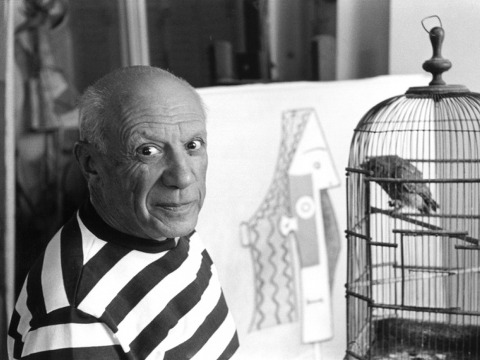
I recently solved a “Don’t Quote Me” puzzle from USA Today that surprised me.  I have been to museums and have seen famous paintings by Pablo Picasso.  But I never understood or appreciated his wide array of work.  I taught second grade and often thought my students produced better drawings than what I observed in the modern art wings of museums.  I am, however, a huge fan of well-written thoughts.  I was surprised when I discovered Picasso was the author of this quote: “The meaning of life is to find your gift.  The purpose of life is to give it away.”   The quote appeared to be a biblical truth, from a surprising source.

Curiosity drove me to the Internet to read more about the artist’s life.  Pablo Picasso lived to be ninety-one and produced more works of art than any other artist in history.  He is famous for inventing the style of art known as Cubism and most biographers remarked on his ability to transform his style as time passed.  There is little doubt that Picasso was extremely gifted, even as a child, in his artistic ability.  Picasso’s life, however, is the best illustration of the wisdom he lacked.

Picasso was walking past a group of school age children and said, “When I was as old as these children, I could draw like Raphael, but it took me a lifetime to learn to draw like them.”  Picasso discovered his gift at an early age but, after reading several online biographies, I don’t think he ever recognized the Creator of his giftedness.  Picasso’s life was marked by egocentric rebellion, which included rebellion against God’s word.  Apparently Picasso looked in his mirror and saw his god.  He believed in his ability, his opinions and his own version of truth.  He also believed that sharing himself and his work was his gift to the world.   Sadly, Picasso’s legacy is one that is praised by people, but not God.

I think the Pablo Picasso quote was biblical truth, almost.  He said, “The meaning of life is to find your gift.”  The apostle who shared Pablo’s first name, might have said, “the meaning of life is to find your spiritual gift.”  Paul wrote to the church in Corinth and said, “Now about the gifts of the Spirit, brothers and sisters, I do not want you to be uninformed” (1 Corinthians 12:1).  Every Christian has been gifted by God and every Christian should know and understand the gifts they have been given.  If a Christian is “uninformed” it is likely that person will limit or miss his or her spiritual calling.

Paul wrote, “There are different kinds of gifts, but the same Spirit distributes them.  There are different kinds of service, but the same Lord.  There are different kinds of working, but in all of them and in everyone it is the same God at work.  Now to each one the manifestation of the Spirit is given for the common good” (1 Corinthians 12:4-7).

Your Kingdom purpose is to allow Jesus to use your life, through your spiritual giftedness for the common good.  Jesus still has an earthly ministry – through those whom the Holy Spirit is able to work through.  Your spiritual gift is the way Jesus is most likely going to use your life for his eternal purpose.

Pablo Picasso said, “The meaning of life is to find your gift.  The purpose of life is to give it away.”  The apostle Paul would tell the Christian, “The meaning of life is to find your spiritual gift.  The purpose of your life is to share your gift with others, as the Holy Spirit leads.”  Paul ends the chapter by saying, “Now eagerly desire the greater gifts, and I will show you the most excellent way.”  That statement is the introduction for Chapter 13.  Take a minute and read the familiar passage about the power of God’s love when shared by God’s people.

Do you know your spiritual gift?  Do you know how God is most likely to use your life for his Kingdom purpose?  There is no higher goal for Christians than to be available and usable by God’s Holy Spirit.  The Denison Forum has a tool that can help you discover and understand your spiritual gift.  It is free and it would be our joy to share it with you.

Pablo Picasso lived to be ninety-one and has a lot to show for his life on earth.  However, none of his art is eternally valuable.  The apostle Paul lived a much shorter life and died as a criminal.  Every word he wrote, through the power of the Holy Spirit, is eternal and is being used for the glory of God.  Our choice today is to decide which “Pablo” we most want to emulate.

Paul began his letter by saying, “For the foolishness of God is wiser than man’s wisdom, and the weakness of God is stronger than man’s strength” (1 Corinthians 1:25).   I wonder – what would Picasso’s life have produced if he had lived by that verse?  I think I would have enjoyed seeing those paintings very much.

{jcomments lock}

Thank you, Lord

I want to begin this blog post by wishing all of you a blessed Thanksgiving. 

I hope the day is filled with all your favorite things! 

We have so much to be thankful for in our lives because of the Lord’s great love for us.

Before the “busy” 

For most of us, this blog post will arrive amidst the “busy.” It’s good to pause for the sake of our sanity and the sake of our souls to focus on the reason we should be most grateful

The holidays can change from one year, or one season of life, to the next. The one, unchanging joy in our lives is the Lord. Jesus is the same “yesterday and today and forever” (Hebrews 13:8). The “Janet Denison version” of the verse is: “Jesus is the only thing that stays the same from yesterday, to today, and forever.” 

Change will always be a part of our earthly lives. I can only imagine what heaven will be like, but I do know that every change, or every constant, will be perfect and eternal.  

Thank you, Lord, for your consistent, faithful love that provides our foundation of peace amidst the daily changes of this life. “The Rock, his work is perfect, for all his ways are justice. A God of faithfulness and without iniquity, just and upright is he.”  

We thank you, Lord, for the truth of Deuteronomy 32:4. 

For the busy

Sometimes your table is surrounded by the peace and comfort of family gathered there. Sometimes your table is surrounded by the noise, chaos, and potential controversy that our family or others have created for the day.  

Sometimes Thanksgiving is a “movie moment,” but most of the time it is just real life. A glass gets spilled, a child gets unruly, something gets forgotten and burns in the oven. Your team might lose, your turkey might need extra gravy on the side, and your pumpkin pie might have a burnt crust with a runny middle. A grandchild might hate your green beans and want some ketchup for their turkey. I could go on . . . but you get the picture. 

If your “Norman Rockwell” Thanksgiving gets sidelined in some way, remember these words from Jeremiah 15:16. The prophet said, “Your words were found, and I ate them, and your words became to me a joy and the delight of my heart, for I am called by your name, O Lᴏʀᴅ, God of hosts.” 

Whatever happens around your table, and whatever else you eat, you can be ready to speak a word from God if you have found his word and eaten that first! The joy and delight of the day don’t depend on a perfect meal, a winning score, or a crowd of people who always agree. The joy and delight of your heart will be that you surrendered the day to the Lord, with the goal of pleasing him.  

Thank you, Lord, for calling us by your name. We ask you to be the “Host” of our Thanksgiving tables. 

For the moments after the busy

After the leftovers are stored away, the dishes are put away, and your feet are comfortably “put up” in slippers, take time to hear God say, “Well done, good and faithful servant” (Matthew 25:23). 

Thanksgiving is a success if we have served God by serving others. Thanksgiving is a success if we have shared the love of God with others. Thanksgiving is a success if we have honored God and others. 

For the quiet after the busy, “Give thanks to the Lᴏʀᴅ, for he is good, for his steadfast love endures forever” (Psalm 136:1). Every holiday on earth changes with the times. Every Thanksgiving is different in some ways than the years before. But every thanksgiving should include and honor the unchanging perfection of the Lord.  

We thank you, Lord, because your “steadfast love endures forever.” We are forever grateful and forever blessed.

Happy Thanksgiving.
May your celebration be filled with the joy of the Lord.
May we “give thanks” to, and for, the Rock of our salvation.

Why should we teach our children to pray?

We teach our children the colors of the world and how to count their fingers and toes. We teach them how to say “thank you” when they should be grateful and “I’m sorry” if they have made a mistake. We teach our children how to communicate what they are thinking and feeling. It is important that we teach them how to talk to others. It is crucial that we teach them how to talk with God.

Christian parents often pray with their children, but are we teaching them to pray on their own? I often quote Psalm 131:2 when I am speaking to parents. The verse says, “But I have calmed and quieted myself, I am like a weaned child with its mother; like a weaned child I am content.”

A nursing mother consumes food and her body processes it into milk, which her hungry infant eagerly consumes. But her child cannot grow and succeed unless he is weaned and learns to eat for himself. Content Christians are people who have learned how to spend time with God alone, growing and learning from what they “consume” on their own. Prayer is a good way to begin the “weaning process” and raise children who will be strong, mature Christians someday.

What will your child learn if you teach them to pray?

1. They will learn that God is real, and that he is God. Jesus taught his disciples to pray saying, “Our Father in heaven, hallowed be your name, your kingdom come, your will be done, on earth as it is in heaven” (Matthew 6:9-10). When we teach our children to pray, we teach them to talk to the Creator of the world who is listening in heaven. When we honor God’s name, we honor him as our King. When children pray, they will understand that they have access to the God of the universe and he wants to talk with them about his will for their lives. God wants to be their King.

2. Prayer is the way they will develop a close, personal relationship with God. “Be still, and know that I am God; I will be exalted among the nations, I will be exalted in the earth” (Psalm 46:10). The strongest relationships in our lives are with people we have chosen to spend time with in a quiet, exclusive way. The same is true of our relationship with God. If the only time your child spends with God is also with other people, then God is most likely going to remain an “acquaintance” rather than a close, personal friend. Teach your children to be still and to spend time alone with God.

3. They will learn that God loves them and listens to their prayers. Jesus said, “I will do whatever you ask in my name, so that the Father may be glorified in the Son. You may ask me for anything in my name, and I will do it” (John 14:13-14). It is normal for children to pray for everything they want, and to expect God to do whatever they ask of him. Most parents struggle with helping their child understand that God’s answers to prayer are not always the same as their requests. Jesus said, “If you ask anything in my name, I will do it.”  He said, when you ask for what his holy and perfect character wants to give or do, he will do it.  When children pray they will learn that God loves them too much to give them something that is not perfect. They will also see their prayers answered, just as they asked. God loves to show his children that he loves them and listens to them. When children pray, they will see God answer and know he heard their prayers.

4. Children will learn that God’s answers are unique and important. “Call to me and I will answer you and tell you great and unsearchable things you do not know” (Jeremiah 33:3). Children will often ask parents or friends for advice. One of the most important things a child can learn is that the only perfect advice is God’s. God’s answers are unique wisdom that can only be gained by “calling on him.”  One of the reasons parents need to “wean” their children spiritually, is so that their children will learn to turn to God for the answers that are “hidden” and that cannot be “known” any other way. That is a lesson that will carry them through life (and it can make the high school and college years a little less stressful for parents).

5. Prayer will teach your children that when they make a mistake, there is help and forgiveness available to them, to make it right. “If we confess our sins, he is faithful and just and will forgive us our sins and purify us from all unrighteousness” (1 John 1:9). Prayer will help your children understand God’s will for their lives, and that nobody makes perfect choices. Prayer is the first and best response when your children need discipline.  Prayer teaches them that God knows their failure and has a plan to redeem. When a parent prays with their child and asks God for wisdom to know how to discipline, the child is much more likely to learn from that discipline. Your child will learn that they need to make their mistakes right with God and right with others. Prayer will show your child that there is both consequence and forgiveness for mistakes and teach them that God redeems for his greater purpose (Romans 8:28).

We know that our children must be weaned physically if they are to grow and become successful adults. God calls us, as parents, to wean our children spiritually as well. Prayer is one of the best ways to introduce your toddler to God. A prayer-filled life will teach children to grow from a toddler relationship to a strong walk with God as their King. Our kids deserve the chance to become all that God has called them to be and prayer is key to providing them that opportunity.

“For I know the plans I have for you,” declares the Lord, “plans to prosper you and not to harm you, plans to give you hope and a future.  Then you will call on me and come and pray to me, and I will listen to you” (Jeremiah 29:11-12).


* Originally published on March 17, 2015

What is your Kingdom purpose?

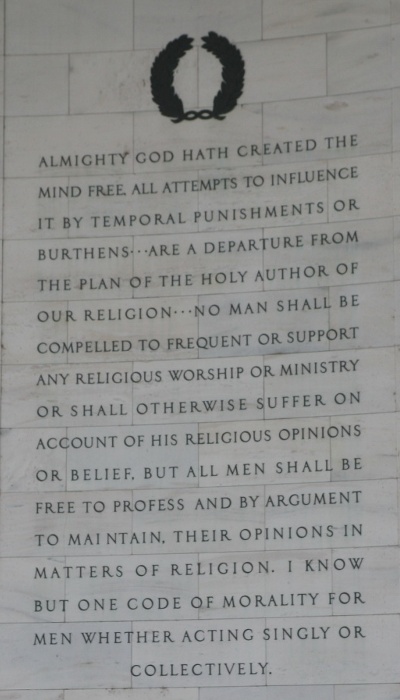
It was really warm in Washington, D.C. this weekend and I was glad to find a cool spot to sit down when we reached the Jefferson Memorial.  Jim and I had been invited to the capitol city by a friend, so that we could attend an important dinner at an ambassador’s home.  It was an interesting evening in a room full of interesting people.  Before we attended the dinner, we spent the afternoon at the National Mall, revisiting the historic sites.  I heard some interesting discussions by the speakers at the dinner, but the words that I came home thinking about were from the Jefferson Memorial.  As I sat on that cool bench, reading one of Thomas Jefferson‘s quotations, I understood my Kingdom purpose.  Do you know yours?

Your Kingdom purpose is the service God has gifted you to perform, that has eternal value.  More specifically, your Kingdom purpose is that thing you do, that you don’t do – but that God does through you.  When last did you see God at work in your life, and the end result was people encountered God in their own lives?  Chances are, the answer to that question is your Kingdom purpose.

Jefferson Memorial, the panel of the northwest interior wall is an excerpt from A Bill for Establishing Religious Freedom, 1777, except for the last sentence, which is taken from a letter of August 28, 1789 to James Madison (Credit: Cliff1066 via Flickr)Here are the words I read on the wall of the Jefferson Memorial, that voiced why I get up and go to work each week:


“Almighty God hath created the mind free. All attempts to influence it by temporal punishments or burthens…are a departure from the plan of the Holy Author of our religion…No man shall be compelled to frequent or support any religious worship or ministry or shall otherwise suffer on account of his religious opinions or belief, but all men shall be free to profess and by argument to maintain, their opinions in matters of religion. I know but one code of morality for men whether acting singly or collectively.”

Almighty God created us with free will – with a mind that is free to believe anything it chooses.  Proverbs 23:7 says, “As a man thinketh in his heart, so is he.”  Jim and I have come to expect this question:  “Now what is it you two are doing now?”  It was easy for people to understand our ministry when it was about pastoring a local church.  I often say that God has called Jim out of the church in order to minister to the Church, the body of believers.  Jefferson’s quote gave me some clarification this weekend.  Our mission field is no longer defined by a building and those that do, or should, attend it.  Our mission field is the American mind.  Our Kingdom purpose is to speak, teach, write and help people to think and act with biblical values.

God hath created the mind free . . . I know but one code of morality for men whether acting singly or collectively.” 

The religion of Thomas Jefferson is the subject of debate.  I’ll leave that to God’s divine judgment.  It is difficult to know if Thomas Jefferson trusted Jesus as his Savior, it is simple to know that he trusted Jesus’ wisdom.  Thomas Jefferson once said, “I am a real Christian – that is to say, a disciple of the doctrines of Jesus Christ.”  Jefferson felt that the morality found in Scripture should be the moral code of any society, especially a society that had been given the freedom to think and act according to their personal values.  You will see biblical values upheld throughout the Constitution of the United States.

The dinner we attended on Friday evening was an interfaith group that is working to bring people of all faiths to a table of common good – a shared sense of morality, even if they don’t share the same faith. Thomas Jefferson would have agreed with the value of having such a room.  He said:

“If the morality of one man produces a just line of conduct in him acting individually, why should not the morality of one hundred men produce a just line of conduct in them acting together?” –Thomas Jefferson to J. Madison, 1789.

I want the citizens of our country to live and think with biblical morality, even if they don’t live with biblical faith.  I believe that way of thinking would promote our best life on earth.  But I won’t ignore my Kingdom purpose because our life on earth is just a small part of our existence.  I want people to know Jesus – so they can have eternal life.  Jesus said, “I am the way, the truth and the life.  No one comes to the Father except through me” (John 14:6).

What is your Kingdom purpose?  Don’t rest until you know the answer.  That answer is the way you will influence others to know Christ and think biblically.  That should be your motivation to go to work this week as well.

{jcomments lock}

{jcomments lock}

The ancient roads aren’t paved at all

We’ve been in ministry for a long time now, and our most important lessons have been learned by living our faith journey with biblical truth. Don’t let anyone convince you that the faithful life is always  easy and filled with joy. It never has been, and it never will be. It is rewarding, blessed, fulfilling, and often an uphill effort. 

Walking God’s ancient road to heaven isn’t the easiest way to live our lives, but it is the road that takes us where we want to go.  

The “road to hell is paved”

The familiar words say, “The road to hell is paved with good intentions.” I find it interesting that we are supposed to think the road to hell is paved. The familiar saying isn’t a biblical concept, but the fact the road is paved actually is. 

Proverbs 14:12 is ancient wisdom. The proverb says, “There is a way that seems right to a man, but its end is the way to death.” Scripture spoke of the “ancient road” as the more difficult path to follow, but it was also the path that led people to heaven. The easy path is the road that seems right but isn’t. Taking the easy way, or the popular way, is often taking the wrong road. The prophets were called to preach the truth people needed to know, even when it wasn’t what they wanted to hear. 

It would seem like every generation of humanity has wanted this life to be easier than it turns out to be. I’ve always squirmed a bit at Jesus’ words when he said, “Enter by the narrow gate. For the gate is wide and the way is easy that leads to destruction, and those who enter by it are many. For the gate is narrow and the way is hard that leads to life, and those who find it are few” (Matthew 7:13–14). 

Jesus’ words to his disciples were really clear and clearly sobering. Living a holy life in this unholy world will not be an easy or widely popular road. Jesus said the way is hard and few find it. 

If the road to hell is paved, it is a much easier road to walk. It “seems right to man” and it has a lot more people to walk alongside. The road to heaven is often a difficult journey, a narrow road that requires constant direction to navigate. The only way to walk that path is to be willing and determined to do whatever it takes to reach the end. 

Ancient paths require ancient truth

The prophet Jeremiah is sometimes called “the weeping prophet.” He preached to the people of Judah when Josiah was king of Judah. Jeremiah’s dad had been a priest so he grew up knowing the ancient truths about God and the nation of Israel. As the nation turned more and more to the worship of Baal, God made his truth very clear. 

God told Jeremiah to tell his people what to expect if they wanted to make the journey to his eternal Presence and blessing. Jeremiah 6:16 says, “Thus says the Lᴏʀᴅ: ‘Stand by the roads and look, and ask for the ancient paths, where the good way is; and walk in it, and find rest for your souls.’ But they said, ‘We will not walk in it.’” 

Sometimes the journey to heaven is filled with paths that can appear too difficult to walk and may seem unfairly narrow. Jeremiah and King David questioned God, saying, “Why do the evil prosper?” It is tempting to live this life on the roads that are most popular and easier to enjoy. We have to consider the destination more important than the journey. 

God told Jeremiah to ask for the ancient paths. Why? 

The answer to that question might be the most important part of this blog post and a change point in your spiritual journey.  

Our culture is full of “fresh ideas” and “new thinking.” Many of our churches are leaning that way as well. All is good if the fresh ideas and new thinking are still based on ancient truth. Scripture teaches us that Jesus was with God in the beginning (John 1:1) and that Jesus is the same yesterday, today, and forever (Hebrews 13:8).  

If someone believes today what Christians have never believed before, their theology is not going to carry them down the ancient paths that lead to heaven. On the other hand, there is a new movement beginning among some Christians in college today who are looking for ancient, proven truth. They are a generation that recognizes the abundance of confusion and discord in popular thinking and have learned to appreciate what has always been considered true.  

Ancient paths require ancient, eternal truth. The ancient paths are “the good way,” and it is on those paths we can find “rest” for our “souls.” 

The question for each individual to consider is: Will I walk in it? 

Have we forgotten the ancient truth?

Jeremiah 18:15 reveals God’s heart for his people: “But my people have forgotten me; they make offerings to false gods; they made them stumble in their ways, in the ancient roads, and to walk into side roads, not the highway.” 

There is a higher way to live our lives and it depends on the ancient, eternal truth of God’s word. God’s definition of truth doesn’t change, but people’s interpretations of his truth have always drifted, then returned, only to drift again—throughout centuries of biblical history. 

Every generation in Christian history gets some things right and other things wrong. We are a fallen people who need their Lord to direct their daily walk. Jesus offers to guide us along the ancient path but the question remains, “Will we choose to walk it?”

Tough journeys require a great God

None of us wish for the difficult parts of this road, but it is the road that takes us to the place we need to be. We learn to trust doctors to save our lives.  Some of you have experienced the pain of difficult treatments that while painful at the time, have led to your healing.

Shouldn’t we all consider that crucial thinking for our spiritual lives as well? 

As Christians, each of us has our own journey and that will be a difficult road at times. We should want to walk the ancient paths of God’s eternal truth because that road leads us to heaven. It isn’t the easier, paved road of popular thinking; it is the proven path of ancient truth. It’s the road to “Well done, my good and faithful servant.” 

I hope all of us will choose to say, “Yes, Lord. I am willing.” 

That narrow gate is an uphill effort at times but worth every step that draws us closer to our eternity with God. 

The Prodigal’s Mother

I’ve taught the parable of the prodigal son from Luke, chapter 15, many times. It never occurred to me until today to ask, “Where was his mother?” I understand the parable should probably be titled the parable of the loving father. The story is much more about the father than the son. Nevertheless, there isn’t a mom anywhere in the picture. Why did Jesus leave her out of his parable? I think I might have the answer.  Consider the story of the prodigal son if Dad was gone that day and Mom had been left to deal with her teenage son.

The story of the prodigal son, as found in 1 Janet, chapter 15:

There was a mother who had two sons. The younger one said, “Mom give me my share of the inheritance.” The mom replies, “I don’t think so. But if there is something you need just let me know.”  The son makes up a fantastic story of great need and his mother says, “Well, I want you to fit in with the rest of your friends, so by all means, let me give you what you want.”  Not long after that, the son goes to the pawn shop and sells the things he had convinced his mom he needed, takes the cash and heads to Vegas. She continues to check on him each day, believing that he is working 9-5 at the office, even when the loud bells of the slot machines in the background should indicate otherwise. She suggests he come home for dinner and believes him when he says he has to work late. In fact, she hangs the phone up, proud that her son is working so hard. One day, the phone rings and her son says he has made some bad investments, and he has been wrongly arrested for tax evasion. He asks her to come and bail him out of jail—and oh, by the way, did I mention I had moved to Vegas? She responds, “No, why didn’t you tell me?” Her son says, “because I wanted to surprise you with my new wife.”  As the doorbell rings, her son says, “And she and my new baby need to stay with you for awhile.” The mother, with great excitement, runs to the door asking, “Is it a boy or a girl?” As she opens the door, she sees a young woman with orange hair, dressed in camo, carrying a small pink bundle. She shouts to her older son, who has been living in the basement for the last six years. (The job market is tough for college graduates!) She tells her older son, “Quick, clean up down there. You need to move out to the garage. Your brother’s new wife and child have just come home!” Needless to say, the older brother is upset. He shouts, “But mom, there is no television or internet connections in the garage!” His mother says, I’ll get it installed later today – but right now, I need to get to Vegas and bail your brother out of jail . . . before your dad gets home.

Now you know why there is no mother in the parable of the prodigal son! She wouldn’t have stood there and watched HER son walk away!  She would have run down that road—and bribed him to come home! I have often mentioned Jesus’ parable when I speak to a room full of moms, and I usually make this point. If you have a prodigal in your family, ask God for strength and wisdom, but let those kids own their consequences—fully own them. The greatest need your child has in this world is God and the salvation the heavenly Father has provided through his son, Jesus. If your child is going to “return to the Father” because of a pig sty, then that pig sty is where you want your child to be. Don’t do your best to keep your children from consequences; do your best to help those kids experience EVERY ONE of them. Allow your prodigal to fail, and even suffer if necessary. And tell his older brother to move out and get a job! No one wants to be a Prodigal’s Mother – but if you end up with one, do everything necessary to send them to that pig sty – praying they will “come to their senses” (Luke 15:17) just like the parable teaches!

“Train your child up in the way he should go, and when he is old he will not turn from it” (Proverbs 22:6). A proverb is not a promise. It is a statement of general truth. No matter how well you parent, you cannot parent away your child’s free will. If you train your child, he will probably turn out great – when he is old. It’s those other years that might have a pig sty or two!

This blog post was originally published in July of 2012 

The Giver: a Christian perspective

I’m not sure why I missed seeing the movie, The Giver, but I will try to see it soon. I remember seeing the trailer in the theater and thinking I needed to see it. Meryl Streep, Jeff Bridges and Katie Holmes seemed like a promising cast, and I remembered that one or both of my sons had read the novel when they were in school.

Recently, I was in a bookstore looking for another book when I saw The Giver, by Lois Lowry, on the same table. I picked up a copy and decided to purchase it. I read The Giver on a recent flight and barely noticed the four hours pass. If you have been reading my blog posts for a while, or if you know me, you know that I love a great book. A great book should be entertaining, but it should also cause a person to think.  Lois Lowry won the Newberry Award for The Giver because she wrote a great book.

After I finished reading the book, I did a little research. Spark Notes described Lowry’s inspiration to write her novel:

“She was inspired to write The Giver—which won the 1994 Newbery medal—after visiting her elderly father in a nursing home. He had lost most of his long-term memory, and it occurred to Lowry that without memory there is no longer any pain. She imagined a society where the past was deliberately forgotten, which would allow the inhabitants to live in a kind of peaceful ignorance. The flaws inherent in such a society, she realized, would show the value of individual and community memory: although a loss of memory might mean a loss of pain, it also means a loss of lasting human relationships and connections with the past.”

The Giver is not a Christian novel, but if I were doing a review, I would be able to point out what a Christian should learn from the story.  When I finished reading the novel, I couldn’t help but compare the colorless, or boring, society that allowed individuals to live in “peaceful ignorance” to the untrue perception many non-Christians have of those who live in faith.

Christianity is often described as a “crutch” or a way some people choose to avoid dealing with the realities of life and death. Non-Christians often believe a life of faith to be rigid, routine and restricted—often colorless or boring. I can see how someone could read The Giver and believe it was a condemnation of religion while another might read it and believe it to be supportive of faith. I can see others read it and believe it has nothing to do with faith at all.

In the introduction to the latest edition of the novel, Lois Lowry describes some of the comments she has received from people over the years. She said a Trappist monk had written to say he considered the book a sacred text. Another man had escaped a cult that he had been raised in and his psychiatrist recommended he read The Giver. One mother read the book because it had been assigned to her child at school. She wrote to tell Lowry that she was clearly a disturbed person and she hoped the author would get some help.

I liked what Lowry had to say about the multitude of comments she had received over the years. She wrote, “A book, to me, is almost sacrosanct; such an individual and private thing. The reader brings his or her own history and beliefs and concerns, and reads in solitude, creating each scene from his own imagination as he does. There is no fellow ticket-holder in the next seat.” I would agree with her words as they apply to every book except the greatest book in history, the Bible.

The Holy Bible had a holy Author, with a perfect purpose. Billions of people have read its pages and been able to come to the same, important conclusions. We read the Bible with our imaginations, but the words we read were not imagined. Scripture was creative, but each truth was created. The Bible was not written to describe a “peace filled life of ignorant bliss.” The Bible was written to guide people to the peace filled life that will certainly exist for all eternity. We don’t live with full understanding. In 1 Corinthians 13:12 Paul writes, “For now we see only a reflection as in a mirror; then we shall see face to face. Now I know in part; then I shall know fully, even as I am fully known.” We live with hope because we live with God’s promise of eternity.

The Giver ends with the main character escaping the created utopia because he discovered that even though the real world had suffering and pain, it was better than a world with no joy.  Joy, as the novel teaches, cannot exist without the understanding of pain and suffering.  Success in The Giver is described as choosing to live in the real, yet fallen world. Success in the Bible is described as choosing to live in the fallen world for the sake of heaven.

The Giver is a great book that makes a person think. It is written for young people, but it was meaningful to me, a “not-so-young person.” I love a great book, but I respect and do my best to govern my life by the only perfect book. Paul taught his young protégé, Timothy, “All Scripture is God-breathed and is useful for teaching, rebuking, correcting and training in righteousness, so that the servant of God may be thoroughly equipped for every good work” (2 Timothy 3:16-17).

The Giver is a great novel but the real “Giver” is the One whose breath created your Bible. Enjoy the novel, but live by God’s Word.

This blog post was originally published on November 18, 2014.

Share God’s word, not word salad

Wouldn’t it be wonderful to share God’s word with perfect clarity? 

I’ve most often muddled the task when I have assumed I know what to say instead of understanding I don’t. The only perfect words are authored by our perfect God and it’s easy to get in his way sometimes. 

One of my favorite verses in Scripture is Psalm 19:14. It is a verse I like to pray before I teach, speak, or write a blog post. The psalm says, “Let the words of my mouth and the meditation of my heart be acceptable in your sight, O Lord, my rock and my redeemer.” 

We need more than words to communicate the truth of God; we also need an acceptable heart.

The phrase word salad has been used for political purposes recently, but I wondered what the phrase meant. As it turns out, it’s a pretty good description for some of our “muddled” speech. If we want to share God’s word with clarity, we should understand what that means biblically.

What is word salad?

Merriam-Webster defines word salad as “unintelligible, extremely disorganized speech” or “a string of empty, incoherent, nonsensical words or comments.” 

Technically, it has often been used to describe the speech of someone with a mental disorder. Lately, word salad has been used politically to describe an answer to a question that never really provides an answer, or a series of relevant-sounding phrases that are actually irrelevant to the listener.

If you are like me, you’ve heard sermons and podcasts or have read articles or papers that, when finished, haven’t seemed to make an important point at all. (Even as I type those words, I am prayerful for my own writing!)

Someone described word salad as a jello salad, saying, “Who first thought about opening a can of fruit and putting it in a bowl of jello? It is like taking something healthy and mixing it with something to make it less healthy.” 

Obviously, that person isn’t a huge fan of jello salad! 

Do we sometimes mix God’s word up with things that make it sweeter to the taste but less beneficial than God intended his word to be? 

One of the best seminars I ever attended was led by a Christian fiction writer who had, on occasion, been criticized for being too graphic in his mystery writing. He said his editors would often ask him to “soften” his words.

The man then spent the next minutes describing several passages in Scripture that had been “softened” in order to teach or preach them in church. I will always remember the point he made that day. He asked us, “At what point did God give us permission to edit or soften his word?”

It is sobering to consider the words of Christ who said, “I tell you, on the day of judgment people will give account for every careless word they speak, for by your words you will be justified, and by your words you will be condemned” (Matthew 12:36–37).

Careful speech is not “softened” truth

I think we need to word God’s truth carefully. 

I sometimes cringed when I sat in the pew with my young boys and listened to a biblical passage or sermon that dealt with sensitive, adult topics. I knew the car ride home might get interesting! 

Thankfully, I knew the preacher was coming home soon and I could just say, “Wait and ask your dad about that.”

My husband, Jim, and I were talking about our early years of ministry. We had a conflict in our small church because some of the women wanted to do a baby shower and help an unmarried, pregnant teen get ready for her baby. Other women in the church worried that we were expressing acceptance of sin as we were offering compassion to someone who needed it. Honestly, both sides of the conflict were able to make a strong, biblical argument.

We ended up hosting the shower and helping the unwed, teenage mother. I’m glad we did that, but, at the same time, forty years later, I’ve seen the problems associated with softening or withholding God’s word on the subject of a premarital sexual relationship. A 2015 survey said that almost 90 percent of unmarried men and women confessed to having a sexual relationship prior to marriage. Other articles called premarital sex “the norm.”

When is the last time your preacher boldly preached the truth of God’s word on the subject? 

Hebrews 13:4 is a clear statement: “Let marriage be held in honor among all, and let the marriage bed be undefiled, for God will judge the sexually immoral and adulterous.”

Have we softened God’s word on the subject of homosexuality? 

Paul told the church in Rome that there would be consequences for those who engaged in that behavior. He said, “For this reason God gave them up to dishonorable passions. For their women exchanged natural relations for those that are contrary to nature; and the men likewise gave up natural relations with women and were consumed with passion for one another, men committing shameless acts with men and receiving in themselves the due penalty for their error” (Romans 1:26–27). 

Many have tried to edit Paul’s statement or rewrite it to bring it into agreement with current, more tolerant thinking. There isn’t any way to edit Paul’s words to make those sexual sins acceptable today.

At what point did God give us permission to tolerate what he has said is dishonorable, unnatural, and shameless? Are we helping a person if we offer tolerance for sin instead of offering the truth about that sin? 

Paul taught we must speak “the truth in love” (Ephesians 4:15), but he also taught we must speak the truth.

Does our word salad sweeten God’s word but make it less beneficial?

As I have said before, one of my “life verses” is from the book of Hosea. God told the prophet, “My people are destroyed for lack of knowledge; because you have rejected knowledge, I reject you from being a priest to me. And since you have forgotten the law of your God, I also will forget your children” (Hosea 4:6).

Is our good desire to protect people’s feelings hindering God’s desire for them to know the truth? 

Current statistics would seem to say that tolerating sins is not helping people to understand that God has said there are consequences to those sins. 

Are people’s lives, and eternal lives, being destroyed because they lack knowledge of God and his word? Is a lack of truth destroying our children’s and grandchildren’s generations?

I know I have softened God’s word at times to help it feel more appropriate or acceptable. I may even have helped others feel better about their sin as a result. I pray that God will forgive my offering of word salad when what they most needed was the truth of God’s word.

There is a new way to look at an ancient psalm. Those words say, “Set a guard, O Lᴏʀᴅ, over my mouth; keep watch over the door of my lips! (Psalm 141:3)” 

As I read that psalm, I pictured the plexiglass guard that hangs over the salad bar at a steakhouse. My new version of that psalm became this: “Hang the guard, Lord, over all my ‘word salad’ and help me leave the jello-words unspoken. Instead, guide me back to the table to consume and share the meat from your word.” 

The words of our lips ought to provide people the wisdom they need to walk in God’s truth.

Let no one suffer because they lack knowledge of who God is and what God most wants for their lives now and eternally. 

They might want the salad bar, but we need to help them choose the steak instead.

Salted conversations

Do you ever feel bombarded by words in our culture today? 

That probably seems like an odd thing to say, given that I make a living with my words. Recent news has certainly sent word bombs flying throughout all the media sources. 

As Christians, how do we make certain our words are landing in the right places?

I have listened to a lot of the rhetoric surrounding the Supreme Court and other issues. I’m not going to debate the issue of abortion because there is no need. I have always liked the simple message I read on yard signs back in the eighties that said “It’s a baby y’all.” Truth isn’t as complicated as fiction. 

I’m glad people are thinking again about the truth of the abortion issue, in addition to the politics the issue creates. But, in all the conversations I have listened to, no one seems to be discussing the deepest concern. There is a profound truth that has been lost to our culture today and to our conversations. 

Why aren’t we speaking about the reason unwanted babies are being created?  

The truth about consequences

There are millions of statements being made about personal freedom. Where are the statements about personal responsibility? I’m not unaware that the issue is complicated by the fact that some babies are created as the result of an attack. But the complete truth about abortion is shaded by that fact.  

Last year, more than one million babies were aborted. Only 1.5 percent of those abortions were attributed to an attack. That means, if the numbers are correct, last year 985,000 babies lost their lives because their moms and dads didn’t want to take the responsibility or live with the consequences of creating them. 

There is a reason that God wanted the most personal relationship a person can have to belong to a husband and wife, who would keep that relationship sacred and holy. Christians need to be salting their conversations with the complete truth of God’s word on this subject. 

Any time we break God’s laws, there are consequences. Are we leaving a generation of God’s children in the dark because we don’t want to hurt their feelings? Be judgmental? Do we just quietly feel badly about the lack of truth, or do we choose to salt our conversations with truth?  

The truth about consequences is that there are consequences for speaking truth, for speaking partial truth, for lies, and for staying silent when truth is needed. 

The truth about salty words

Don’t you hate getting salt on a cut finger? 

It stings and often we don’t realize there is a problem until we feel the burn. 

I was curious: Why does salt sting? Google to the rescue! 

I found an article that explained the sensation. Salt stings for the same reason antiseptic stings: both activate the nerve “receptors.” I couldn’t help but see the metaphor.  

Sometimes “truth hurts.” We shouldn’t throw our truth around, hoping it will cause pain. That is using our words as weapons. At the same time, we can’t help the fact that when salt hits a wound people feel it. The sting alerts them that something is wrong. It is a natural response of our “receptors.” 

God created all things, including us. It would seem he wanted us to feel truth sometimes, especially when it is applied to something that is wrong in our lives. 

Why did Jesus call his disciples “the salt of the world”?

I just finished recording six Bible studies from the Sermon on the Mount. (They will be available on the website later this summer.) Jesus was teaching his disciples when he said, “You are the salt of the earth, but if salt has lost its taste, how shall its saltiness be restored? It is no longer good for anything except to be thrown out and trampled under people’s feet” (Matthew 5:13). 

Disciples are the salt of the earth. Our words may be the only Scripture, or message from God, that people will hear on a subject. Have we allowed the culture to remove the “saltiness” from our conversations? Is that why our culture has been “trampling” God’s word with their rhetoric? 

Our unsalted words may not sting people quite as much, but that’s because they are no longer as good. People can throw them away and walk on them. Truth will sting, but that is because pure, salty truth hits a receptor. 

God wants us to notice when something is wrong. 

Will you live a salty life?

Peter Marshall was an American preacher in Washington D.C. who later served as a Senate Chaplain. He was known for his wisdom as well as his preaching talent. Peter Marshall said, “Give to us clear vision that we may know where to stand and what to stand for—because unless we stand for something, we shall fall for anything.” 

Have Christians fallen for Satan’s messages of partial truth? 

If so, we have lost our saltiness. If our words don’t “burn” some wrong opinions these days, our words have lost their saltiness. 

If we don’t stand for biblical truth, we will fall for something less. Jesus taught his disciples that an unsalted life and witness won’t be good for anything. Jesus also taught his disciples to speak the truth in love. In other words, don’t rub salt into wounds but, at the same time, don’t hesitate to let God allow the truth to “burn” just a bit, even when you speak it with love. Be encouraged that when people “receive it” they might become aware of a wrong in their lives and know to fix it. 

“Unless we stand for something, we shall fall for anything.” Peter Marshall was right to encourage us to live with a clear vision and the strength to stand for God’s truth. May our words be salted with his truth, by his Spirit, for the sake of his purpose. If our words burn just a bit, it is just the truth about consequences.  

Disciples are the salt of the earth. Our salted conversations bring the flavor of truth to our words and to our world. Our culture deserves the chance to know God’s word and hopefully live a life he will bless.