
A disciple’s Easter calling

The disciples were beginning to understand the reality of what Jesus had been saying as they sat on the Mount of Olives, listening to him answer their questions. It was late on Tuesday of Passion Week. Jesus had been very blunt with the Pharisees in the temple that day, and there was no mistaking the Jewish leaders’ vehemence. The Pharisees and Sadducees had planned to discredit Jesus that day, and he had turned the tables on them. Jesus had publicly spoken God’s truth into their misguided ministries and motivations.

Now, fearing Jesus’ words about the future, his disciples wanted to know what would happen after he was gone. Jesus had promised his return, and they wanted to know how long they would have to wait for that.

Jesus taught his disciples that he had come to “fulfill” the Law

It’s important to remember that Jesus’ disciples had grown up in the Jewish faith. They knew what the prophets had said about the Messiah and had spent the past three years learning from Jesus, the man they believed was their Messiah. Matthew wrote his gospel to first-century Jewish Christians. The Olivet Discourse, Jesus’ teaching on Tuesday of Holy Week, must be viewed with that perspective. 

Think back to Jesus’ Sermon on the Mount (Matthew 5–7). Jesus said, “Do not think that I have come to abolish the Law or the Prophets; I have not come to abolish them but to fulfill them. For truly, I say to you, until heaven and earth pass away, not an iota, not a dot, will pass from the Law until all is accomplished” (Matthew 5:17–18).  Jewish people had been raised to carefully obey and follow the Law to the best of their ability. The required sacrifices were to provide for their sins when they inevitably failed.

Jesus’ death would fulfill the requirements of the Law because his sacrifice on the cross would be the final sacrifice needed to cover any and every sin for all people who would choose God’s Son as their Lord and Savior.

Every generation has wanted answers to Jesus’ teachings about the last days, the days after his resurrection, and the final day, the Parousia, when Jesus will return to gather the elect for the last time. That Tuesday on the Mount of Olives, Jesus taught his disciples what to know and understand about both.

Jesus taught his disciples what to expect

Jesus wanted his disciples to understand the trials God’s people would face in the “last days,” the years that would follow his resurrection and precede his final coming. His words on the Mount of Olives address both those events.

Matthew 24:15–51 is some of the Bible’s most studied and debated Scripture. Verses 15–28 describe the “abomination that causes desolation” and the following days. Most scholars believe the abomination referred to the time when Antiochus Epiphanes, a Greek king, built an altar to Zeus over the altar for burnt offerings in the Jerusalem temple and then sacrificed a swine on it. Epiphanes, who reigned from 175 B.C. to 164 B.C., also enacted a law that made Judaism a capital offense. Daniel had used the phrase “abomination that causes desolation” in his teaching. Now Jesus, on the Mount of Olives, repeats that phrase about the days that will follow his death. Jesus warned the disciples that when they saw that abomination, everyone should flee immediately from Jerusalem, taking nothing with them. Most scholars believe Jesus is referring to the five-year period of Roman persecution that would culminate with the final “abomination” of the temple. Rome destroyed and desecrated the temple in A.D. 70, and it would never be built again.

Jesus also warned them about false teachers in the last days who would lead people astray, even some of the elect. Many would perform “great signs and wonders” and say they had seen his return, but they would be proven wrong.

The “last days” have continued for over two thousand years; everything Jesus taught us to expect has been a reality. Today, more Christians are persecuted for their faith than ever before. The hope Jesus gave his disciples that day remains our hope today.

Jesus taught time will tell

Jesus also told his disciples about the final day of his return. He said that everyone will experience his final coming at the same time. He said, “For as the lightning comes from the east and shines as far as the west, so will be the coming of the Son of Man” (Matthew 24:27).

Then he described the moment when he returns, saying, “Then will appear in heaven the sign of the Son of Man, and then all the tribes of the earth will mourn, and they will see the Son of Man coming on the clouds of heaven with power and great glory. And he will send out his angels with a loud trumpet call, and they will gather his elect from the four winds, from one end of heaven to the other” (Matthew 24:30–31). Jesus also told them, “But concerning that day and hour no one knows, not even the angels of heaven, nor the Son, but the Father only” (Matthew 24:36).

Everyone who has ever predicted the second coming of Christ has later been proven incorrect. Jesus made this one truth abundantly clear: No one but God knows when Jesus will return. Everyone else is guessing, predicting, and, quite frankly, teaching a false lesson.

When will Jesus return? Only God knows, and only time will tell.

How do we wait well?

Jesus talked about Noah that day. The only thing Noah knew was that the rain was going to come. Noah and his family lived among people who mocked them for building that huge ark. Everyone in Noah’s family went about their day-to-day lives faithfully, waiting for that first raindrop to fall. 

We don’t know when to expect the final storm, either. The lightning will begin, the angels will come, and Jesus will return in glory someday. In the meantime, Jesus taught every generation of his disciples to live faithfully, watching and waiting.

Jesus then asked an important question: “Who then is the faithful and wise servant, whom his master has set over his household, to give them their food at the proper time? Blessed is that servant whom his master will find so doing when he comes” (Matthew 24:45–46).

Feed his sheep

Jesus, after his resurrection, was with Peter when he gave him a calling. Jesus told Peter three times, “If you love me, feed my sheep.”

If you are reading these words, you are still waiting for Jesus to return. We share Peter’s calling as we wait.

Peter told Jesus, “Lord, you know that I love you.” Let’s tell the world we love Jesus today as we faithfully feed his sheep.


It’s common sense to stay off God’s throne

James, chapter 4 begins with two interesting questions. James asks, “What causes quarrels and what causes fights among you?” (James 4:1). Remember, James was writing to the members of his Jerusalem church who had been scattered due to persecution. Most of James’ flock had been born into the Jewish faith but then placed their trust and faith in Jesus as their Messiah.

James asks God’s children, these early Christians, what causes their fights and quarrels. Understandably, people of faith will have issues with people outside their churches, especially if the argument concerns important biblical truth and teaching. But apparently, that wasn’t the only issue among James’ flock.

How would you answer James today? Right now, many Sunday School teachers and preachers are steering clear of politics. Every church has both Democrats and Republicans, and we don’t want politics to become divisive and distract people from important faith priorities.

What causes Christians to fight and quarrel?

Jim and I were young when we went to pastor a small Baptist church in the country. There was a lot of love in the church but not much money. It was almost time for VBS when the only water fountain in the church stopped working. A man came to check it out and announced it wouldn’t be worth fixing. 

We were about to have a LOT of kids for VBS, and we needed a new water fountain. We had a business meeting to vote on spending the money to purchase the new fountain, and those attending quickly approved the purchase. Then someone asked, “What color fountain should we get?” For the next HOUR, the people debated what color fountain we should buy. Finally, at the end of the discussion, it was voted that we would get another brown fountain, just like the one purchased decades earlier. (Just FYI. . . . I did NOT vote for brown because I thought it was outdated looking. However, the pretty blue one I chose raised concerns about showing dirty fingerprints.)

Over the years, I have pictured Jesus on his throne, rolling his eyes at some of our church discussions. Christians have so much in common, especially about the most important things. But Satan seems to hide out in the small stuff and is great at making us think the small stuff really matters.

James answered his own questions, saying, “Is it not this, that your passions are at war within you? You desire and do not have, so you murder. You covet and cannot obtain, so you fight and quarrel. You do not have, because you do not ask. You ask and do not receive, because you ask wrongly, to spend it on your passions. You adulterous people! Do you not know that friendship with the world is enmity with God? Therefore, whoever wishes to be a friend of the world makes himself an enemy of God” (James 4:1–4).

James told his church they were quarreling over their personal wants and needs. Why? Because they hadn’t taken the time to ask God and wait for his answer. Most of the arguments I witnessed in the churches we pastored had nothing to do with what was important to God and everything to do with what was important to certain groups of people. A lot of the quarrels about the contemporary music style were led by the people who sang the “high church” solos. They argued about the merits of contemporary music, but they were concerned with the fact that if the music style changed, they would likely not be asked to do many solos in the morning worship service. (Our services were on TV, which made that an even bigger issue than it should have been.)

Those who know me know that I like the hymns the best. I like the words, the theology, the music, and the tradition of the great hymns. But I’ve also come to appreciate some contemporary music’s joy and praise. I measure music now by one standard: “Does it cause people to praise and worship God?” If yes, then it is good music.

James makes a key statement about quarrels and fights. He said, “Whoever wishes to be a friend of the world makes himself an enemy of God.” Maybe we should ask every contentious person in our churches, “Do you realize you could be making yourself an enemy of God right now?” THAT would likely shut me down. A brown water cooler is just fine if it means I’m choosing God’s side!

Why does God put up with our fights and quarrels?

James wrote, “But he gives more grace. Therefore it says, ’God opposes the proud but gives grace to the humble.’ Submit yourselves therefore to God. Resist the devil, and he will flee from you. Draw near to God, and he will draw near to you. Cleanse your hands, you sinners, and purify your hearts, you double-minded” (James 4:6–8).

God puts up with us because of his grace. He loves us so much he chooses to offer patience to his kids. At the same time, God calls us to do better. How many of the issues in our churches would become a “non-argument” if we realized Satan was behind all of our self-important, self-driven thoughts and desires? Paul encouraged the Ephesian church to remember, “For we do not wrestle against flesh and blood.” If we paused to realize that our arguments were actually helping Satan, we would probably give up a little more quickly on the things that don’t matter eternally.

James said, “Humble yourself before the Lord and he will exalt you” (James 1:10). The answer to almost every Christian argument is to humble yourself. The triune God sits on the throne of heaven, and none of us have been invited to sit beside him. If we humble ourselves, he can exalt us. If we crawl up on his throne, refusing to humble ourselves, God will likely humble us. It’s a LOT BETTER if we take the initiative so we don’t have to accept his discipline.

How do you know if you need a “humble thyself” session with God?

It isn’t difficult to know if you are at odds with some of your Christian family and at odds with God. James gave us a good way to measure ourselves. He wrote, “Do not speak evil against one another, brothers. The one who speaks against a brother or judges his brother, speaks evil against the law and judges the law. But if you judge the law, you are not a doer of the law but a judge. There is only one lawgiver and judge, he who is able to save and to destroy. But who are you to judge your neighbor? (James 4:11–12).

Do you sit in judgment on people who vote differently than you? Do you sit in judgment on people who want only contemporary music while you want only hymns? Do you sit in judgment on your brothers and sisters who dress differently, parent differently, give differently, attend differently, and worship differently?

Do you slander, gossip, and gripe about your brothers and sisters in Christ? Most of us can probably answer, “Not usually.” Thank you, Lord, for your loving grace. None of us deserve all the love and mercy we have received. 

How can you humble yourself today?

When I know I am not right with God and too consumed with judging, I like to picture God on his throne as Elijah saw him, “high and lifted up.” I sometimes place myself beside Mary at the foot of the cross. I see her agonizing tears, and I see the blood of Christ pooling at the bottom of the cross. I am deeply grieved and humbled by the grace and love that have literally been poured into my life through Jesus’ sacrifice.

My next thought is often, “Why does that fight or quarrel even matter?”

God is on his throne of glory, and we have made him our King. It’s just common sense to fight the temptation to “think more highly of ourselves than we ought.” It’s common sense to stay off the throne and honor God as our Sovereign King.

The water from that brown fountain was just as cold and refreshing. Fighting and quarreling among Christians are rarely worth our effort. Extending God’s grace and mercy to one another is worthy of our best efforts. 

Who will need God’s grace today from you, his humble servant?

Remembering 9/11

Every year when 9/11 falls on a Wednesday, I have a decision to make. Today is the anniversary of one of the worst days I experienced in my lifetime. And, I must decide whether to write about it in this blog post. Once again, I decided to address 9/11. 

I am always grateful when this day comes and goes without another terrorist attack. Our enemies are drawn to certain memorable dates, like flies are drawn to death. On every 9/11, I expect them to attempt another attack, and every year, I breathe a sigh of relief when the day ends without serious harm to our nation.

Why should 9/11 cause us to worry?

An op-ed by Bruce Riedel for Brookings explained the continued threat to this date each year. Riedel wrote: “Al Qaeda has every reason to be obsessed with 9/11. The plot that toppled the World Trade Center towers and damaged the Pentagon cost al Qaeda less than half a million dollars to pull off, according the 9/11 Commission report. The property damage alone cost about $100 billion, and estimates of the total economic damage inflicted by the attack range up to $2 trillion. The cost of the two wars in Afghanistan and Iraq that flowed out of the 9/11 tragedy has been estimated recently by Brown University scholars at about $4 trillion. Al Qaeda pulled off the world’s cheapest global game changer ever on Sept. 11, 2001, and we are still living with the consequences and costs.”

The article, written in 2011, identified an unsuccessful terrorist attempt on 9/11 in 2006 and another in 2008. The financial impact he reported would contain significantly higher numbers if written today. Our enemies are still drawn to this date each year, hoping and planning to cause more harm to our nation. Today, because of our nation’s continued commitment to Israel, the open border policies, and those factors becoming election issues, there are reasons to feel threatened.

Americans have a right, even an obligation, to worry about this day each year. Yet, Jesus encouraged his disciples, saying, “Let not your hearts be troubled. Believe in God; believe also in me” (John 14:1). 

How can we acknowledge the concerns of this life and not allow those concerns to “trouble” our hearts and minds?

What did you worry about when you heard the news that day?

When I watch the video footage from 9/11, my mind is flooded with memories. I was simply catching up on the news and enjoying a second cup of coffee when the morning show went live, and they began reporting the first tower was on fire. I watched the video in real-time as the second plane eerily entered the second tower. That’s when we all knew we were being attacked.

I called Jim and told him to turn on the television. I tried to reach my parents, who were on vacation in Pennsylvania, only miles from the downed plane there. My mom still remembers watching their hotel parking lot fill up with members of the FBI and trucks that were unloading the body bags.

I had two sons in high school and wondered how these events would impact their futures. If our nation went to war, would they enlist or be drafted?

I went to the bank and the grocery store that day. I didn’t know if it mattered, but I wanted to do what I could to protect my family.

I mostly prayed and begged God to forgive our sins and watch over our country. I prayed, not knowing if America was “ one nation under God.” I prayed, knowing our nation had made many choices that didn’t deserve God’s favor.

Do we deserve God’s favor and protection today?

Many politicians continue to end their speeches by saying, “May God bless America.” Have you noticed the many who no longer do? We have passed laws in this country that are fundamentally opposed to the laws of Scripture. In essence, our citizens are being asked to approve ideas and choices that God’s divine character cannot approve of and will not bless. 

The prophets taught the people what God would require of them. The prophets taught the people that God would surely discipline their choices. The prophets warned the people to listen, to think, to change, and to repent. Some did, but most did not.

So, God created a new covenant relationship with people through his Son, Jesus. His blessings were no longer promised to a nation of people. His new covenant was offered to everyone in the world. His new covenant was with “whoever believed” in his provision of salvation through Christ (John 3:16).

In 2030 . . .

The next time 9/11 falls on a Wednesday, it will be 2030 and I’ll be in my seventies. I wonder what I will say on that day. I wonder if I’ll have another 9/11 to talk about. I wonder if I will still be writing this blog post in 2030. 

What I do know is that, given the opportunity, I will still say what I want to say today.

We should be reminded of our highest calling every year on 9/11. A LOT of people died that day. Most people were significantly impacted by that day. Some of the victims went to heaven, while others lost their opportunity forever that day. I’m sure there were Christians who were thankful they had shared their faith with someone who had died. I’m also sure there were Christians who wished they had taken the opportunity to witness but had not.

When 9/11 falls on a Wednesday, I will use this blog post to remind us that there is no higher calling in this life than sharing our faith. We should care about people’s lives, feelings, and happiness, and we need to care even more about their souls.

It isn’t a pleasant thought, but it is necessary: If today is another tragic 9/11 that makes history, would you have regrets? Today is a good day to prayerfully consider that question and ask for God’s perfect answers. Today is a good day to ask God to redeem our nation and forgive our sins.

Will you take that time with God now and allow his Spirit’s voice to direct your life? Today is 9/11 and God still wants to redeem this date for his glory. How will he use your life to make a difference because you have prayed?

May God bless this day, and may God bless our nation.

Hope Is Like Honey

Sometimes I reach for the remote and change the channel. I don’t want to ignore the news; I probably watch more than I should. But sometimes I need to turn off the television and turn to God. The past two weeks have been hard to comprehend. I needed a word of hope and found that in Proverbs 24.

Proverbs 24 is part of a series of random wise sayings on a number of topics. I like to think about what these wise sayings meant to the people of that biblical time before considering what the words mean now. Often that is when the words make better sense. King Solomon was gifted with the wisdom of God. If Solomon said these words were wise, then I know to do the same!

I think Proverbs 24:24 caught my eye because I have always loved honey. If I eat breakfast out, and they are going to bring me a biscuit, I am going to ask if they can bring some honey too. (Unless I am at Cracker Barrel—then I’m asking for the apple butter!)

I’ve always loved honey, but lately there has been a renewed appreciation for its use. I googled the benefits of honey and found articles that called it liquid gold and a powerfood. One article said that honey prevented cancer, healed wounds, helped with hangovers and sore throats, and could even be a great facial ingredient. Who knew? I just like the way it tastes.

Honey has been used by cultures for as long as we have recorded history, and probably before then. The ancient Egyptian culture considered it a medicine, and the bee was highly esteemed. King Solomon certainly used honey and he spoke about it in Proverbs 24:13–14. He compared the health-giving properties of honey to the value of wisdom and hope for our future.

Proverbs 24:13–14 says: “Eat honey, my son, for it is good; and the drippings from the honeycomb are sweet to your taste. Know that wisdom is such to your soul: if you find it, there will be a future, and your hope will not be cut off.” Why did King Solomon consider this a wise saying?

— Eating honey is good. Science shows that is true. It has all kinds of health benefits, but most of us use honey because it is “sweet to the taste.” It is nice to know that God wanted us to enjoy his creation. Even when the news is bad or things don’t seem to be right in the world, God’s blessings are available to lift our spirits. Mary Poppins should have sung, “Just a spoonful of honey makes the medicine go down!”

— Wisdom is like honey. My translation: Wisdom does for your life what honey does for your biscuit. “Get wisdom, and whatever you get, get insight” (Proverbs 4:7). When the news reported there was a shortage of honeybees, I bought some extra honey. I didn’t want to be without it. I should feel the same way about God’s wisdom. God’s word is God’s wisdom and will make our lives sweeter.

— If you find wisdom, there is future hope for you, and it will not end. Each honeybee produces around half of a teaspoon of honey in its lifetime. (That fact gives me a greater respect for that bottle on my shelf.) A hive will usually have about 50,000 bees. Most bees stay close to home and only leave for short periods of time. That is why finding honey is a promise of future hope. If the hive remains protected, a person can return on a regular basis and should find honey each time. So it is with God’s wisdom. We can return to God’s word, remember God’s wisdom and continue to find the same hope in God that King Solomon found.

I like to picture King Solomon being served bread, with a container of honey sitting on the tray. I imagine the honey he ate tastes a lot like the honey we eat today. He was probably grateful for the servants that made sure to find the hives and gather the honey for his family. And I feel that way about the servants of God who gathered God’s wisdom, wrote it down, and preserved it for God’s family today.

The wisdom that blessed Solomon blesses us. I went to God’s word with a sad heart, and I found sweet hope for the future. I always did like honey! I hope the news is better tomorrow morning. But regardless, I think I will make some biscuits for breakfast!

How sweet are Your words to my taste, sweeter than honey to my mouth! Psalm 119:103


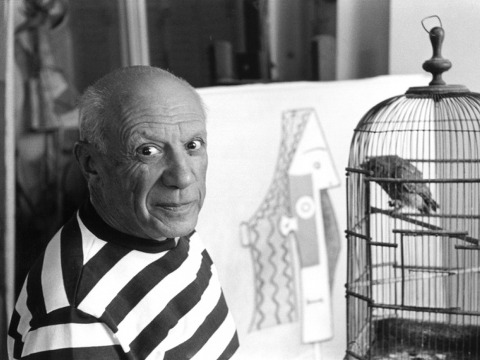
Wisdom for 2015 from Pablo Picasso

I recently solved a “Don’t Quote Me” puzzle from USA Today that surprised me.  I have been to museums and have seen famous paintings by Pablo Picasso.  But I never understood or appreciated his wide array of work.  I taught second grade and often thought my students produced better drawings than what I observed in the modern art wings of museums.  I am, however, a huge fan of well-written thoughts.  I was surprised when I discovered Picasso was the author of this quote: “The meaning of life is to find your gift.  The purpose of life is to give it away.”   The quote appeared to be a biblical truth, from a surprising source.

Curiosity drove me to the Internet to read more about the artist’s life.  Pablo Picasso lived to be ninety-one and produced more works of art than any other artist in history.  He is famous for inventing the style of art known as Cubism and most biographers remarked on his ability to transform his style as time passed.  There is little doubt that Picasso was extremely gifted, even as a child, in his artistic ability.  Picasso’s life, however, is the best illustration of the wisdom he lacked.

Picasso was walking past a group of school age children and said, “When I was as old as these children, I could draw like Raphael, but it took me a lifetime to learn to draw like them.”  Picasso discovered his gift at an early age but, after reading several online biographies, I don’t think he ever recognized the Creator of his giftedness.  Picasso’s life was marked by egocentric rebellion, which included rebellion against God’s word.  Apparently Picasso looked in his mirror and saw his god.  He believed in his ability, his opinions and his own version of truth.  He also believed that sharing himself and his work was his gift to the world.   Sadly, Picasso’s legacy is one that is praised by people, but not God.

I think the Pablo Picasso quote was biblical truth, almost.  He said, “The meaning of life is to find your gift.”  The apostle who shared Pablo’s first name, might have said, “the meaning of life is to find your spiritual gift.”  Paul wrote to the church in Corinth and said, “Now about the gifts of the Spirit, brothers and sisters, I do not want you to be uninformed” (1 Corinthians 12:1).  Every Christian has been gifted by God and every Christian should know and understand the gifts they have been given.  If a Christian is “uninformed” it is likely that person will limit or miss his or her spiritual calling.

Paul wrote, “There are different kinds of gifts, but the same Spirit distributes them.  There are different kinds of service, but the same Lord.  There are different kinds of working, but in all of them and in everyone it is the same God at work.  Now to each one the manifestation of the Spirit is given for the common good” (1 Corinthians 12:4-7).

Your Kingdom purpose is to allow Jesus to use your life, through your spiritual giftedness for the common good.  Jesus still has an earthly ministry – through those whom the Holy Spirit is able to work through.  Your spiritual gift is the way Jesus is most likely going to use your life for his eternal purpose.

Pablo Picasso said, “The meaning of life is to find your gift.  The purpose of life is to give it away.”  The apostle Paul would tell the Christian, “The meaning of life is to find your spiritual gift.  The purpose of your life is to share your gift with others, as the Holy Spirit leads.”  Paul ends the chapter by saying, “Now eagerly desire the greater gifts, and I will show you the most excellent way.”  That statement is the introduction for Chapter 13.  Take a minute and read the familiar passage about the power of God’s love when shared by God’s people.

Do you know your spiritual gift?  Do you know how God is most likely to use your life for his Kingdom purpose?  There is no higher goal for Christians than to be available and usable by God’s Holy Spirit.  The Denison Forum has a tool that can help you discover and understand your spiritual gift.  It is free and it would be our joy to share it with you.

Pablo Picasso lived to be ninety-one and has a lot to show for his life on earth.  However, none of his art is eternally valuable.  The apostle Paul lived a much shorter life and died as a criminal.  Every word he wrote, through the power of the Holy Spirit, is eternal and is being used for the glory of God.  Our choice today is to decide which “Pablo” we most want to emulate.

Paul began his letter by saying, “For the foolishness of God is wiser than man’s wisdom, and the weakness of God is stronger than man’s strength” (1 Corinthians 1:25).   I wonder – what would Picasso’s life have produced if he had lived by that verse?  I think I would have enjoyed seeing those paintings very much.

{jcomments lock}

Thank you, Lord

I want to begin this blog post by wishing all of you a blessed Thanksgiving. 

I hope the day is filled with all your favorite things! 

We have so much to be thankful for in our lives because of the Lord’s great love for us.

Before the “busy” 

For most of us, this blog post will arrive amidst the “busy.” It’s good to pause for the sake of our sanity and the sake of our souls to focus on the reason we should be most grateful

The holidays can change from one year, or one season of life, to the next. The one, unchanging joy in our lives is the Lord. Jesus is the same “yesterday and today and forever” (Hebrews 13:8). The “Janet Denison version” of the verse is: “Jesus is the only thing that stays the same from yesterday, to today, and forever.” 

Change will always be a part of our earthly lives. I can only imagine what heaven will be like, but I do know that every change, or every constant, will be perfect and eternal.  

Thank you, Lord, for your consistent, faithful love that provides our foundation of peace amidst the daily changes of this life. “The Rock, his work is perfect, for all his ways are justice. A God of faithfulness and without iniquity, just and upright is he.”  

We thank you, Lord, for the truth of Deuteronomy 32:4. 

For the busy

Sometimes your table is surrounded by the peace and comfort of family gathered there. Sometimes your table is surrounded by the noise, chaos, and potential controversy that our family or others have created for the day.  

Sometimes Thanksgiving is a “movie moment,” but most of the time it is just real life. A glass gets spilled, a child gets unruly, something gets forgotten and burns in the oven. Your team might lose, your turkey might need extra gravy on the side, and your pumpkin pie might have a burnt crust with a runny middle. A grandchild might hate your green beans and want some ketchup for their turkey. I could go on . . . but you get the picture. 

If your “Norman Rockwell” Thanksgiving gets sidelined in some way, remember these words from Jeremiah 15:16. The prophet said, “Your words were found, and I ate them, and your words became to me a joy and the delight of my heart, for I am called by your name, O Lᴏʀᴅ, God of hosts.” 

Whatever happens around your table, and whatever else you eat, you can be ready to speak a word from God if you have found his word and eaten that first! The joy and delight of the day don’t depend on a perfect meal, a winning score, or a crowd of people who always agree. The joy and delight of your heart will be that you surrendered the day to the Lord, with the goal of pleasing him.  

Thank you, Lord, for calling us by your name. We ask you to be the “Host” of our Thanksgiving tables. 

For the moments after the busy

After the leftovers are stored away, the dishes are put away, and your feet are comfortably “put up” in slippers, take time to hear God say, “Well done, good and faithful servant” (Matthew 25:23). 

Thanksgiving is a success if we have served God by serving others. Thanksgiving is a success if we have shared the love of God with others. Thanksgiving is a success if we have honored God and others. 

For the quiet after the busy, “Give thanks to the Lᴏʀᴅ, for he is good, for his steadfast love endures forever” (Psalm 136:1). Every holiday on earth changes with the times. Every Thanksgiving is different in some ways than the years before. But every thanksgiving should include and honor the unchanging perfection of the Lord.  

We thank you, Lord, because your “steadfast love endures forever.” We are forever grateful and forever blessed.

Happy Thanksgiving.
May your celebration be filled with the joy of the Lord.
May we “give thanks” to, and for, the Rock of our salvation.

Why should we teach our children to pray?

We teach our children the colors of the world and how to count their fingers and toes. We teach them how to say “thank you” when they should be grateful and “I’m sorry” if they have made a mistake. We teach our children how to communicate what they are thinking and feeling. It is important that we teach them how to talk to others. It is crucial that we teach them how to talk with God.

Christian parents often pray with their children, but are we teaching them to pray on their own? I often quote Psalm 131:2 when I am speaking to parents. The verse says, “But I have calmed and quieted myself, I am like a weaned child with its mother; like a weaned child I am content.”

A nursing mother consumes food and her body processes it into milk, which her hungry infant eagerly consumes. But her child cannot grow and succeed unless he is weaned and learns to eat for himself. Content Christians are people who have learned how to spend time with God alone, growing and learning from what they “consume” on their own. Prayer is a good way to begin the “weaning process” and raise children who will be strong, mature Christians someday.

What will your child learn if you teach them to pray?

1. They will learn that God is real, and that he is God. Jesus taught his disciples to pray saying, “Our Father in heaven, hallowed be your name, your kingdom come, your will be done, on earth as it is in heaven” (Matthew 6:9-10). When we teach our children to pray, we teach them to talk to the Creator of the world who is listening in heaven. When we honor God’s name, we honor him as our King. When children pray, they will understand that they have access to the God of the universe and he wants to talk with them about his will for their lives. God wants to be their King.

2. Prayer is the way they will develop a close, personal relationship with God. “Be still, and know that I am God; I will be exalted among the nations, I will be exalted in the earth” (Psalm 46:10). The strongest relationships in our lives are with people we have chosen to spend time with in a quiet, exclusive way. The same is true of our relationship with God. If the only time your child spends with God is also with other people, then God is most likely going to remain an “acquaintance” rather than a close, personal friend. Teach your children to be still and to spend time alone with God.

3. They will learn that God loves them and listens to their prayers. Jesus said, “I will do whatever you ask in my name, so that the Father may be glorified in the Son. You may ask me for anything in my name, and I will do it” (John 14:13-14). It is normal for children to pray for everything they want, and to expect God to do whatever they ask of him. Most parents struggle with helping their child understand that God’s answers to prayer are not always the same as their requests. Jesus said, “If you ask anything in my name, I will do it.”  He said, when you ask for what his holy and perfect character wants to give or do, he will do it.  When children pray they will learn that God loves them too much to give them something that is not perfect. They will also see their prayers answered, just as they asked. God loves to show his children that he loves them and listens to them. When children pray, they will see God answer and know he heard their prayers.

4. Children will learn that God’s answers are unique and important. “Call to me and I will answer you and tell you great and unsearchable things you do not know” (Jeremiah 33:3). Children will often ask parents or friends for advice. One of the most important things a child can learn is that the only perfect advice is God’s. God’s answers are unique wisdom that can only be gained by “calling on him.”  One of the reasons parents need to “wean” their children spiritually, is so that their children will learn to turn to God for the answers that are “hidden” and that cannot be “known” any other way. That is a lesson that will carry them through life (and it can make the high school and college years a little less stressful for parents).

5. Prayer will teach your children that when they make a mistake, there is help and forgiveness available to them, to make it right. “If we confess our sins, he is faithful and just and will forgive us our sins and purify us from all unrighteousness” (1 John 1:9). Prayer will help your children understand God’s will for their lives, and that nobody makes perfect choices. Prayer is the first and best response when your children need discipline.  Prayer teaches them that God knows their failure and has a plan to redeem. When a parent prays with their child and asks God for wisdom to know how to discipline, the child is much more likely to learn from that discipline. Your child will learn that they need to make their mistakes right with God and right with others. Prayer will show your child that there is both consequence and forgiveness for mistakes and teach them that God redeems for his greater purpose (Romans 8:28).

We know that our children must be weaned physically if they are to grow and become successful adults. God calls us, as parents, to wean our children spiritually as well. Prayer is one of the best ways to introduce your toddler to God. A prayer-filled life will teach children to grow from a toddler relationship to a strong walk with God as their King. Our kids deserve the chance to become all that God has called them to be and prayer is key to providing them that opportunity.

“For I know the plans I have for you,” declares the Lord, “plans to prosper you and not to harm you, plans to give you hope and a future.  Then you will call on me and come and pray to me, and I will listen to you” (Jeremiah 29:11-12).


* Originally published on March 17, 2015

What is your Kingdom purpose?

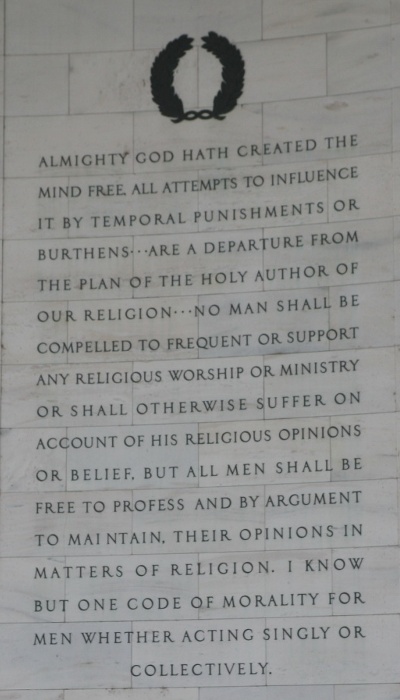
It was really warm in Washington, D.C. this weekend and I was glad to find a cool spot to sit down when we reached the Jefferson Memorial.  Jim and I had been invited to the capitol city by a friend, so that we could attend an important dinner at an ambassador’s home.  It was an interesting evening in a room full of interesting people.  Before we attended the dinner, we spent the afternoon at the National Mall, revisiting the historic sites.  I heard some interesting discussions by the speakers at the dinner, but the words that I came home thinking about were from the Jefferson Memorial.  As I sat on that cool bench, reading one of Thomas Jefferson‘s quotations, I understood my Kingdom purpose.  Do you know yours?

Your Kingdom purpose is the service God has gifted you to perform, that has eternal value.  More specifically, your Kingdom purpose is that thing you do, that you don’t do – but that God does through you.  When last did you see God at work in your life, and the end result was people encountered God in their own lives?  Chances are, the answer to that question is your Kingdom purpose.

Jefferson Memorial, the panel of the northwest interior wall is an excerpt from A Bill for Establishing Religious Freedom, 1777, except for the last sentence, which is taken from a letter of August 28, 1789 to James Madison (Credit: Cliff1066 via Flickr)Here are the words I read on the wall of the Jefferson Memorial, that voiced why I get up and go to work each week:


“Almighty God hath created the mind free. All attempts to influence it by temporal punishments or burthens…are a departure from the plan of the Holy Author of our religion…No man shall be compelled to frequent or support any religious worship or ministry or shall otherwise suffer on account of his religious opinions or belief, but all men shall be free to profess and by argument to maintain, their opinions in matters of religion. I know but one code of morality for men whether acting singly or collectively.”

Almighty God created us with free will – with a mind that is free to believe anything it chooses.  Proverbs 23:7 says, “As a man thinketh in his heart, so is he.”  Jim and I have come to expect this question:  “Now what is it you two are doing now?”  It was easy for people to understand our ministry when it was about pastoring a local church.  I often say that God has called Jim out of the church in order to minister to the Church, the body of believers.  Jefferson’s quote gave me some clarification this weekend.  Our mission field is no longer defined by a building and those that do, or should, attend it.  Our mission field is the American mind.  Our Kingdom purpose is to speak, teach, write and help people to think and act with biblical values.

God hath created the mind free . . . I know but one code of morality for men whether acting singly or collectively.” 

The religion of Thomas Jefferson is the subject of debate.  I’ll leave that to God’s divine judgment.  It is difficult to know if Thomas Jefferson trusted Jesus as his Savior, it is simple to know that he trusted Jesus’ wisdom.  Thomas Jefferson once said, “I am a real Christian – that is to say, a disciple of the doctrines of Jesus Christ.”  Jefferson felt that the morality found in Scripture should be the moral code of any society, especially a society that had been given the freedom to think and act according to their personal values.  You will see biblical values upheld throughout the Constitution of the United States.

The dinner we attended on Friday evening was an interfaith group that is working to bring people of all faiths to a table of common good – a shared sense of morality, even if they don’t share the same faith. Thomas Jefferson would have agreed with the value of having such a room.  He said:

“If the morality of one man produces a just line of conduct in him acting individually, why should not the morality of one hundred men produce a just line of conduct in them acting together?” –Thomas Jefferson to J. Madison, 1789.

I want the citizens of our country to live and think with biblical morality, even if they don’t live with biblical faith.  I believe that way of thinking would promote our best life on earth.  But I won’t ignore my Kingdom purpose because our life on earth is just a small part of our existence.  I want people to know Jesus – so they can have eternal life.  Jesus said, “I am the way, the truth and the life.  No one comes to the Father except through me” (John 14:6).

What is your Kingdom purpose?  Don’t rest until you know the answer.  That answer is the way you will influence others to know Christ and think biblically.  That should be your motivation to go to work this week as well.

{jcomments lock}

{jcomments lock}

Six signs you are a genuine Christian

I ran across an article from Huffington Post that caught my attention. The article was titled “6 Signs You’re A Truly Genuine Person.”  The article listed six ways people live according to their true selves. I was curious to see how I measured up, so I read the article.  By the time I reached the third point I knew I would be writing on the subject from a spiritual perspective. I am always amazed when people “discover” truths that God has revealed since the beginning. God has been teaching people how to be genuine since the book of Genesis.

I think one of the greatest needs in our world today is for Christians to learn how to maintain a genuine walk of faith. Unfortunately, we like lists that teach us if we know these six or seven things, then we will have attained X or Y. We need to remember that knowing and doing have always been hard for people. Adam and Eve knew they weren’t supposed to eat the fruit. The Pharisees knew what God’s word said about the coming Messiah. You and I know what God says about loving others and forgiving others, just to mention two. Has knowledge been enough for you? (I’ll plead the 5th!)

Michael Kernis and Brian Goldman are “authenticity research pioneers.”

They found that the following six signs mean that a person is living according to his or her true self. I added the spiritual emphasis to their teaching points. Let me know if you agree.

1. Genuine people have a good sense of self-esteem. They are not arrogant, nor are they overly worried about their flaws. Good self-esteem is found in the middle. A genuine person knows that all people are capable of many things and that no one is capable of perfection. God’s Word put it this way: “Righteousness is given through faith in Jesus Christ to all who believe. There is no difference between Jew and Gentile, for all have sinned and fall short of the glory of God, and are justified freely by his grace through the redemption that came by Christ Jesus” (Romans 3:22-24). Christians have a genuine quality when they realize that no one person is better than another. On the other hand, those of us who have discovered our redemption in Christ have been abundantly blessed.

2. Genuine people embrace vulnerability. A person with strong self-esteem can admit when they are failing. You can receive criticism without crumbling. Negative and positive feedback affect the way you think about something you have done, not the person you are.  Proverbs 27:17 reads, “As iron sharpens iron, so one person sharpens another.” God will always give us other Christians to hold us accountable and help us. Occasionally, some of them can have sharp edges!

3. Genuine people share their true thoughts, beliefs and opinions with the world. No explanation needed. But God would add this clarification: “Instead, speaking the truth in love, we will grow to become in every respect the mature body of him who is the head, that is, Christ” (Ephesians 4:15). I’ve known a lot of Christians, myself included, that don’t have much trouble sharing our thoughts and opinions – but speaking the truth in love can often be a struggle. Thank goodness genuine people can also embrace vulnerability!

4. Genuine people openly give and receive compliments. Enjoy the success of others. Recognize the greatness that is in others and be an encourager. Hebrews 10:24: “And let us consider how we may spur one another on toward love and good deeds.” Compliment Christians for what you see the Lord doing in their lives. It may “spur them on” to continue their ministries. But, empty compliments are just that. Refer back to #3. Genuine people tell the truth.

5. Genuine people really listen and prefer deep conversations. Empty conversations are similar to empty compliments. I love the book of James, and this is one of my favorite verses: “My dear brothers and sisters, take note of this: Everyone should be quick to listen, slow to speak and slow to become angry” (James 1:19). To that I would add: “One of the best ways to demonstrate God’s love is to listen to people” (Bruce Larsen).

6. Genuine people are driven by an inner voice rather than their surroundings. I think I could have written an entire blog on this one point. The Huffington Post article said, “When you have thought through what you think, what you feel, what’s important to you and why it’s important to you, that determines a certain sense of purpose and directive.” Jesus said, “My sheep listen to my voice; I know them, and they follow me” (John 10:27). When I wrote my book, Content to be Good, Called to be Godly, I titled the second chapter, “Do You Recognize the Voice of God?” I often tell people that the rest of the book really doesn’t matter unless they understand and embrace chapter two. Who is the author of your inner voice? I hope it is the Holy Spirit of God. Paul told the church in Corinth: “For who has known the mind of the Lord that he may instruct him? But we have the mind of Christ” (1 Corinthians 2:16).

D.L. Moody said, “More depends on my walk than my talk.” I hope all of us will walk in such a way that the world can believe the message of salvation. Genuine people have genuine faith in the genuine God. Whether you turn to the right or to the left, your ears will hear a voice behind you saying, “This is the way; walk in it” (Isaiah 30:21). Genuine Christians listen to that inner voice and then walk in it. Enjoy your journey!

This blog was originally published on August 12, 2014.

The ancient roads aren’t paved at all

We’ve been in ministry for a long time now, and our most important lessons have been learned by living our faith journey with biblical truth. Don’t let anyone convince you that the faithful life is always  easy and filled with joy. It never has been, and it never will be. It is rewarding, blessed, fulfilling, and often an uphill effort. 

Walking God’s ancient road to heaven isn’t the easiest way to live our lives, but it is the road that takes us where we want to go.  

The “road to hell is paved”

The familiar words say, “The road to hell is paved with good intentions.” I find it interesting that we are supposed to think the road to hell is paved. The familiar saying isn’t a biblical concept, but the fact the road is paved actually is. 

Proverbs 14:12 is ancient wisdom. The proverb says, “There is a way that seems right to a man, but its end is the way to death.” Scripture spoke of the “ancient road” as the more difficult path to follow, but it was also the path that led people to heaven. The easy path is the road that seems right but isn’t. Taking the easy way, or the popular way, is often taking the wrong road. The prophets were called to preach the truth people needed to know, even when it wasn’t what they wanted to hear. 

It would seem like every generation of humanity has wanted this life to be easier than it turns out to be. I’ve always squirmed a bit at Jesus’ words when he said, “Enter by the narrow gate. For the gate is wide and the way is easy that leads to destruction, and those who enter by it are many. For the gate is narrow and the way is hard that leads to life, and those who find it are few” (Matthew 7:13–14). 

Jesus’ words to his disciples were really clear and clearly sobering. Living a holy life in this unholy world will not be an easy or widely popular road. Jesus said the way is hard and few find it. 

If the road to hell is paved, it is a much easier road to walk. It “seems right to man” and it has a lot more people to walk alongside. The road to heaven is often a difficult journey, a narrow road that requires constant direction to navigate. The only way to walk that path is to be willing and determined to do whatever it takes to reach the end. 

Ancient paths require ancient truth

The prophet Jeremiah is sometimes called “the weeping prophet.” He preached to the people of Judah when Josiah was king of Judah. Jeremiah’s dad had been a priest so he grew up knowing the ancient truths about God and the nation of Israel. As the nation turned more and more to the worship of Baal, God made his truth very clear. 

God told Jeremiah to tell his people what to expect if they wanted to make the journey to his eternal Presence and blessing. Jeremiah 6:16 says, “Thus says the Lᴏʀᴅ: ‘Stand by the roads and look, and ask for the ancient paths, where the good way is; and walk in it, and find rest for your souls.’ But they said, ‘We will not walk in it.’” 

Sometimes the journey to heaven is filled with paths that can appear too difficult to walk and may seem unfairly narrow. Jeremiah and King David questioned God, saying, “Why do the evil prosper?” It is tempting to live this life on the roads that are most popular and easier to enjoy. We have to consider the destination more important than the journey. 

God told Jeremiah to ask for the ancient paths. Why? 

The answer to that question might be the most important part of this blog post and a change point in your spiritual journey.  

Our culture is full of “fresh ideas” and “new thinking.” Many of our churches are leaning that way as well. All is good if the fresh ideas and new thinking are still based on ancient truth. Scripture teaches us that Jesus was with God in the beginning (John 1:1) and that Jesus is the same yesterday, today, and forever (Hebrews 13:8).  

If someone believes today what Christians have never believed before, their theology is not going to carry them down the ancient paths that lead to heaven. On the other hand, there is a new movement beginning among some Christians in college today who are looking for ancient, proven truth. They are a generation that recognizes the abundance of confusion and discord in popular thinking and have learned to appreciate what has always been considered true.  

Ancient paths require ancient, eternal truth. The ancient paths are “the good way,” and it is on those paths we can find “rest” for our “souls.” 

The question for each individual to consider is: Will I walk in it? 

Have we forgotten the ancient truth?

Jeremiah 18:15 reveals God’s heart for his people: “But my people have forgotten me; they make offerings to false gods; they made them stumble in their ways, in the ancient roads, and to walk into side roads, not the highway.” 

There is a higher way to live our lives and it depends on the ancient, eternal truth of God’s word. God’s definition of truth doesn’t change, but people’s interpretations of his truth have always drifted, then returned, only to drift again—throughout centuries of biblical history. 

Every generation in Christian history gets some things right and other things wrong. We are a fallen people who need their Lord to direct their daily walk. Jesus offers to guide us along the ancient path but the question remains, “Will we choose to walk it?”

Tough journeys require a great God

None of us wish for the difficult parts of this road, but it is the road that takes us to the place we need to be. We learn to trust doctors to save our lives.  Some of you have experienced the pain of difficult treatments that while painful at the time, have led to your healing.

Shouldn’t we all consider that crucial thinking for our spiritual lives as well? 

As Christians, each of us has our own journey and that will be a difficult road at times. We should want to walk the ancient paths of God’s eternal truth because that road leads us to heaven. It isn’t the easier, paved road of popular thinking; it is the proven path of ancient truth. It’s the road to “Well done, my good and faithful servant.” 

I hope all of us will choose to say, “Yes, Lord. I am willing.” 

That narrow gate is an uphill effort at times but worth every step that draws us closer to our eternity with God.