How should we pray for Israel and ourselves?

It’s been a busy week, filled with breaking news. Tensions are high, but so is the praise for those who planned and executed the attack on the nuclear facilities in Iran. Most of the world is grateful that Iran’s capabilities were minimized, but the future remains uncertain. We have many reasons to be in prayer during these tense days.

Israel has always known it needed the help only God could provide from his heavenly throne. Because of its key location, others have always coveted the land. Much of today’s news highlights the brilliance of the Israeli people and their military leaders. I’ve repeatedly said that David’s “genetics” can be seen in many of their war strategies. 

King David led many battles during his lifetime and was known for his keen ability to strategize. Why was David such a successful and powerful leader? The answer to that question can help us navigate our questions these days. We should consider praying like the Israelites were taught to pray for King David when we pray for Israel. Psalm 20 has some well-known verses that I find myself praying for Israel today, and those verses are essential for our own country as well.

The timeless wisdom of Psalm 20

Psalm 20 was written by David and used by his people as they prayed for him in times of battle. The psalm begins with the prayer, “May the Lord answer you in the day of trouble! May the name of the God of Jacob protect you! May he send you help from the sanctuary and give you support from Zion!” (Psalm 20:1–2). 

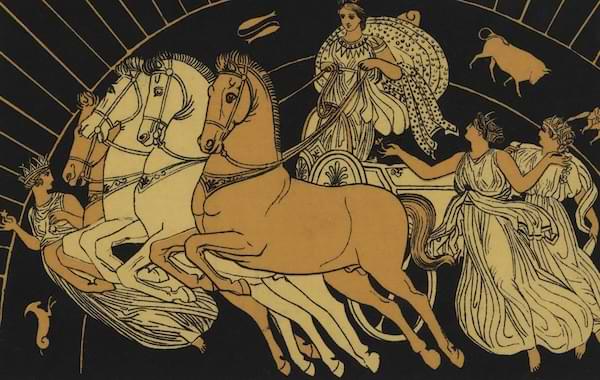
Psalm 20 also says, “Now I know that the Lord saves his anointed; he will answer him from his holy heaven with the saving might of his right hand. Some trust in chariots and some in horses, but we trust in the name of the Lord our God” (Psalm 20:6–7). 

A lot of news has explained the munitions of the countries involved, and many of the war plans are made with great consideration to those bombs, planes, etc., in mind. You might say that those munitions are the “chariots and horses” of our day. 

Most of us still trust in chariots and horses, but David’s psalm would encourage us to trust instead in “the name of the Lord our God.” God’s name is God’s holy, perfect character. When we trust in God, we trust him for his perfect help.

I’m grateful to live in a nation with powerful weapons that our enemies should respect and fear. I’m grateful that we can help discourage or prevent the world from engaging in nuclear war. I appreciate our “chariots and horses,” but choosing to carefully trust only in God is an effort. What are God’s plans for the world and all the people who are living in danger today?

Living in a Tom Clancy novel

Jim and I re-watched The Sum of All Fear, the movie based on Tom Clancy’s novel. When the movie was over, I was surprised at how relevant it felt. I didn’t feel like I was watching a work of fiction as much as I felt like I was viewing actual possibilities. I often feel the same way when I read a Joel Rosenberg novel. The images on the screen and the words of the novels depict nuclear explosions that bring harm to this country and others.

Recognizing that these possibilities are real isn’t comforting. However, living in fear of those possibilities would be wrong. God’s word clearly commands, “Do not fear.” It’s helpful when we can gain some comfort in our government’s ability to keep us safe. They have amassed many “chariots and horses.” But even advanced intelligence-gathering techniques cannot equal the amazing abilities of our Creator, God. 

God perfectly understands every moment of history, and the same “right hand” that created this world continues to accomplish his perfect will for it.

Everything on earth has a beginning and an end

God has made it clear that this world is not his permanent plan. He told the prophet Isaiah, “For behold, I will create new heavens and a new earth. The former things will not be remembered, nor will they come to mind” (Isaiah 65:17). Jesus told John in the Revelation, “Then I saw a new heaven and a new earth, for the first heaven and the first earth had passed away, and the sea was no more” (Revelation 21:1).

Those important passages can give us an eternal perspective on everything we see on our screens. It is amazing to realize that when we get to heaven, the “former things will not be remembered.” God told Isaiah that they wouldn’t even “come to mind.” When we think of heaven, we think of it with earthly images and ideas. When the Bible describes heaven, the words used are limited to our earthly vocabulary and ability to comprehend. Heaven is so much more than we can understand today.

Everything on earth has a beginning and an end. Every world power, city, person, and tradition or practice will one day end. Some things will last longer than others, but nothing on earth was made to last forever.

How do we pray for Israel today?

We need to pray that Israel will turn to Almighty God for every answer they need. We also need to pray that Israel will seek a right relationship with God through their Messiah, God’s Son. We need to pray for those brilliant people to recognize their overwhelming need for God’s blessings through Jesus.

Psalm 20 is speaking about David’s enemies when it says, “They collapse and fall, but we rise and stand upright. O Lord, save the king! May he answer us when we call” (Psalm 20:8–9). Jesus taught us to pray to God, saying, “Your kingdom come, your will be done, on earth as it is in heaven” (Matthew 6:10). Jesus didn’t simply teach us to ask that of God. He taught us to pray those words so we would want Jesus, our Messiah, to be our King. All people involved in this war today need to choose that relationship so they can be Spirit-led in their prayers and ideas. We can and should pray that God will save our kings. The more necessary prayer, however, is to pray that the people of our world will make Christ their King and want his will and purpose for these days.

This world will not last forever, but those who choose Jesus as their Lord will. God so loved this world that he gave us Jesus, and anyone who believes in him as Lord and Savior will be saved. The single greatest need anyone has is their salvation. 

Who needs you to pray those prayers for them today? May God bless our prayers in miraculous ways for our nations and the sake of his perfect name.

How might we help or hinder someone from knowing the King?

Jesus taught his disciples to “Let the little children come to me and do not hinder them, for to such belongs the kingdom of heaven” (Matthew 19:14). Do we allow all of God’s children to come to him with childlike faith, or do we hinder some who might approach God differently than we do?

I enjoyed teaching the children at our church’s VBS last week. I’ve been mainly teaching adults for many years, and it was good to experience the faith of children again. Sometimes when I think I already know a Bible story, I can miss the new thing God wants to teach me. God taught me a lot last week as I studied to teach those kids.

When I began the week, I had no idea how it would end. Bombs have flown. People have shouted in protest. Those demonstrations were called, “NO KINGS.”

The saved can be a “beloved disciple”

I taught John 1:1–3 to introduce Jesus the way his “beloved disciple” did in his gospel. From there I moved to the story of the little children being allowed to come to Jesus.

John 1:1–3 has always been my favorite description of Jesus in the Bible. I started out by asking the kids who they thought was Jesus’ best friend. Each class I taught said, “PETER” with great confidence. I told them I understood why they would think that, but it was actually John who was Jesus’ best friend among the disciples. I told them how John was the beloved disciple and the only disciple at the cross. I reminded them of what Jesus told John that day: He asked John to care for his mom, Mary. 

I then explained that John 1:1–3 describes Jesus through the eyes of the friend who knew him best. From there, I taught them that “the Word” refers to the holy name of Jesus, who was with God in the beginning, and that the Word was God. 

From there, I told the story about the time the disciples tried to chase away the children from interrupting Jesus one day, and he got frustrated with them. Jesus told them, “Let the little children come to me and do not hinder them, for to such belongs the kingdom of heaven” (Matthew 19:14).

The kids left the room that day knowing they had been invited to come to Jesus, who was actually God in every way. I told them that if Jesus walked in the room today, he would want to put his arms around them and bless them, just like he had blessed the children that day in the story. I told them that the kingdom of heaven belonged to them if they would just ask Jesus to be their King.

I watched their faces as they considered receiving that hug and that blessing from Jesus himself. It was sweet to see them realize that they were important to Jesus, too. I hope I taught them how to make Jesus their King.

Do we fully understand who Jesus is?

The next day I taught the story of Jesus sleeping in the stern of the boat while the storm raged on the Sea of Galilee. I helped the kids understand that the fear that day was real. Peter, James, John, and Andrew were all fishermen by trade and were highly experienced with boats on that sea. Even those four strong men were terrified and thought they were about to die.

Jesus stood up that night and “rebuked the wind and the sea,” and there was a “great calm.” I love this story and even wrote a book inspired by that verse (Matthew 8:26). I titled my book A Great Calm because it is the peace that results only from the work of Christ in our lives. You would think that after writing a book on the subject, I would have learned everything I needed to from this story. But I heard myself telling the kids that there was a part of this passage I would never fully understand.

After Jesus rebuked the wind and the sea, and a great calm fell upon them, “He said to them, “Why are you so afraid? Have you still no faith?” (Mark 4:40). Honestly, those questions seem really unfair. But Jesus spoke them, so I know they must be perfect.

Jesus had asked his disciples to get in the boat because he wanted to go to the other side of the Sea of Galilee. That is about an eight-mile journey and the end of the day. Scripture says that when they began, other boats were with them, but it doesn’t say those boats were with them when the storm became so fierce. Apparently, when the clouds started to appear and the winds picked up, the other fishermen knew to turn back and get to land as quickly as possible. Jesus had said he wanted to go to the other side, and while he slept, his disciples obeyed his request. Peter, James, John, and Andrew would have known that a nighttime voyage wasn’t practical, but they did it anyway. Peter, James, John, and Andrew knew they were in great danger and would probably die once the waves began filling the boat faster than they could bail it out. Why would Jesus question their fear? Why would Jesus question their faith? If it were anyone other than Jesus, we would say his words were unwarranted, unfair, uncalled for! Why then did Jesus speak them?

The disciples might have felt hurt by Jesus’ words, but then again, they had just witnessed him calm that storm! After I said this to the children, one of them asked, “Why didn’t Jesus wake up and help them sooner?” Now…there’s a great question!

What did the disciples need to learn that day from the storm?

When Jesus calmed the Sea of Galilee, the men “were filled with great fear and said to one another, ‘Who then is this, that even the wind and the sea obey him?’” (Mark 4:41). Was this the day John began to realize that Jesus was “the Word” and that “the Word,” Jesus, was God? 

I taught the kids that Jesus was and is God, that Jesus was and is perfect, and that Jesus was and is God’s greatest gift to us. I told them that Jesus was the King of kings, and Lord of lords. I wanted the “little children to come to Jesus” because I knew that to “such as them” belongs the kingdom of God. It was easy to pray for those faces and teach them that day. 

But by the end of that week, I realized I was praying differently for the faces I saw on the news. On Friday,, my oldest son, Ryan wrote The Daily Article for Denison Forum. He reminded his mom to pray for everyone I was watching!

Do we hinder anyone from coming to know Jesus?

As the people protested in the streets, I prayed that God would bring his “great calm” to their storm. How ironic that their protests are called, “NO KING!” How interesting that Israel called their mission of war, “The Rising Lion.” So many in this world need to understand Jesus is the only King, and that Jesus came to earth as the Lamb of God. 

We have a high and holy calling regardless of our politics and opinions. We are to allow and help every person come to Jesus as their King. Right now there are wars and rumors of wars. It seems the calm is short-lived these days. It’s time to seriously consider our personal witness for Christ. Christians are called to live carefully, and to pray and witness like we have been taught in Scripture. Our words and our actions can either help or hinder.

Spiritually, there are so many “little children” in the world today. Truthfully, many people are acting and thinking like little children these days. Everyone deserves to know that Jesus is God and can calm every storm in their lives. “To such as them belongs the kingdom of God.” Let’s help and not hinder the little children from coming to Jesus. You, his beloved disciple, can help people know that Jesus was, is, and will always be, King of kings and Lord of lords.

Will you, his beloved disciple, help or hinder the people you see today to come to Jesus as their King?

The seven churches – Laodicea

The seventh and final church Jesus addresses in the Revelation is the church in Laodicea. Laodicea was located near Colossae and Hierapolis in the fertile Lycus valley. A major Roman road ran from Ephesus straight through Laodicea, making it an important center for trade, commerce, and banking. The city was known for its much sought-after black wool and eye ointment for healing. It was also known for its great wealth, its large market, a medical school, and, additionally, for its inferior water supply. 

Despite its abundant wealth and possessions, Laodicea had terrible water. The city received its water from an aqueduct about six miles long. The water came from a hot spring in the south or a natural spring of cool water. Regardless of the source, once the water traveled six miles, it arrived in Laodicea lukewarm and of poor quality.

Jesus compared the Christian church in Laodicea to their water, saying the spirit of the people there was “lukewarm” as well.

What do the words of Jesus, the “Amen, the faithful and true witness,” teach Christians today?

Why is lukewarm faith undesirable to God?

Jesus was our example of a faithful, true witness for God. He was and is God himself and has been with God from “the beginning of God’s creation” (Revelation 3:14). Those in Laodicea and today can know that his words are accurate and of God. Jesus told the church, “I know your works: you are neither hot nor cold, I will spit you out of my mouth” (Revelation 3:15).

God wants us to be passionate about what we believe and to serve him with that passion. Living with an expressionless faith means living a life that doesn’t serve God or his kingdom purpose. Apathy does not lead others to know God or become his children.

I’ve often said it’s easier to lead a person to faith if they are antagonistic rather than apathetic toward the gospel message. It’s challenging to have a meaningful conversation with a person who politely listens but doesn’t really care one way or the other. I’d rather argue with someone than have them pretend to agree when they don’t. A genuine faith relationship with God has passion. 

Jesus told them, “I know your works.” Do our actions point clearly to our faith, or do people wonder what we genuinely believe? Do we believe the Bible to be God’s perfect truth, or do we consider some parts of it as possible suggestions for our choices? Does God find our works undesirable?

Our definitions for success compared to God’s

The people in Laodicea didn’t have great drinking water, but they were comfortable in almost every other way. They had better food, clothing, housing, and medical care. The residents felt prosperous, not needing anything. But Jesus told them they didn’t realize that in God’s eyes, they were “wretched, pitiable, poor, blind, and naked” (Revelation 3:17).

God always sees our “works” with an eternal perspective. It’s normal to measure our lives using earthly standards. If we have worked hard, saved, and tried to spend well, we probably have been able to afford medical care, a home, a car, and many other things we acquire to enjoy our lives.

Jesus would want us to ask ourselves, “What have I done that has produced eternal benefits?”

Do our works last for a finite time on this earth, or can God reward them as treasure in heaven? Have we received all our praise from people around us, or will we receive praise from God on our day of judgment? The praise we should strive to seek is “well done, my good and faithful servant” (Matthew 25:21). 

Jesus told the church in Laodicea, “I counsel you to buy from me gold refined by fire, so that you may be rich, and white garments so that you may clothe yourself and the shame of your nakedness may not be seen, and salve to anoint your eyes, so that you may see” (Revelation 3:18). Jesus was likely referring to the banking industry from which the people accumulated their unrefined “gold.” He spoke to the popular “black wool” they enjoyed wearing, telling them they needed his garments of white to clothe themselves in forever. And they needed his “salve” for their eyes so they could truly see what matters. 

Then Jesus told them that God would never be “apathetic” in his relationship to them.

God’s discipline is our great help

Jesus said, “Those whom I love, I reprove and discipline, so be zealous and repent” (Revelation 3:19).

Apathy and earthly wealth had caused even the Christians in Laodicea to become “lukewarm” and passionless in their faith. That can be, and usually is, still true for Christians today. God doesn’t want to spew us from his mouth, so he will continuously do whatever is necessary to bring us back into a right relationship, a relationship of passionate faith with himself.

Jesus said he will “stand at the door and knock.” In the original language, he said, “I will knock and keep knocking.” When we repent, we stop doing life by our own standards and begin to live by the biblical standards of our faith. God doesn’t give up on us until we are living a life that he is able to bless. When our works produce eternal rewards, we will have allowed our discipline to bring about the necessary changes we need for his blessed approval.

Why should we live with passionate faith and for eternal reward?

Jesus said, “If anyone hears my voice and opens the door, I will come in to him and eat with him, and he with me. The one who conquers, I will grant him to sit with me on my throne, as I also conquered and sat down with my Father on his throne” (Revelation 3:20–21).

Jesus told the church that the greatest blessings now and eternally will come from the works produced by our passionate, genuine, obedient faith. Genuine repentance brings us back into the presence of Christ now and eternally.

“He who has an ear, let him hear what the Spirit says to the churches” (Revelation 3:22).

When you have time, reread the direct, eternal teaching of Jesus’ words to the seven churches in Revelation, chapters 2 and 3. Revelation is the only book in the Bible that promises a blessing to the person who reads and obeys its words. “Blessed is the one who reads aloud the words of this prophecy, and blessed are those who hear, and who keep what is written in it, for the time is near” (Revelation 1:3).

Which of the seven churches most spoke to your personal needs? Which did you find most convicting? Jesus wants us to know his words to the churches because they clearly define the strengths and weaknesses that can impact our faith journeys.

Jesus knows our works, too. Even now, he stands at the door to our lives and keeps knocking until we allow him to enter, sit with us, and live in his Presence. We are blessed beyond measure to have these words from the book of Revelation. 

To those who have an ear, hear what the Spirit has said to each of these seven churches. May we all adjust our lives to his perfect, eternal teaching.

The seven churches – Philadelphia

The ancient city of Philadelphia was about thirty miles southeast of ancient Sardis and located along a critical Roman highway. Philadelphia was established on a plateau in a river valley and became a fertile agricultural region. The area was known for producing many of the grapes used for making wines and other important agricultural crops. Unfortunately, this beautiful area was also known for its frequent earthquakes. A devastating earthquake in 17 AD destroyed most of the city. The emperor Tiberius assisted in the rebuilding efforts, and in gratitude, it was renamed Neocaesarea in his honor. The city’s leaders dedicated a temple in his name to commemorate his support further. 

We cannot be sure who first established the Christian church in Philadelphia, but we know the church there had a long history of faithfully serving the Lord. Eventually, the entire country fell to Muslim control, yet the city of Philadelphia was able to maintain a Christian population until 1392. Interestingly, many Christians are allowed to live in that region today.

The open door that Jesus would provide

Jesus told John to tell Philadelphia that the words to them were “the words of the holy one, the true one, who has the key of David, who opens and no one will shut, who shuts and no one opens” (Revelation 3:7). Jesus wanted the church to understand that his message to them was borne of his holy character as their Messiah.

Jesus then praised them saying, “I know your works. Behold, I have set before you an open door, which no one is able to shut. I know that you have but little power, and yet you have kept my word and have not denied my name” (Revelation 3:8). Jesus had admonished the church in Sardis for straying from the whole truth, but those in Philadelphia had remained true to the words of Christ and the gospel message. Even though others did not consider them powerful, Jesus would establish “an open door” in Philadelphia, which no one could shut. In other words, Philadelphia would always be a place for people to come and find the truth about how to enter heaven, a truth that would be eternal.

My husband was touring the ancient ruins of Philadelphia several years ago when a government official, a Muslim, handed him a copy of the letter from the Revelation to the church of Philadelphia. This government worker had been provided copies by a Christian organization that asked him to pass them out to those visiting. Philadelphia was still an “open door” more than two millennia later!

The “hour of trial” that will come to the unbelievers

Jesus praised the Christians in Philadelphia for keeping the faith, but then gave a clear warning to those persecuting them. Jesus said, “Behold, I will make those of the synagogue of Satan who say that they are Jews and are not, but lie—behold, I will make them come and bow down before your feet, and they will learn that I have loved you. Because you have kept my word about patient endurance, I will keep you from the hour of trial that is coming on the whole world, to try those who dwell on the earth” (Revelation 3:9–10).

There was a synagogue in Philadelphia, and apparently, the Jewish people in the city had said and done evil things to the Christians in God’s name. Jesus referred to them as a “synagogue of Satan” because their actions were not of God but prompted by Satan. Jesus assured those in Philadelphia that these Jewish believers would one day bow before them and learn that Jesus loved his followers because they had “kept” his word and patiently endured.

Theologians interpret Jesus’ following words (v. 10)  differently because we can’t be sure what the “hour of trial” means. We know that the day will come to the whole world and will be a day of judgment. Jesus said that those in the church would be spared the judgment that would come upon the unbelievers. This may be the judgment that occurs at the final coming of Christ, but could also point to the judgment that occurs for everyone upon entering heaven. We know this: Jesus promised that those who believe and faithfully endure on earth will be spared on that day because they are beloved.

Jesus said, “I am coming soon.”

The letter of Revelation was given to John toward the end of the first century. Many of the early Christians had passed away and had even been killed because of their faith in Jesus. So, why did Jesus say, “I am coming soon,” and we are still waiting two thousand years later?

That question will be asked until Jesus returns for the final time. According to historical records, Christians lived in Philadelphia as late as 1392. How many of them took their last breath on earth only to open their eyes and see Jesus coming to take them to heaven! 

The older we get, the faster the years seem to speed by. That fact is worrisome to many, but Christians can be encouraged. Jesus gave us this advice about waiting. He said, “I am coming soon. Hold fast what you have, so that no one may seize your crown” (Revelation 3:11). Could it be that “holding fast” in times of suffering will provide us our greatest rewards in heaven? One day, our faithfulness in our most challenging difficulties could be the blessings of our eternal crowns.

To the one who conquers . . .

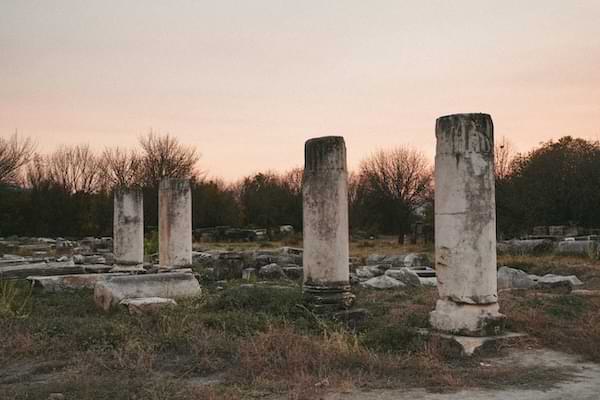
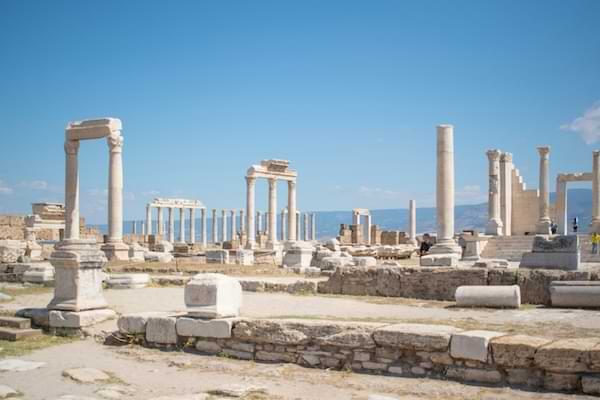
If you were to visit the ancient ruins of Philadelphia today, you would see very little. Most of the ancient ruins are buried underneath the current, modern city of Alasehir in Turkey. The frequent earthquakes either ruined or buried much of the ancient city. Interestingly, several of the pillars the city was famous for remain standing. These pillars were constructed by carving and stacking one piece upon the next. When the ground shook, the pillars moved with the earth and either remained standing or were able to be rebuilt by stacking the original pieces. 

Jesus told the believers in Philadelphia, “The one who conquers, I will make him a pillar in the temple of my God. Never shall he go out of it, and I will write on him the name of my God, and the name of the city of my God, the new Jerusalem, which comes down from my God out of heaven, and my own new name.  He who has an ear, let him hear what the Spirit says to the churches” (Revelation 3:12–13).

The early Christians of Philadelphia were promised an “Open Door” that, against all odds, remains open today. AI reports, “While modern-day Alaşehir is primarily a Muslim city, there are still some Christian communities, including both Orthodox and Roman Catholic, and a growing number of evangelical Protestants. The city is also a titular see of the Roman Catholic Church, which indicates its historical significance as a Christian center. Additionally, the ruins of the ancient city, including the Church of St. John, are still preserved and visited by Christian pilgrims.”

The “open door” that Jesus promised remains open today in the Muslim country of Turkey! Many will one day enter heaven because Jesus wrote God’s name and character on them, and now they belong in the “new Jerusalem,” which comes down from God out of heaven. Christians carry the name of Christ now and eternally. 

Jesus will come soon. It may turn out to be the final day on earth or our final day on earth. Either way, Jesus will come for us. When he does, we will face the judgment day without fear because we are saved. For now, we are called to remain steadfast in our faith and look forward with hope to the reward we will receive for our “patient endurance” during this lifetime. 

Until that day, may our lives lead people to that “Open Door” that Philadelphia was promised. How many people will be in heaven forever because they knew you on earth? Our calling is to obey his word and keep his name. That is how we lead people to that “Open Door,” the gospel message, that no one can ever shut!

The seven churches: Sardis

When you were ready to choose a church to join, how did you decide which churches to visit? Did your choice follow an internet search, a friend’s advice, or maybe the congregation’s history of success? Jesus’ words to the church of Sardis speak to the importance of having a genuine, active faith and witness to the world, rather than simply relying on an appearance or a past reputation of faith.

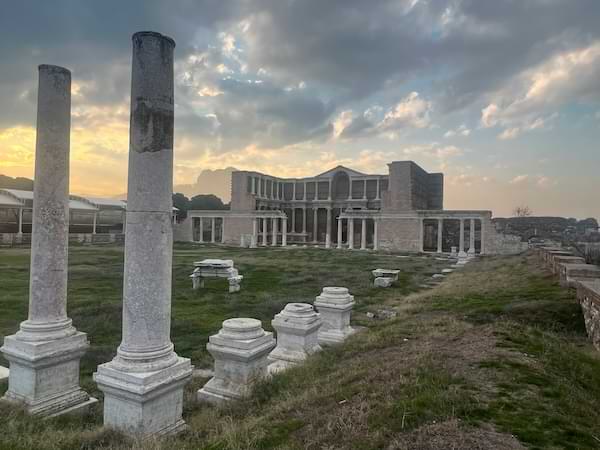
Sardis was about thirty miles south of Thyatira and an important city for commerce and strategic military defense. A road ran through it, and because of its topography, it was used as a refuge when the people were threatened. Historically, the city had only been taken captive twice because natural, almost vertical rock walls surrounded it on three sides. The region was wealthy because of its commerce and trade, especially wool and other fabrics.

Sardis boasted an acropolis dedicated to Artemis and a large necropolis, or burial ground, just a few miles from town. Sardis was a strong city for the first two hundred years of Christian history, but was likely showing signs of decline when John received the Revelation.

Jesus identifies himself to the church in Sardis as the one “who has the seven spirits of God and the seven stars” (Revelation 3:1a). Jesus wants the church to know two essential truths: 

  • He controls the seven spirits of God. 
  • His Spirit bestows the blessings, guidance, and judgment upon all the churches.

What did Jesus know about Sardis and want them to do?

Jesus said, “I know your works. You have a reputation of being alive, but you are dead” (Revelation 3:1b). The city of Sardis was practically immune to attack from foreign enemies and comfortable economically. The city’s citizens were thought to be easily successful and generally unafraid. The city had an excellent reputation because of its history, but a closer look revealed the people had grown weak and apathetic because of the ease of their lives.

Apparently, the city’s apathy had also influenced the Christian church. Jesus told that church, “Wake up, and strengthen what remains and is about to die, for I have not found your works complete in the sight of my God” (Revelation 3:2). 

Jesus knew apathy was a greater weakness than people realized. Jesus knew their works, whether they were of God or not. The church’s reputation was good with others, but not with God. 

Why is apathy unacceptable to God?

God’s standards for our lives are much higher than we tend to recognize. So often, we measure the success of our spiritual lives by the standards of those around us. We tend to compare our church programs with those of a sister church in the same city. Reputations are often gained by using earthly standards rather than God’s. Jesus taught Sardis that their works might be good in the eyes of others, but God disapproved of them.

Jesus said, “I have not found your works complete in the sight of my God.” God’s biblical standards are the only standards we can use to measure spiritual success. Our works might earn us a good reputation with others, but if we haven’t been obedient to God’s Spirit-led guidance, our works are “incomplete” in his eyes. Our good ideas can earn us a good reputation, but following God’s plan is the only option for those who want to please him.

What is God’s solution for apathy?

Jesus clearly taught the church in Sardis what they needed to do:

  • “Wake up” and “strengthen what remains and is about to die.
  • “Remember” the teaching they had received and heard.
  • “Obey” and “repent” so they could return to God’s favor and blessing.

Jesus told the church, “If you will not wake up, I will come like a thief, and you will not know at what hour I will come against you.” Jesus wanted them to know that God would judge their lack of genuine, Spirit-led faith if they did not change. They needed to stop accepting what was unacceptable to God. Their reputation was good with others, but it was God’s expectations they were required to fulfill.

What is God’s reward for those who remain strong?

It seems most in the church had relaxed God’s standards for their faith, but not all. Jesus pointed out that the church still had a few people who had not “soiled their garments” and walked obediently with Jesus in a pure way, wearing “white.” Jesus commended these, saying, “They are worthy.” (Revelation 3:4)

No church is filled with saints or hypocrites. Every church has both, and there is grace for the humanity we all wrestle to overcome. We can’t completely avoid sin, but Jesus told us that through his grace and power, we can conquer that sin.

Peter preached the gospel message to the Jewish people who had gathered in the temple portico. They had just witnessed the healing of the lame man at the temple gate called Beautiful. Peter called on them to: “Repent therefore, and turn back, that your sins may be blotted out” (Acts 3:19).

Those who accept Jesus can know their salvation is assured. But our faith can become apathetic over time. Just as Jesus told the church in Ephesus to return to their first love, he also told the church in Sardis that their garments had become soiled. Christians must notice when we have lost our ability to walk with Jesus “in white.” Everyone, including apathetic Christians, needs to repent of the sins we can easily accumulate. Those sins might not impact our reputation with others, but they certainly change our walk with Jesus.

What did Jesus promise those who conquer their apathy?

Jesus said, “The one who conquers will be clothed thus in white garments, and I will never blot his name out of the book of life. I will confess his name before my Father and before his angels” (Revelation 3:5).

The solution to spiritual apathy is to step into a vital faith relationship with Christ as our King. Those who are saved will be clothed in “white” and found “worthy.” A Christian’s name will never be removed from the book of life. And Jesus will stand with us before his Father and before his angels and confess our “name,” our character in Christ, to them.

We can lose the vitality of our daily walk with God. Thankfully, through repentance, we can gain it back. We can never lose our salvation, but we can lose some of the heavenly reward Jesus taught us to “store up” in heaven through our genuine, Spirit-led works here on earth.

Imagine hearing Jesus speak your name to God and the host of angels in heaven saying, “This name is written in the book of life.” Then hear Jesus share with God all you accomplished in obedience to his Spirit. Don’t we all long to hear our Abba say, “Well done, my good and faithful servant.

What do we need an ear to hear?

The Holy Spirit speaks these lessons to the seven churches in Revelation. Every church and every Christian has been given God’s Holy Spirit and his holy standards. We are called to evaluate our lives by those standards

What happened in Sardis still happens today. We judge people, churches, and even ourselves by a “reputation” when we need to use God’s biblical standards instead. We might appear better than some, but the only reputation that matters is where we stand in God’s eyes.

Let’s ask God to show us any areas of apathy in our spiritual lives. Then, let’s repent of our sins, praying for God’s forgiveness. After that prayer, we can put on those clean white clothes and walk closely with Jesus once again.

The seven churches: Pergamum

Why was compromise a wrong choice for the Christians in Pergamum?

Pergamum was about sixty-five miles north of Smyrna but was not a coastal city in Asia Minor. It was located inland, in a highly fertile area. Some considered Pergamum the capital of Roman Asia because of its beauty and wealth. King Eumenes of Pergamum hoped to one day build a library that would exceed Alexandria’s. To hinder that plan, the export of papyrus to the region was cut off to Pergamum. That embargo led King Eumenes to develop parchment, a writing material made from animal skins.

Pergamum was home to famous sculptures, temples to many Roman gods, and at least three temples for emperor worship. Finally, it was unique in that it was the only city that Rome allowed to use capital punishment. Even the Jewish historian Josephus wrote about Pergamum, which had a Jewish community living there.

What was it like for the Christians of Pergamum?

When Jesus gave his message to John about Pergamum, he said, “To the angel of the church in Pergamum write: ‘The words of him who has the sharp two-edged sword. I know where you dwell, where Satan’s throne is. Yet you hold fast to my name, and you did not deny my faith even in the days of Antipas my faithful witness, who was killed among you, where Satan dwells’” (Revelation 2:12–13).

Jesus told the pastor of the Christian church that the words of his message to Pergamum were to be considered a “sharp two-edged sword.” These Christians lived in a city where the Roman leaders were allowed to execute those believed to be criminals. All that is known about Antipas is that he was a faithful witness, and he was killed in a city “where Satan dwells.” In a city that held three temples dedicated to emperor worship, Antipas likely refused to say the words, “Caesar is Lord,” and, as a result, lost his life. Jesus wanted the pastor and the Christians in Pergamum to know that his words would be their weapon, a “sharp two-edged sword.”

But not everyone would stand for their witness as Antipas had done.

Who had compromised their witness in Pergamum?

Jesus said, “But I have a few things against you: you have some there who hold the teaching of Balaam, who taught Balak to put a stumbling block before the sons of Israel, so that they might eat food sacrificed to idols and practice sexual immorality. So also you have some who hold the teaching of the Nicolaitans” (Revelation 2:14–15).

Apparently, some Christians divided the church and distorted the apostolic message by following wrong teaching. Those wrong teachers were compared to those in Old Testament history who misled the Israelites to follow Baal. The church in Pergamum allowed people to preach a compromised message, and many followed their message.

Jesus commended the church in Ephesus because they “hated the practices of the Nicolaitans,” just as he also “hated them” (Revelation 2:6). The Nicolaitans were a heretical group whose message allowed for certain compromises that made living under Roman rule more bearable or pleasant. This unbiblical teaching was understandably popular, but it was not the truth of God. Jesus spoke against the people “who hold the teaching of the Nicolaitans” (2:15).

If Jesus were to write letters to the Christian churches today, what wrong, unbiblical teaching would he point to as false teaching? What issues have Christian churches spoken for or against that do not follow the truth of Scripture? What issues have churches grown quiet about, refusing to address in sermons or Bible study? 

What did Jesus instruct the pastor to tell the compromised in Pergamum?

Jesus instructed those who had fallen away from his truth to “repent,” a word that means to “stop and go the other direction.” Jesus told those who followed the teaching of the Nicolaitans, “Therefore repent. If not, I will come to you soon and war against them with the sword of my mouth” (Revelation 2:16). The words of Jesus, our Scripture, is a “two-edged sword” which means it cuts in every direction. Jesus taught that a Christian’s most potent weapon in a culture of multiple gods is the truth of God.

Aren’t we seeing that in our own culture today? The quiet and softened messages from the pulpit might not ruffle feathers, but they also don’t stir the waters of the baptistry with people who understand their need to “repent” and be saved. Truth doesn’t have to be a weapon. Still, as the writer of Hebrews makes clear: “The word of God is living and active, sharper than any two-edged sword, piercing to the division of soul and of spirit, of joints and of marrow, and discerning the thoughts and intentions of the heart” (Hebrews 4:12). The powerful word of God leads people to seek repentance when they understand their great need of salvation.

Most preachers don’t want to “step on toes,” but let’s face it: a GREAT sermon cuts to our hearts and causes us to consider our own thinking and intentions. It makes us want to repent, turn from wrong habits and ideas, and turn toward God instead.

He who has an ear . . .

Jesus said, “He who has an ear, let him hear what the Spirit says to the churches. To the one who conquers I will give some of the hidden manna, and I will give him a white stone, with a new name written on the stone that no one knows except the one who receives it” (Revelation 2:17).

Jesus told those who would hear, understand, and obey that they could “conquer.” The truth isn’t just powerful for the Christians who will speak it, but also for those who will accept it. Listening to Jesus and following his word means, as Paul pointed out, “in all these things we are more than conquerors through him who loved us” (Romans 8:37).

Jesus told the church in Pergamum that he would give them “some hidden manna” and “a white stone, with a new name written on the stone.” We don’t know exactly what Jesus meant, but it’s possible that he was referring to the manna that Moses “hid” in the ark of the covenant to remind God’s people of his abiding grace, power, and faithfulness. 

A white stone was often used in the first century as an invitation to a wedding, banquet, or important gathering. Only those with the correct white stone were allowed to enter. Jesus will place a new name and identity on the person who accepts his “invitation.” It’s possible that Jesus was saying to those who would repent and faithfully follow the new covenant gospel that they could now walk daily knowing that Jesus will hand us a “white stone” that invites us into heaven, our new home.

To those who “have an ear to hear,” will you allow Jesus’ word to Pergamum to be a “sharp two-edged sword” that you will faithfully obey, share, and teach as his word of truth? We live in a culture that worships personal truth more than perfect, biblical truth. Compromising biblical truth wasn’t the right choice for Pergamum and isn’t the right choice for Christians today.

The seven churches: Smyrna

Imagine what it would be like to be a member and attend worship at the largest Christian church in Tehran. That is comparable to what it was like to be a Christian church member in Smyrna.

Smyrna was a beautiful seaport city about forty miles north of Ephesus in what is now modern-day Turkey. The city was rich and famous for its advanced learning, especially in science and medicine. Smyrna was also known for its undivided loyalty to the Roman Empire. 

It was also the first city to build a temple to honor a Roman emperor. Smyrna passed a law requiring every citizen to present a pinch of incense at the temple and speak, “Caesar is lord.” The Christian confession of faith has always been, “Jesus is Lord.” Understandably, most Christians refused to obey Smyrna’s temple law and honor Caesar. The resulting persecution was miserable, often resulting in a sentence of death for many of the Christians in the city.

The Source of their faith

Jesus’ message to the Christians of Smyrna:

Jesus was identifying his divine nature when he told John, “The words of the first and the last, who died and came to life” (Revelation 2:8). Jesus wanted the people in Smyrna who were suffering great persecution to remember that they had chosen to believe in him, the One who had always existed and the One who had died and then came back to life. The Christians in Smyrna had witnessed or experienced the persecution a faithful Christian could face, and Jesus reminded them that they were followers of the Son of God. Their faith was in the truth: “Jesus is Lord.” Jesus’ resurrection was proof that he had always been Lord and always would be.

Jesus then told John to write this message to the pastor, “the angel” in Smyrna: “I know your tribulation and your poverty (but you are rich)” (Revelation 2:9a). Jesus told the pastor and the people that he knew what they were enduring. 

Sometimes pain, grief, or persecution for our faith can cause us to feel isolated and different from everyone else. When Christians refuse to believe what is popular truth because we choose instead to accept the clear truth of Scripture, we can feel persecuted for our faith, too. Jesus would remind us that our faith and our future are secure. Jesus knows you have made him your Lord, and you have chosen to place your faith in him. Jesus wants you to know that whatever your circumstances are here on earth, you are rich as a child of God. You have “set your minds on things above, not on things that are on earth” (Colossians 3:2).

The source of Smyrna’s suffering

It would have been normal for the people of Smyrna to blame the leaders and citizens of Rome for their suffering. Jesus had a different message for the Christians, identifying the true source of their persecution and slander as “those who say that they are Jews and are not, but are the synagogue of Satan” (Revelation 2:9b). 

The leaders and government of Rome were persecuting the people of Smyrna, but the Jewish leaders and the Jewish people were also attacking them. Jesus didn’t blame the Romans or the Jewish people; he blamed Satan, who was their motivator. Jesus taught the Christians to look past the lost people to the one who wants them to be lost. 

Jesus taught the Christians of Smyrna and Christians today to look past the faces who slander us or treat us wrongly because of our faith. Instead, we should see the face of evil, our real enemy. Paul taught a similar lesson saying, “the god of this world has blinded the minds of the unbelievers, to keep them from seeing the light of the gospel of the glory of Christ, who is the image of God” (2 Corinthians 4:4). How might it change our emotions and our actions if we lived with this perspective? How would we treat people if we saw them as lost and usable by Satan to do his work against us?

The Source of our strength

Jesus wanted the Christians in Smyrna to know that he understood how difficult their lives were, but he also wanted them to understand who they should truly blame for their suffering. Then, Jesus told Christians, “Do not fear what you are about to suffer. Behold, the devil is about to throw some of you into prison, that you may be tested, and for ten days you will have tribulation. Be faithful unto death, and I will give you the crown of life” (Revelation 2:10).

Jesus did not promise the Christians that he would end or limit their suffering on earth. Instead, Jesus taught them their suffering would end forever in heaven. This would have been difficult for the people in Smyrna to hear, and it is difficult truth for us as well. Jesus taught Christians not to fear the things of this world because suffering would only be for “ten days,” meaning a short amount of time. Jesus encouraged his children to “be faithful unto death” because the only crown worth pursuing is “the crown of life.” The word “crown” in this verse refers to the crown awarded to a person at the end of a race.

Why did God allow the Christians of Smyrna to suffer such slander and persecution? They suffered “so that” they could be “tested” or purified by their tribulation. Their eternal reward would be a crown that would mark them as victorious in their faith, for all eternity.

According to Open Doors’ World Watch List top 50, 310 million Christians face very high or extreme levels of persecution. According to Christianity Today, “Overall, more than 380 million Christians live in nations with high levels of persecution or discrimination. That’s 1 in 7 Christians worldwide, including 1 in 5 believers in Africa, 2 in 5 in Asia, and 1 in 16 in Latin America.” Those statistics don’t include nations like America. We might feel persecuted at times for our faith, but our persecution doesn’t reach the levels necessary to be considered persecuted by the world’s standards. Hundreds of millions of our Christian brothers and sisters live faithfully every day, knowing their faith could cost them or their loved ones their lives. Jesus didn’t promise them or us an easy life on earth. He promises that our faith can sustain us to live without fear because we are promised an eternity living with a victor’s crown.

Are his promises enough for your pain or suffering today?

Do his words encourage or discourage you today?

Jesus said, “He who has an ear, let him hear what the Spirit says to the churches. The one who conquers will not be hurt by the second death” (Revelation 2:11). Will you listen to and hear the truth of Jesus’ words today?

Jesus taught that our faith is to be grounded in the truth of the Source of our faith. Christians say, “Jesus is Lord,” but we must also make him Lord of every choice and circumstance in our earthly lives. Jesus is our King, and we can’t allow anything else to occupy his throne. When Jesus is truly our Lord, we can overcome slander, persecution, suffering, and all other hardships because we know our best hope is eternal, not earthly. 

None of us will succeed all the time. Only Jesus could claim that. But we can choose what Jesus taught the Christians in Smyrna to choose. Our joy, our hope, our reward rest in things eternal. Are there earthly goals in your life? Are there people you continue to blame, or do you look past their faces and see the evil face of their motivator? Have you ever been motivated by the evil one to slander or persecute someone? 

Those are hard and humbling thoughts, but if the truth leads you to call out to Jesus not just as your Savior but as your Lord, then obedience to Jesus’ words for Smyrna can become your blessing and one day, your eternal crown. We serve a God of grace, but we are called to serve him as our King.

Will you make him your King again today and say with the people of Smyrna, “Jesus is my Lord”?

The seven churches: Ephesus

The seven churches of Revelation are located in Asia Minor, or modern-day Turkey. The Revelation is John’s letter that traveled to many churches, so his messages were for every church then and now. Yet, Jesus pointed out the specific strengths and weaknesses of each church, illustrating how those strengths and weaknesses can impact a church community as well as an individual’s walk of faith.

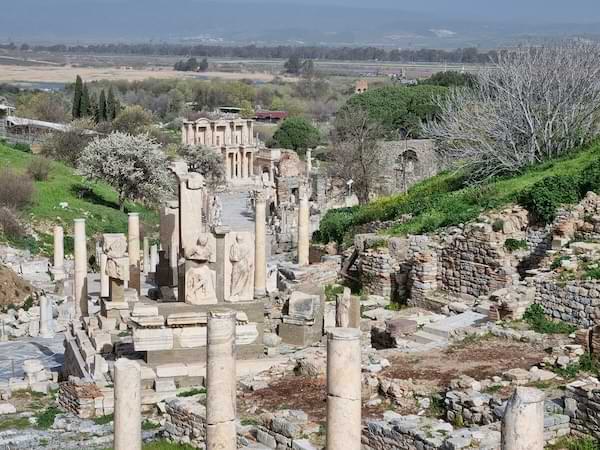
I remember the first time I walked through the streets of Ephesus, amazed at the beauty and grandeur of the ruins and antiquities. You can make a virtual visit” if you have never been there. Ephesus was a favorite city for some of Rome’s wealthy leaders. It’s located on the Aegean Sea with cool ocean breezes, making summer heat more bearable. In addition, it was located on a river that brought a continual source of fresh water. The wealthy from Rome could have owned a summer home in the city and often retired to that part of the world. Ephesus was also a major port city, making numerous goods from around the world available to those living there.

Why might Jesus have started with Ephesus?

In his revelation to John, Jesus mentions seven key churches in Asia Minor. Paul visited most of these churches on his missionary journeys. Ephesus was central to the region’s commerce, culture, and politics, and most Christians receiving John’s letter would have traveled to that city at some point.

Ephesus, a cultural seaport city, was well known for its many pagan practices and temples. The temple of Artemis, or Diana, is considered one of the “seven wonders of the world.” Diana was the goddess of fertility, and “worship” in that temple usually involved prostitution. Many sacrificial altars in the city involved dark and evil practices. 

It is thought that John brought Mary, the mother of Jesus, to Ephesus when they were forced to flee from Jerusalem. There is a home that is thought to be where she lived. The ruins of the Basilica of St. John are located next to the site where the apostle is said to have been buried. John ministered to all the churches mentioned in the Revelation, but apparently, Ephesus was his “home,” and Jesus spoke to that church first.

What did Jesus say about the church in Ephesus?

Jesus said, “To the angel of the church in Ephesus write, ‘I know your works, your toil and your patient endurance, and how you cannot bear with those who are evil but have tested those who call themselves apostles and are not and found them to be false. I know you are enduring patiently and bearing up for my name’s sake, and you have not grown weary” (Revelation 2:1–3).

The “angel” is likely the pastor who would have read John’s message to the church. The words read are the words of Christ who walks among the churches—the “golden lampstands” (Revelation 1:20). The job of the church and its congregation was to share the light of Christ with others. 

Those in the Ephesian church were given reasons to be proud of their character. John praised them for:

  • Their works or their Christian deeds done for the sake of the church and one another. They “toiled” to serve Christ through the church with patient endurance.
  • They did not put up with the people who “called themselves apostles” but were actually “evil.” John had written letters to these churches warning them to pay no attention to the Gnostics, a group that distorted the gospel of Christ and the original apostolic truth of Paul and others. The Gnostics’ message was considered more popular in Greco/Roman culture, and they had successfully turned some people away from the truth. The Ephesian church had not grown weary of faithfully honoring the pure truth of the Christian faith.

Jesus also said, “But I have this against you, that you have abandoned the love you had at first” (Revelation 2:4). It’s difficult to fully understand what Jesus meant when he spoke those words. We know these churches had likely existed for about forty or fifty years by this time. Many in the early church were convinced that Christ would return quickly, yet decades had passed without his final coming. Life as a Christian in Ephesus had become increasingly difficult, and many suffered physically, mentally, and financially to continue in the Christian faith. Jesus praised them for their patient endurance but then told them they had “lost their first love.” Quite possibly, their devotion to Jesus and to sharing the gospel message had changed. Jesus told them to “remember” and “repent” or turn back to the “works” they had done at first. 

Remembering our “first love” for Christ is always a good idea—heartfelt gratitude and praise we felt when we realized our souls had been saved and heaven was our promised hope. We eagerly shared our faith with others, excited to share the good news. 

We are to love Jesus now, just as we loved him then. Jesus wants us to remember Easter and all he did to give us eternal life with God as our Father. 

The message to the Ephesian church reminds us that we can be faithful to our works or deeds at the church, yet forget to gratefully love and honor the One who is the reason for our church community of faith. 

Jesus told the Ephesian church, “I will come and remove your lampstand from its place, unless you repent” (Revelation 2:5). In other words, the light of God’s word is hindered or even extinguished if it does not shine through people who love its Author.

What does Jesus hate?

Jesus continued his message to the church in Ephesus with one last important message. He said, “Yet this you have: you hate the works of the Nicolaitans, which I also hate” (Revelation 2:6). 

Much study and writing have been done about the Nicolaitans, a group we don’t know much about. A Christianity Today article said, “The Nicolaitans appeared to conform to this Roman culture and seemed to encourage Christians in Ephesus to do the same in a time of dire persecution (1 Corinthians 6:12). In eating the food given to the idols. This implies they had gone to the temples to receive the food and would’ve had to engage in the immoralities there to acquire this meat.” Some believe a man, possibly named Nicolas, had led some in the church to compromise their faith to make their lives more bearable or pleasant. Jesus praised those who “hated” that behavior and said he hated it as well. The Christianity Today article also said, “Overall, the warnings against the Nicolaitans in Revelation emphasize the importance of maintaining the purity of the Christian faith and avoiding compromise with practices that are contrary to the teachings of Christ.”

The message to Ephesus

Jesus closed his message to the church in Ephesus, a message for every church, saying, “He who has an ear, let him hear what the Spirit says to the churches. To the one who conquers I will grant to eat of the tree of life, which is in the paradise of God” (Revelation 2:7).

Those who are Spirit-led are privy to the voice of Jesus in their lives today. Jesus promised those Spirit-led believers that they could look forward to an eternity in the “paradise of God.”

If your “first love” has faded, or if you have accepted teaching that is contrary to the pure perfection of God’s word, you can “repent” and turn back to a purer faith walk with Christ. All of us need to “have an ear” and “hear what the Spirit says to the churches” and to us.

These messages are timeless truth, directly from the teaching of Christ to John. We are blessed to read and study his truth. We will be abundantly and eternally blessed if we will listen and heed it today.

Do you see the Jesus that John saw?

When you pray, how do you picture Jesus? Most of us would probably see Jesus as the man who lived, ministered in the first century with messages and miracles, and then was nailed to the cross, laid in the tomb, and rose again on Easter.

At Christmas, I picture Jesus as the small babe in the manger or held in Mary’s arms. Occasionally, I picture Jesus at age twelve, speaking to the priests in the temple and astounding them with his questions. I wonder what Jesus looked like when he was baptized by John, and the Spirit descended upon him. Sometimes I see him as the risen Christ, proving his true identity to Thomas and the other disciples gathered in the upper room.

But I rarely picture Jesus the way John saw him that day on the island of Patmos. Jesus made certain we would be able to recognize him now. In the book of Revelation, Jesus told John, “Write therefore the things that you have seen, those that are and those that are to take place after this” (Revelation 1:19). 

The Jesus that John saw that day, is the Jesus that all of God’s children will see someday. He is also the risen Jesus that we should envision today.

The Jesus that John saw is the true identity of our Lord right now.

We need to picture Jesus like John saw him

The first time John saw the ascended Christ, he “fell at his feet as though dead” (Revelation 1:17). There was no mistaking Jesus’s glory then, and we shouldn’t miss it today.

Revelation is the only book in Scripture that promises to bless the person who reads, hears, and obeys its words. Revelation 1:3 says, “Blessed is the one who reads aloud the words of this prophecy, and blessed are those who hear, and who keep what is written in it, for the time is near.” How would it bless your life today to picture Jesus the way John saw him? How would that change your prayers, your worship, and your witness?

John saw Jesus standing amid lampstands, “clothed with a long robe and with a golden sash around his chest. The hairs of his head were white, like white wool, like snow. His eyes were like a flame of fire, his feet were like burnished bronze, refined in a furnace, and his voice was like the roar of many waters. In his right hand he held seven stars, from his mouth came a sharp two-edged sword, and his face was like the sun shining in full strength” (Revelation 1:13–16).

John saw Jesus as he is today, wearing priestly garments, crowned with wisdom, strong and immovable. He heard his words and knew he was hearing the voice of God. Jesus held the servants of God in his right hand, and from his mouth came the powerful truth of God. His face shone with the brilliance that reflected the glory of God’s Presence. John saw the risen Christ as we will see him one day, when he returns at the end of our lives or returns that final time for all who believe.

When you bow your head to pray, is this who you picture listening to your every word?

Why do we tend to picture the Jesus who walked on the earth?

It seems more natural to see Jesus as the man who spat in the mud and spread it on the blind man’s eyes so he could see. It’s more comforting to see Jesus preaching the Sermon on the Mount to the crowds gathered there. It’s exciting to see Jesus walking on the water towards his disciples in that boat. And it’s essential we see the bloodied Jesus who was flogged, crucified, and laid in a borrowed tomb. That blood reminds us we have been “washed clean.” When I think of entering heaven one day, that is the Jesus I picture holding out his arms to me. I want to run toward him, hug that Jesus, and hear his voice greet me.

But, is that who Jesus is now?

John saw Jesus as he is today and fell at his feet in terror. Old Testament Scripture tells us that no one can see God and live. But people did see God when they saw Jesus. They just didn’t realize Who they were with.

Jesus reached out that day and touched his best friend John, saying, “Fear not, I am the first and the last, and the living one. I died, and behold I am alive forevermore, and I have the keys of Death and Hades” (Revelation 1:17–18). 

Jesus wanted every Christian to know why we should know him as he is today. Those who are saved should have no fear. When we see Jesus, he will be very much alive in heaven. He is still the Jesus we worshipped at Easter, the One who died and rose again to live “forevermore.” We need to remember what he looks like today, standing in heaven, holding the “keys of Death and Hades.” 

Why did Jesus want us to picture him holding those keys?

Jesus is “the way, the truth and the life,” and he is the one who will unlock eternity for everyone. Everyone either lives with the hope and promise of heaven, or Jesus will need to unlock the gates of hell for them. Jesus wanted us to know and understand that he holds those keys.

As the book of Revelation continues, the reader is reminded of the number one job for every child of God. Those of us who own the promise of heaven also own the task of being a servant. For now, we serve Jesus by helping others find the hope we have in Christ. The sword we carry is the word of God, and we can teach it to others. The gospel is the “power of God for the salvation of everyone who believes” (Romans 1:16). Jesus told us to “share the gospel.”

Jesus wanted us to picture him holding the keys because he wants us to remember our most important job while on earth. Jesus doesn’t want to unlock the gates of hell; he wants to invite people to their eternal home and unlock that mansion door instead.

How will you picture Jesus today?

Don’t be afraid to see Jesus as John did. John was told to write it all down to make certain that every generation of Christians could see the risen Jesus as he is now. Jesus is shining with his heavenly glory, which he set aside to be born as a small babe in Bethlehem.

We will spend some time in Revelation in the coming weeks. May we all bow our heads and pray, worship, and seek the Jesus that John saw that day. That is the Jesus we are called to share with the world. That is the Jesus we will see in heaven, and like John, we will likely fall at his feet in awe and wonder. Maybe Jesus will touch our shoulder and speak words of comfort and joy. Perhaps then, we will wrap our arms around him and joyfully thank him for saving our souls and bringing us home to heaven.

Take a minute, bow your head, or look to heaven and see the Jesus John saw.

Are you ready for Easter?

Easter is the most important event in Christian history. Jesus knew that, and his ministry in the last week of his life reflects that priority. 

Many in our culture add the story of the Easter bunny into our celebrations, or at least an egg hunt for the kids. Easter, like Christmas, is a wonderful holiday but can become a lot of different things unless we keep our primary focus on God’s word. Like the busy season of Christmas, there is a holiday to plan for, but that final Tuesday of Jesus’ life serves as a message of God’s priorities for Easter.

Stories with a lesson, or parables, were one of Jesus’ favorite ways to teach his disciples. When Jesus was with them on Tuesday of Easter week, he used parables to emphasize what they most needed to understand.

He was still answering their questions about what they had seen happen in the temple earlier that day and illustrating what he meant when he said, “Therefore you also must be ready, for the Son of Man is coming at an hour you do not expect” (Matthew 24:44).

Are we ready for that hour?

The parable of the Ten Virgins

Jesus told his disciples about ten women who grabbed their lamps and went out to meet a bridegroom. Some brought oil with them, and some did not. When the bridegroom arrived, those who hadn’t fully prepared were off looking for more oil and missed his arrival. They missed entering the marriage feast because they found the door had been locked. Jesus taught his disciples, saying, “Watch therefore, for you know neither the day nor the hour” (Matthew 25:13). 

Jesus was teaching them the point of our lives on earth. We are here to prepare for our lives eternal. Some of the women were ready, and others were excluded because they were not. 

Who do we know that isn’t ready for “the bridegroom” to return? How do we help them find what they need? The women who had oil weren’t able to give it away. Like them, we can’t “give away” some of our own salvation so others can use it for their lives. We can only help them find their own salvation, their light before the bridegroom arrives.

The Parable of the Talents

In the Bible, talent was not an ability but a form of money that could easily be invested or exchanged. The word for servants was literally the word for slaves, but the slaves in Jesus’ story were entrusted with “talents” from their master before he went on a long journey. These servants were essential to the Master and his plans. When the master returned, the slaves entrusted with the most had invested the money and increased the amount they could return to the master. The master said to these faithful servants, “Well done, good and faithful servant. You have been faithful over a little; I will set you over much. Enter into the joy of your master” (Matthew 25:23). The servant who had only been entrusted with one talent buried it in the ground and was only able to hand back what he had been given. 

Jesus told his disciples, “To everyone who has will more be given, and he will have an abundance. But from the one who has not, even what he has will be taken away” (Matthew 25:29). The servant who did not serve the Master was cast into the darkness, a place of suffering. Like the virgins who did not “prepare” for the Master’s return, the servant who buried the Master’s gift was not given a place of reward. 

Jesus was about to die, and his death would become the final sacrifice needed for the sins of every person. When I teach this parable to children, I always liken it to tickets at the State Fair. The tickets for their entrance, food, and rides have been purchased, and they are waiting for them at the gate. Those who pick up the tickets are allowed to enter and enjoy all their tickets afford them. Those who refuse to stay in the line because they think it is just too long a wait or think they will just come back later do not experience what God wants to give them.

Who do we know who has refused to do what is necessary to enter God’s kingdom and receive all that he wants to give? In addition, how can we help our brothers and sisters in Christ invest their lives in his kingdom purpose? 

Jesus’ last message that Tuesday is for everyone to understand

You will likely never hear a message on hell for Easter Sunday. You might not want to read the last words Jesus told his disciples Tuesday in his Olivet Discourse. It was Passover, and the gardens would likely have been full of new growth, flowers, and warm sunshine. Jesus could have closed his message to his disciples with comforting words of hope and happiness, but instead, he stressed the one point we all need to think about today.

Jesus said, “When the Son of Man comes in his glory, and all the angels with him, then he will sit on his glorious throne. Before him will be gathered all the nations, and he will separate people one from another as a shepherd separates the sheep from the goats. And he will place the sheep on his right, but the goats on the left. Then the King will say to those on his right, ‘Come, you who are blessed by my Father, inherit the kingdom prepared for you from the foundation of the world’” (Matthew 25:31–34).

Jesus then described people who were hungry, thirsty, naked, sick, and in prison. The people on the right, the sheep, had blessed them with help while the goats had done nothing. Jesus said that how we treat others is directly related to how we treat him. 

Jesus said, “Truly, I say to you, as you did not do it to one of the least of these, you did not do it to me” (Matthew 25:45). The “goats” were sent “away into eternal punishment, but the righteous into eternal life” (Matthew 25:46).

Sheep or goats?

We live in a culture that wants to allow people to believe whatever they want to believe about God, the Bible, and heaven and hell. We enjoy our Easter being about the joy and peace of the resurrection. We appreciate the beauty and celebration of a beautiful spring day filled with faith and family and some Easter meals with candy eggs. ALL that is good and right when you know you are a “sheep.” The truth is, we need to remember our Easter is only a celebration for the sheep. We are ready and waiting for the bridegroom to return! But what about the goats? Jesus, seated with his disciples, made it very clear: Heaven and hell are real. Everyone we meet today is either a “sheep” with an eternal life or a goat with an eternal death. Those are the only two categories that will matter when Jesus returns.

Jesus made that point to his disciples at the end of that Tuesday while sitting with them on the Mount of Olives. We don’t know what Jesus did the next day, Wednesday. Many theologians have speculated that our Lord used that day to prepare spiritually for all that was ahead.

Whatever we do for others today, this Wednesday of Easter week, we do for Jesus. Let’s follow Jesus’ example and get ready for Easter. Let’s be prepared for the bridegroom to arrive. As servants, let’s invest what we have been given in his kingdom purpose. As sheep, let’s be aware the “goats” aren’t coming to heaven with us – yet. 

Easter is a great time to help someone know how to be born again. If we believe Jesus’ message and help others do the same, goats can become sheep.

Have a blessed and holy Easter!