
The Mind of Christ, Given to You

Every Easter I struggle to comprehend how Jesus was able to wait in the darkness, watching the torches descend from Jerusalem, knowing those soldiers were coming for him. When I am in Israel, the Garden of Gethsemane is the place I most often struggle with tears. I can see the gate in the city wall the soldiers used. Jesus could have escaped, but he chose not to.

Jesus experienced a struggle between his mind and his earthly body, so he prayed for the strength to remain in the garden. His mind, strengthened by God’s, enabled Jesus to wait. That process in the Garden of Gethsemane may be one of our most important lessons of Easter.

According to 1 Corinthians 2:16, “We have the mind of Christ.”

The mind of Christ gives a new perspective

Paul was writing to the church in Corinth. Let’s just say that those early Christians struggled to think and act like Jesus. The culture of Corinth was similar to our own, only worse.

Paul taught the Corinthian church one of the most important lessons in Scripture about the Holy Spirit. He said, “Now we have received not the spirit of the world, but the Spirit who is from God, that we might understand the things freely given us by God” (1 Corinthians 2:12).

When we think with the mind of Christ, we won’t think like the world. We will see things from a spiritual perspective and our views will change. We will understand things like Christ would and perceive situations with his thoughts.

When last did you watch the news and view those stories and images as Jesus would?

The mind of Christ authors our words

All of us have conversations that feel above our spiritual pay grade. I still get caught off guard sometimes. Someone is in great need, and God has given me an appointment to answer. There is a verse I try to lean on and teach others to lean on as well. It should be our prayer and our purpose in every spiritual conversation we enter into. Paul taught, “We impart this in words not taught by human wisdom but taught by the Spirit, interpreting spiritual truths to those who are spiritual” (1 Corinthians 2:13).

This is a whole sermon, but I will teach that verse like this:

  1. We don’t want to speak our ideas. Human wisdom will not lead people to know God.
  2. We do want to pray for, and yield our minds to, the mind of Christ, his Holy Spirit.
  3. The Holy Spirit will author our words, be our wisdom, and teach the truth that person needs to hear.
  4. The key: Those who think with the mind of Christ will be able to interpret spiritual truths to someone else. And “you have been given the mind of Christ” (1 Corinthians 2:16).

Christ doesn’t always change people’s minds

Sometimes your Spirit-led conversations don’t change a person’s mind. That doesn’t mean you didn’t speak the thoughts and words God authored. If you were prayerful and allowed the Spirit to empower your mind and author your words, then “well done, good and faithful servant.”

You aren’t responsible for a person’s response to God’s truth. You are only responsible to speak the truth, led by the mind of Christ, his Holy Spirit. Paul taught the Corinthian church, “The natural person does not accept the things of the Spirit of God, for they are folly to him, and he is not able to understand them because they are spiritually discerned. The spiritual person judges all things, but is himself to be judged by no one” (1 Corinthians 2:14–15).

Jesus couldn’t convince the Pharisees he was their Messiah. We won’t convince everyone either.

The Easter story doesn’t end with the empty tomb

It may seem like Easter is over and it’s time to move on to other subjects. Christians rarely celebrate Pentecost as a holiday, yet it is the real ending to the Easter story.

The tomb was empty; Jesus was resurrected. But Jesus returned to teach his followers until his ascension. The ending of the Easter story was the beginning of the Christian movement in the world. At Pentecost, the disciples of Christ received his Holy Spirit. They received the mind of Christ.

You can think, talk, and walk with the mind of the Lord

It’s easy to feel like Jesus ascended to heaven and then left his work to his followers. He didn’t. Jesus didn’t leave his work to us; he went to heaven so he could do his work through us. The body of Jesus was resurrected, but then his mind, his Spirit, returned to indwell those who would believe in him.

Human beings don’t teach spiritual truths, speak spiritual words, or love people as Jesus did. Jesus teaches, speaks, and loves through the person who will yield his or her mind to the Holy Spirit.

Paul said, “For who has understood the mind of the Lord so as to instruct him? But we have the mind of Christ” (1 Corinthians 2:16).

This week, maybe today, Jesus will give you a chance to speak to someone, or treat someone, like he wants to. Before you say a word, pray that Christ’s mind will do the talking and caring instead of your own. It could make all the difference.

We have been given the mind of Christ. In gratitude for Easter, let’s use it!

This Grammer’s Grammar

Google announced a new level of artificial intelligence to the workplace. Google Docs is introducing a grammar checker. A Fortune article said, “Some of the things that the new grammar checker will scan for include when to use articles like ‘a’ or ‘an’ in a sentence.” I’ve also heard that it will correct common mistakes like there and their or its and it’s. Maybe English professors will just need to teach their students to get close to the right spelling and grammar because “your computer will take it from there.” English 101 might become a three-week course instead of a semester’s worth of work.

My kids and my husband make jokes about my texts and the speed with which I type on my phone. (I’m slow.) I usually write my texts with the same kind of spelling and grammar that I use to write these blog posts. It’s not perfect, but it isn’t a big ol’ mess either! I will occasionally throw in an OMG—but only if the people know I mean “goodness” for the “G.” I’m a big fan of grammar. I had a double major in Elementary Education and English. That, combined with my age, makes me a triple threat in this category. This “grammer” thinks grammar is important!

How will a company know if a person is educated if the HR person is looking at a computer-corrected resume? How will we know if a person is careful with their work if the computer corrects all their spelling errors? Do we really want artificial intelligence, or should we be looking for the real thing?

But, there might be a positive to all of this artificiality in our culture. Maybe people will want to look for the genuine things that matter most.

Compare my parents’ generation, for example, to my kids’. My parents watched Ozzie and Harriet. Harriet vacuumed her home and cooked dinner wearing a pleated cotton dress with pearls. Upon returning home from work, Ozzie’s job was to sit in a chair, read the paper, and have his dinner plate filled by his adoring wife. How genuine was that? My kids watched shows like The Cosby Show or Full House. That was probably a little closer to the truth anyway. Either way, we all learn what is genuine by watching what goes on in our own homes.

Times are changing, but they always have. Every culture moves up and down but always forward. Some things are good and others are bad, but there is one final, promising outcome. God is moving us ahead to something better. I sometimes think times are getting worse while I am microwaving dinner onto the table in about five minutes. The violence seems to be closer to home, but then I think about the pictures I have seen from World Wars I and II. The weather seems to be too hot as I sit in my air-conditioned home. The gas seems too expensive until I look at the car I am putting it in. I worry about getting older until I realize I am getting closer to eternity.

Some things are getting worse and some things are getting better. But the good and bad of progress is all in the way you look at it. My friend sent this clever email. You must read it all the way through. I promise it will be worth it.

Today was the absolute worst day ever
And don’t try to convince me that
There’s something good in every day
Because, when you take a closer look,
This world is a pretty evil place.
Even if
Some goodness does shine through once in a while
Satisfaction and happiness don’t last.
And it’s not true that
It’s all in the mind and heart
Because
True happiness can be obtained
Only if one’s surroundings are good
It’s not true that good exists
I’m sure you can agree that
The reality
Creates
My attitude
It’s all beyond my control
And you’ll never in a million years hear me say that
Today was a good day.
Now…read from bottom to top.

Jesus had a lot go wrong in his life, if you look at his life from an earthly perspective. But this is what Jesus said was true about his life—and ours:

  • “Jesus spoke to them, saying, ‘I am the light of the world. Whoever follows me will not walk in darkness, but will have the light of life’” (John 8:12).
  • “In my Father’s house are many rooms. If it were not so, would I have told you that I go to prepare a place for you?” (John 14:2).
  • “They will see his face, and his name will be on their foreheads. And night will be no more. They will need no light of lamp or sun, for the Lord God will be their light, and they will reign forever and ever” (Revelation 22:4–5).
  • “And he who was seated on the throne said, ‘Behold, I am making all things new’” (Revelation 21:5).

The point: Hey, y’all . . . be happy.

Things ain’t so bad after all.

How’s that for a little “grammer grammar!”

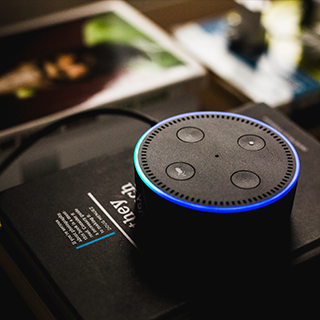
I Unplugged Alexa

The name Alexa is ranked #65 on the list of the most popular names for girls. I expect that ranking to sink much lower in the years to come. Imagine having every conversation with your daughter interrupted by a machine that says “I’m sorry. I didn’t understand your command.”

I was watching an old Hallmark movie the other day, and the main character was named Alexa. The machine in my kitchen kept waking up to insert comments throughout the show. I thought it was funny, but after reading a few recent articles, I’m not sure.

I watched a news segment on smart homes currently under construction in a California neighborhood. All of them will be built to function with new technology. If you buy one of these homes, you will never need to open your blinds again. You will just simply say, “Alexa, open the blinds.” Instantly, you will hear each window covering in your home rise, allowing the morning sunshine in. This seems like a brilliant idea—until you remember your teenager is still asleep upstairs or your spouse might not be fully dressed in the bedroom.

A smart-home buyer can ask Alexa to clean the den floor. Immediately, the Roomba activates and begins to vacuum. I’m thinking smart-home buyers may have some nervous, agitated pets, or unhappy kids when their Legos vanish into the machine. If you feel a little warm, you simply say, “Alexa, cool the house off,” and the thermostat instantly lowers a degree or two. Doors unlock and televisions can display pictures from various security cameras or tune to your favorite music or movie. And all of this can happen while you remain comfortable in your favorite chair.

You can start your car with a phone app, but it will be important for you to remember to open the garage door first. You can instruct Alexa when you want to wake up or remind you of someone’s birthday. You can tell Alexa when you need a pizza or a ride from Uber. Alexa is listening, all the time. And that is what all of us need to consider.

My Alexa is unplugged right now. I love to ask her to play Christian music while I am working in my kitchen. I enjoyed her Christmas music in December. She can tell me about the traffic on the Tollway or the weather outside. She is handy to have around. Why? Because she is always . . . ALWAYS listening. I enjoyed that, until Jim sent me an article.

There are people, much smarter than I am, who have figured out how to do strange things with Alexa and other artificial intelligence sources. The article said, “Over the last two years, researchers in China and the United States have begun demonstrating that they can send hidden commands that are undetectable to the human ear to Apple’s Siri, Amazon’s Alexa and Google’s Assistant. Inside university labs, the researchers have been able to secretly activate the artificial intelligence systems on smartphones and smart speakers, making them dial phone numbers or open websites. In the wrong hands, the technology could be used to unlock doors, wire money, or buy stuff online — simply with music playing over the radio.”

Are smart homes a smart idea? Do we want machines to control our devices in exchange for the freedom to control our lives? We do live in some interesting times, with interesting choices. I had to consider the question, “Do I really want something to be listening to everything I might be saying?”

Almost immediately, I thought about God. He does listen to everything I say. He also sees everything I do. I work pretty hard to lead a decent life, but there is no way I want to give a random tech device the chance to hear every word I say at any moment of the day. The only One I trust to have enough grace for my daily sins is the Lord.

The prophet Isaiah said, “Have you not known? Have you not heard? The Lord is the everlasting God, the Creator of the ends of the earth. He does not faint or grow weary; his understanding is unsearchable” (Isaiah 40:28). Alexa will do what I ask but doesn’t understand why I am asking. God does. Alexa isn’t “working” right now, because I unplugged her until I choose to need her. God is never “unplugged” from my life. I can’t do anything to remove his power because God is the power, and “he does not faint or grow weary.”

Alexa is without any power right now, because I decided to make that choice. I have the choice because God created me with the power to choose. As technology advances, our power to choose seems to be the price of convenience. But, our power to choose is the God-given and God-created difference between people and everything else in the world.

When God created Adam and Eve, he already knew that one day someone would create “Alexa.” Is that why Scripture is careful to remind us, “Where shall I go from your Spirit? Or where shall I flee from your presence? If I ascend to heaven, you are there! If I make my bed in Sheol, you are there! If I take the wings of the morning and dwell in the uttermost parts of the sea, even there your hand shall lead me, and your right hand shall hold me” (Psalm 139:7–10). No matter how advanced artificial intelligence becomes, it is still artificial. Alexa is listening, but so is the perfect, Creator God.

I can see the benefits of smart homes, especially in meeting the needs of the aging or people with disabilities, but I also see downsides to the technology. Do I really need a machine to open my windows, or do I simply enjoy the power of issuing a command? Is it healthy for my brain to ask a device to remember for me? Do I really want tech geniuses throughout the world to have access to my home and life? Or, do I simply want the current advances in technology to remind me of the highest intelligence in the world?

God is always listening, always interested, always available, and always Lord. We will always have the choice to live under his grace and choose to be controlled by his Holy Spirit­­—or something less. I will still plug Alexa in when I need her. But I will unplug her when I don’t. Interestingly, she is unplugged most of the time, another reminder that the only one I need to know is listening is God. He has all the power He needs—all of the time.