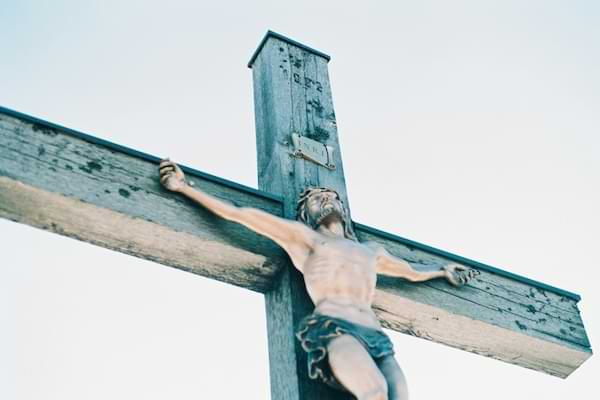

When Jesus makes the news

“By this all people will know that you are my disciples, if you have love for one another.” —John 13:35

Jason Hughes was a high school math teacher and golf coach in Gainesville, GA. On a rainy night, he heard five of the school’s students outside throwing rolls of toilet paper over his trees and bushes. He ran out to catch them in their prank, a prank he apparently had been expecting. When the students heard his approach, they ran to their cars and attempted to get away. Sadly, Jason Hughes tripped on the wet grass, falling in front of one of the cars, and was struck. The kids immediately stopped and tried to help, but Jason died hours later in the hospital.

The district’s superintendent released this statement: “Our hearts are broken. Jason Hughes was a loving husband, a devoted father; a passionate teacher, mentor, and coach who was loved and respected by students and colleagues.” Schofield went on to say, “He gave so much to so many in numerous ways as he faithfully served God. Our hearts and prayers go out to his wife and family.” 

The five 18-year-olds who were involved in the toilet paper prank have each been arrested. The young man who was driving the vehicle that hit Jason has been charged with felony first-degree vehicular homicide and reckless driving, as well as misdemeanor criminal trespass and littering on private property.

The moment Jesus made the news

I wanted to write about this tragic event because of the statement his family released to the news media. The real truth about this story can be heard in those words. Jason’s wife, Laura, was also a math teacher at the high school and the mother of the two children who lost their dad that night. She, too, is a devoted teacher who cares deeply for her students.

Laura is filled with grief right now, but that isn’t what she wanted people to know. As the media rushed to get the facts and create a quick, sensational story, they often failed to get the whole truth. There were stories of blame, slander, drama, and condemnation – all of which were factually based, but not necessarily the entire truth. The family released a statement so that people could grieve with them, but grieve with hope and truth.

The family’s statement read: “We are thankful for the outpouring of prayers and support as we grieve the loss of Jason. We ask that you continue to pray for our family and also for the students involved in the accident, along with their families. Please join us in extending grace and mercy to them, as Christ has done for us.” The Hughes Family

I was watching an ABC morning news program that reported her statement. It was interesting to see the faces of that program’s hosts. Her words obviously moved them, but the only thing said was, “tragic.” 

People who don’t understand Christianity still don’t know what to do when Jesus makes the news. That was true in the first century, too.

Why did Jesus pick the Passover season to die?

The most obvious reason Jesus died during the Passover season is that he was born to become the final Passover Lamb the world would ever need. The captives in Egypt were told to sacrifice a lamb and put its blood on their doorframes. This was the final “plague” before the Exodus. The angel of death brought judgment on the homes in Egypt that night that were not covered by a lamb’s blood. That was the plague that led to the captives’ release. 

The nation of Israel celebrated that day as a sacred and holy time of remembrance. The Passover meal is filled with symbolism, reminding people of the Exodus from Egypt. The city of Jerusalem was filled each year with Jewish pilgrims who were required to make the journey to Jerusalem at least once in their lives during Passover. Many came more often than that.

Jesus shared that Passover meal with his disciples before his death. We call it the “Lord’s Supper,” and Leonardo’s famous painting is titled “The Last Supper.” Jesus took the bread and the wine and changed the meaning of the Passover meal to include his death. Jesus told his disciples, “Do this in remembrance of me.”

The city of Jerusalem will be less crowded this year due to the war with Iran. Normally, the city is almost impossible to move through during the Easter/Passover season. It is now crowded with Christian pilgrims as well as Jewish visitors.

Jesus wanted to “make the news” that day

Jesus picked the Passover weekend to die because he wanted the world to recognize him as the sacrificial lamb. Isaiah had told the Jewish people their Messiah would be a suffering servant. The prophet described him as, “oppressed, and he was afflicted, yet he opened not his mouth; like a lamb that is led to the slaughter, and like a sheep that before its shearers is silent, so he opened not his mouth” (Isaiah 53:7). Hundreds of years later the Jewish people weren’t looking for their Suffering Servant, they wanted their Messiah to be a conquering king.

Jesus chose to die at a time when his death would remind people of Isaiah’s words and understand that his blood would now cover them. Jesus would die for their sake, so they could escape this life and enter the promised land, heaven. He also chose to die at a time when the city would be full of pilgrims from around the world. His death made news that day, and so would his resurrection.

I wanted to write about Jason Hughes’ family’s statement because it is a modern-day Easter story. The ABC news reporters shook their heads as if they couldn’t believe or understand the Hughes family’s request that people pray for the student’s families and join the family in “extending grace and mercy to them as Christ has done for us.” Christians understand the Source of the family’s strength and mercy. The Romans 8:28 of this tragic event is evident in their message to the nation. The family knows and serves Jesus. Easter is more than just a spring holiday to them.

I hope that statement continues to make news during this Easter season. Her statement is the divine purpose of Easter and echoes the words of Christ when he said, “‘Father, forgive them, for they know not what they do.’ And they cast lots to divide his garments” (Luke 23:34). On the cross, Jesus prayed for the very men who had beaten and bloodied his body. Jesus prayed for the men who had hurt him the most with a compassion found only in the powerful love of God.

Help Jesus make the news again this Easter

This is an important time of the year to celebrate Easter as a pilgrim to the Passover table. Jesus would tell us to celebrate Easter “in remembrance of him.”

How will your life point people toward the divine Source and power of our Christian faith? May all of us help Jesus “make the news” in the news we share over the next few weeks as we celebrate the Easter season. 

What Does It Mean To Mock God?

That is the question that kept coming to my mind, after Dan Patrick’s tweet was being volleyed about in the news. I will probably get into a bit of trouble with this blog, but I have to write it. I decided to spend a good amount of time studying the passage, thinking about the news, and trying to find an answer to the question. When does a person “mock God?”

I have often said that I think Galatians 6:1–10 is one of the most provable, practical passages in the Bible. We think of Scripture in terms of chapter and verse, but that was not how it was written. Paul’s letters need to be read as letters, from start to finish. The epistles are popular because every word came from Paul’s Spirit-led heart, and he wrote to churches he loved.

Paul wrote to the church in Galatia because they were struggling to maintain the Christian doctrine they had been taught. Teachers had come to the city, insisting that Gentile Christians needed to enter into Jewish practices, like circumcision, if they were to truly be accepted by God. At the same time, Gentile believers were teaching that no matter what a person did, they could be forgiven. Many Gentiles wanted to maintain some of their sinful practices and used the message of forgiveness to distort spiritual truth.

The book of Galatians is among the most relevant books for the American culture. Galatians 5 ends with one of my favorite passages in Scripture. The gist: Christians are to live by the power, purpose, and priority of God’s Holy Spirit. That is what it means to be “Spirit-led.” God’s people have often wanted “five easy steps” to forgiveness or “ten ways to know God’s will.” The truth: God gave us his Holy Spirit so that we could “keep in step” with him (Galatians 5:25).

Paul, in chapter 6, calls the mature, Spirit-led Christians to restore the brothers and sisters who have fallen away from the standards of the Christian faith. Paul tells the mature Christians to be careful, because it will be tempting to trip over our own set of sins while trying to help others with theirs.

It is then Paul writes verse 7, the now famous tweet, “Do not be deceived: God cannot be mocked. A man reaps what he sows.” What does it mean to “mock God?” I’ll let God’s word provide the answer.

  • “As I have seen, those who plow iniquity and sow trouble reap the same” (Job 4:8).
  • “The point is this: whoever sows sparingly will also reap sparingly, and whoever sows bountifully will also reap bountifully” (2 Corinthians 9:6).

Basically, a person mocks God when they think they can live apart from his laws. We can’t plant carrot seeds and think we will grow squash. We mock God if we think we can jump out of a tree and defy the law of gravity. We mock God if we think we can fool God because we can fool others. We mock God if we think we are more intelligent, more forward thinking, or more advanced than his Word. We mock God’s word if we try to change it.

Jesus was teaching that truth to his disciples in the parable of the sower (Matthew 13:1–23). Every farmer understands the laws of nature and works accordingly. God can forgive a sin, and remove our punishment, but the consequences of our choices remain.

We can choose not to love a person and God can forgive our sin, but there is still a broken heart and a damaged witness. God can forgive us our reckless driving, but there is still a ticket to be paid and a car that is damaged. God can forgive sexual sin, but there are still people who have been hurt, disease that has spread, and even children born, or aborted.

When that man entered the bar with the intention to kill, God’s laws were broken, and the consequences will endure. God grieves every child lost and he grieves every sin that separated those people from his love and direction. God grieves the rallies, the politics, and the obscuring of his truth, whether that takes place in the media or in the church.

God’s word has always been the same, and he cannot be mocked. When people break his laws, there are always consequences. That is true for the shooter, the people in the bar, and the people in the church. God loves all of us and wants us to spend our days on earth Spirit-led. He gave us Scripture so we could understand how to live our earthly lives and how to live one day in heaven. God’s word, like God, cannot be mocked. Truth cannot be a lie.

There are so many people who want to be loved in this world. They are lonely, broken, and looking for something or someone to meet their needs. There, but for the grace of God, go we. I know this is a controversial statement, but I have lived with this thought since I heard the news of Dan Patrick’s tweet. It has been proven that the tweet was randomly scheduled, before the events that occurred in Orlando. The tweet has been labeled “unfortunate,” “random,” “racist,” “homophobic,” “insensitive,” “slanderous” and many other things.

I couldn’t escape this thought: what if that very public, scheduled tweet was not random at all? What if God was saying to the world, and especially to Christians, my word cannot be mocked? What if God was reminding believers of the great solution found in the book of Galatians? God is calling his Church, the body of Christ, to be Spirit-led. Galatians was written to believers. What if Dan Patrick’s tweet was as well?


This article was originally published on June 21, 2016 and makes reference to the Orlando nightclub shooting that occurred on June 12, 2016, where 49 people were killed and 53 injured.

Jesus paid it all

Recently I was at a restaurant enjoying lunch with three new friends. We waved at a man from our Sunday School class who came in while we were eating. Later, our server told us that he had picked up the check for the whole table. His gift made us feel grateful and gifted by his kindness.

Tomorrow is Maundy Thursday which, for me, has always been the most holy and profound day of the Easter season. That is the day Jesus sat with his disciples for the last time, before he gave his life for theirs. Jesus was gifting their lives that day, only they couldn’t yet comprehend all that he was doing. 

Later, Judas would be devastated to the point of suicide for his betrayal of Jesus. 

Peter would be shamed and grieved when he heard the rooster crow the next morning. 

John would sit at the foot of the cross with Mary, and both were likely grieved with thoughts of “What could I have done to stop this?” 

Earlier in the upper room, Jesus had washed the feet of his disciples as yet another way to say, “I would do anything for you because I love you with God’s great and perfect love.” 

Jesus was born to die, and on Good Friday he “paid it all.” 

“Jesus Paid it All”

Churches would often sing the hymn “Jesus Paid it All” as an invitation for those worshiping in the congregation to come profess their faith in Christ. Others would join the church or simply use that time as a reminder of the sacrifice Jesus made. For some, the King James vocabulary or simplicity of the music might keep them from experiencing the profound truth of the lyrics. 

I have included a link to one of my favorite versions of the great hymn. I’ve been blessed to see Fernando Ortega lead worship many times. He sits at the piano and shares his gift of music with people. He isn’t there to perform. He is there to help those listening experience the Lord’s presence and power through worship. 

I hope you will pause, turn off all distractions, and spend some time immersed in this version of that great hymn.  

Jesus Paid it All answers the question, “Why Easter?” 

https://www.youtube.com/watch?v=D5DyeCx8H4U

I wish you a happy and holy Easter 

I will enjoy all the moments of Easter Sunday. I love the crowds in church, the smiles, the spring flowers, and the new Easter clothes—especially the new clothes on the children that day. If ever there was a time for ruffles and patent leather shoes, it’s Easter Sunday.  

The music proclaims the joy of Jesus’ resurrection and the hope that is ours in Christ. The tomb was empty and proved Jesus has power over earthly death and the ability to provide eternal life. We all love the celebration of Easter, but it’s so important not to miss the holy purpose of the day. 

Jesus came to save souls and make disciples of all nations. Easter isn’t Easter unless we understand the entire purpose of Christ’s life.  

Who will come for an Easter service this year and meet Christ? 

There will be several in your church this Sunday

Some interesting facts from my husband Jim’s Lenten message this week: 

  • 63 percent of Americans say that they are Christians. 
  • 81 percent of Americans say they will celebrate Easter. 
  • 43 percent of our population is planning to attend an Easter service at church. 

Jim’s point: The difference between those who say they are Christians and the number who will celebrate the holiday means many millions of people are celebrating a holiday they don’t truly understand. 

The pews this Sunday 

Jesus was about to raise Lazarus from the dead. He told Lazarus’ sister Martha, “‘I am the resurrection and the life. Whoever believes in me, though he die, yet shall he live, and everyone who lives and believes in me shall never die. Do you believe this?’ She said to him, ‘Yes, Lord; I believe that you are the Christ, the Son of God, who is coming into the world’” (John 11:25–27). 

It is safe to say that several people will be in your church this Sunday who will come to celebrate Easter and who identify themselves as “Christian.” It is likely that many of them may not understand what is necessary to actually become a Christian. They have never said to Jesus, “Yes, Lord, I believe that you are the Christ, the Son of God, and I know I need you to forgive my sins, and, as the old hymn states, I trust you can ‘wash me white as snow.’” 

I like to look for those people on Easter Sunday. I like to pray specifically for the uneasy, unfamiliar, and sometimes uninvolved. Easter is an important Sunday. If we will pray, speak to, invite, and encourage people, we might get to enjoy seeing God change their lives before the next Easter Sunday.  

Easter is a powerful day of important truth. Jesus didn’t die so that one day we could enjoy our eternal life. Jesus died so that we would enjoy our eternal life from the moment of our salvation. Christians live each day knowing they will never die. We just stop breathing on earth one moment and start breathing in heaven’s air the next. That’s what it means to place our hope in Christ. 


Jesus paid it all—and we can live with eternal gratitude 

Maundy Thursday is my moment each Easter season. I like to dwell on those upper room words of Jesus and the garden moments spent in prayer for and with his disciples. You might want to spend some time reading about the Easter moments from John chapters 12–20. John was the beloved disciple, and his words reveal the heart of Easter through the disciple who loved Jesus, stood by him, and spent his entire life serving him. 

Take a few moments to listen again to the holy purpose of Easter through Fernando Ortega’s version of “Jesus Paid it All.”  

Easter is summed up in the words of that hymn: “Jesus paid it all. All to him I owe. Sin had left a crimson stain; he washed it white as snow.” 

I pray you will have a happy and holy Easter Sunday because you have had a holy and profound Maundy Thursday. 

Let’s live as blessed Christians, enjoying our certain hope of heaven today. We serve Jesus because he has served all of us. He paid it all. Now, we owe him our all. 

May your Easter be filled with joy and purpose as you worship the One who paid it all. 


Jesus can bring out the worst in us

One of my favorite messages from social media this year said, “I’m not adding this year 2020 to my age. I did not use it.” 

I heard another of my favorite messages last week on a Christian radio station. The host said, “If something or someone brings out the worst in you, then recognize the worst that is in you, and do something about it.”

Independence Day 2020 

Last March, when we first began dealing with all these germs, did you picture yourself wearing a mask in July? 

We probably should have, but, generally speaking, we didn’t expect this to last so long. However, to be blunt, the Santa at the mall this Christmas will probably be wearing a mask. Entrepreneurs: get those Christmas 2020 shirts ready. 

Never mind, we won’t want to wear them! 

There won’t be huge family picnics this July 4th or baseball games with fireworks, even though we could really use some happy reminders to celebrate America this year. The truth is, we are blessed to live in this country, even during its worst days.  

We need to celebrate Independence Day, but maybe with an expanded focus. 

We need to celebrate our most significant freedom. 

Jesus came to offend people 

People will always have differences this side of heaven. We know that, but we should also expect that. 

One of Satan’s favorite tools is comparison. If we notice the differences, we automatically begin to choose which we prefer. Those thoughts lead to what we believe is best, and then we seek to prove that what we believe is best. 

Jesus entered the world in a hostile period of history. The Jewish nation believed they were better than the Gentiles. The Romans believed they were better than almost everyone. Those emotions led to arguments, slander, prejudice, and oppression.  

Jesus chose to enter the world during political and social unrest. His ministry caused a revolution. He didn’t take anyone’s “side,” and his preaching was offensive to almost everyone. 

Jesus taught everyone that no one was “right” and everyone was wrong—except him. It is easy to understand why most people were offended by his teaching and considered him dangerous. 

Imagine if Jesus preached that message today! 

Jesus was offensive for a good reason 

Early in his ministry, he was speaking at the temple to a group of Pharisees and other Jewish men. He told them, “If you hold to my teaching, you are really my disciples. Then you will know the truth and the truth will set you free” (John 8:31–32). 

They questioned his words, saying, “We are Abraham’s descendants and have never been slaves of anyone. How can you say that we shall be set free?” (v. 33). 

The Jewish people were offended by Jesus’ suggestion that they were not “free.” They were Abraham’s descendants, which, in their minds, meant they were superior to anyone who wasn’t. 

Jesus then taught the Jewish people one of the most significant truths in Scripture: “Very truly I tell you, everyone who sins is a slave to sin. Now a slave has no permanent place in the family, but a son belongs to it forever. So if the Son sets you free, you will be free indeed” (vv. 34–36). 

Jewish people believed they were right because they were part of Abraham’s bloodline. Romans believed they were right because they were more powerful, more educated, and often wealthy. Gentiles believed in whatever felt right to them personally. 

Jesus taught that no one was right unless they were righteous. Then he taught them how to be righteous. Jesus needed to offend everyone so everyone could understand their offenses. It is that humility that taught people they needed salvation. 

Let Jesus bring out the worst in you

Jesus wants to cleanse our lives from the sins that enslave us to the world’s standards, the world’s thoughts, and our reactions to the things of this world. If the sinful things aren’t part of our lives, then the world’s moments can’t bring those things out of us.  

The goal is to be holy; it always has been. Throughout the Bible, God’s word to his people has always been, “Be holy, because I am holy” (1 Peter 1:16). 

Jesus said, “Everyone who sins is a slave to sin” (John 8:34), and Romans 3:23 says, “for all have sinned and fall short of the glory of God.” 

Everyone needs Jesus to bring out the worst in us. If Jesus brings the worst out in us, then it won’t be there for someone or something else to draw out. 

July 2020 

This is a good month to consider our freedoms and be grateful. But a lot of Americans only think they are free. The important questions are why do we believe we are free, and what does that freedom require of us? 

Henry David Thoreau said, “That government is best which governs the least, because its people discipline themselves.”  

Jesus said, “If the Son sets you free, you will be free indeed” (John 8:36). 

The question for Independence Day 2020 is: What freedoms are we able to celebrate? 

We live in a democracy where people are free to speak, act, and choose. But we aren’t really free without self-discipline. We are free to make this country a better place, and, sadly, we are free to do the opposite. 

No one can be truly free apart from freedom in Christ. 2020 has been a powerful illustration for the truth of God’s word. The world has brought out the worst in many of us. The good news is that we know the worst is always hidden in us—unless Jesus brings it out first. 

Biblical independence 

Do you want Jesus to bring out the worst in you? 

Scripture teaches us, “If we confess our sins, he is faithful and just to forgive us our sins and to cleanse us from all unrighteousness” (1 John 1:9). 

It isn’t hard to get rid of the worst in ourselves. The challenge is to maintain our independence.  

We can take the trash out today, but there will be more tomorrow. The good news is that it will always get picked up and hauled away. We don’t have to keep it around. 

Some people will not want to think about 2020 because they didn’t “use it.” For others, it may become one of the best years of their lives. It just depends on what 2020 brings out of us. 

May we pray for and achieve the independence Jesus came to give.

You’ve Been Upcycled

Football season has come to a close and, chances are, you have a little more free time on Sunday afternoons. Next Sunday, you should check out a show called Flea Market Flip.

People compete by shopping for things at a flea market and then upcycling those items into a new and more relevant table, chair, lamp, or whatever. It’s an interesting show, but I don’t blog to give television advice. (Although it can be a side benefit!)

The point is this: in many ways, Flea Market Flip could serve as a parable for each of our lives.

God’s in the restoration business

A lot of people visit a flea market and only see a bunch of unwanted junk. Maybe that stuff was nice in the beginning, but, over the years, it has been dinged up, broken, rusted, faded, or just used up. Most people look at those piles of discards as useless.

But God visits flea markets and sees the potential.

In one episode, two women bought a couple of rusted patio chairs with dirty cushions. The chairs were sitting off in a field, covered by dirt and only worth a few dollars to the seller. By the end of the program, those chairs had been soldered together to become a brightly painted bench with a fancy new seat cushion. Those two old chairs were upcycled and then priced at a much higher value.

Do you ever feel like those rusted chairs?

Maybe the hard moments of life have made you feel useless or less valued. All of us have to weather our share of storms. But God is in the restoration business.

Israel became a world power under King Solomon’s leadership. They had prominence, power, wealth, and wisdom. But later, after most of the nation had been decimated, Jeremiah wrote these words to the remnant in Judah: “For I will restore health to you, and your wounds I will heal, declares the Lord, because they have called you an outcast” (Jeremiah 30:17).

Judah would be taken captive by Babylon, and the once beautiful and opulent city of Jerusalem was reduced to ruins. God’s people were enslaved and called outcasts. But God knows how to upcycle what has been cast aside. God restored his people, not to their former glory, but to rebuild something new, with greater potential.

A new creation

I am amazed at the creativity of the people who transform their purchases on Flea Market Flip into things I never could have imagined.

  • Two women took an old ladder and a few old frames and turned those things into a shelving unit to display photos.
  • A husband and wife took an old chicken coop and created a beautiful coffee table.
  • A mom and daughter duo took an old door and two rusty stools and created a kitchen table that could hang on the wall of a small kitchen and then transform into an eating area when needed.
  • And two men turned an old, wooden wheel into a beautiful clock.

Paul was teaching the church in Corinth that Jesus could transform their lives. Corinth was known for their decadent culture and immorality. I’m sure some of the people in that Corinthian church thought they would never belong in a group of “holy” people. But Paul taught them that Jesus had given his life for everyone and could forgive every sin. Jesus is able to upcycle any life into something new and amazing.

Paul wrote: “Therefore, if anyone is in Christ, he is a new creation. The old has passed away; behold, the new has come” (2 Corinthians 5:17). Do you ever wonder what your life would look like if you had lived it without Jesus? Do you ever imagine what the lives of those outside the Christian faith could look like if they chose to make Jesus their Lord?

Jesus would love the chance to continually upcycle our lives and the lives of those around us.

Jesus turns our junk into treasure

At the end of every episode of Flea Market Flip, one of the competing duos receives $5,000. That prize goes to the people who make the highest profit on their upcycled items. Most of the time it is a close race. On one episode, the difference was just a penny, but, occasionally, the difference is several hundred dollars.

The $5,000 prize is the same, regardless.

Every Christian is a child of God and has been given the same promise. Jesus said, “Truly, truly, I say to you, whoever hears my word and believes him who sent me has eternal life” (John 5:24).

That prize is yours, regardless.

You’ve been upcycled

Maybe it’s time to take a fresh, new look at your life.

Do you notice the battle scars of your life, or do you see yourself as restored? You are a child of God, upcycled to a person of great value to your heavenly Father.

Maybe you haven’t fully recognized your potential. When Jesus came into your life, you were given a new purpose and a new usefulness. You have been upcycled by the Holy Spirit as a gifted disciple of Christ. You are a new creation. Jesus can transform junk into treasure.

And, finally, you are guaranteed to win the final prize.

The apostle John was an elderly man who had developed an amazing ministry in Ephesus. He was captured and exiled to the prison island of Patmos. I imagine he wondered if his life and ministry had been discarded as well.

Instead, he started a church there and began a brand new ministry in his older years. And Jesus appeared to him on that island and said he wanted John to write a few things down!

We call those words the book of Revelation.

Our ultimate purpose

All of us will need to be constantly upcycled on this side of heaven. This life is a journey, and, let’s face it, our witness gets a little dinged up and rusty along the way. But, Jesus told the apostle John that all of us would be winners in the end.

In Revelation 21:1–5, John wrote: “Then I saw a new heaven and a new earth, for the first heaven and the first earth had passed away, and the sea was no more. And I saw the holy city, new Jerusalem, coming down out of heaven from God, prepared as a bride adorned for her husband. And I heard a loud voice from the throne saying, ‘Behold, the dwelling place of God is with man. He will dwell with them, and they will be his people, and God himself will be with them as their God. He will wipe away every tear from their eyes, and death shall be no more, neither shall there be mourning, nor crying, nor pain anymore, for the former things have passed away.’ And he who was seated on the throne said, ‘Behold, I am making all things new.’”

In heaven, no upcycling will be needed. There is never anything that looks like junk.

Everything and everyone is eternally made new!