
St. Peter’s scale

Wasn’t it nice to wake up this morning to ads about insurance and toothpaste instead of ads about political candidates? 

I voted early this time and then kept the remote nearby so I could reach the mute button. As I write these words, I don’t know how the midterms will turn out. Hopefully, there won’t be any runoff elections in Texas. I think the mute button on my remote is wearing out! 

As you read these words, you have probably heard reports of the election results. I don’t need to hear the statistics to write this blog post. I already know that half the country is happy and the other half is disappointed. Those feelings will be reflected in the faces we see today in our neighborhoods, places of business, and anywhere else we go. Hopefully, your home is of the same opinion, but even that isn’t guaranteed for everyone. 

One thing is certain: it would be good to remember that the volume of our witness today will be set on high. Whether your candidates won or lost, people will be gauging your response. 

Wise counsel from Hebrews

This is a good day to walk in the counsel of Hebrews 12:14 which says, “Strive for peace with everyone, and for the holiness without which no one will see the Lord.” 

Politics matter. Elections matter. But neither matters as much as helping people know the Lord. 

The words of our witness today will be wiser if we allow Hebrews 12:14 to frame them. Picture a big box with a locked lid sitting next to a door. Imagine gathering your prideful thoughts, sinful thoughts, disappointments, and slander and then choosing to lock up every word produced from your natural self in that box before you step into your day. 

How will your day turn out differently if you strive for peace with everyone? How many arguments or angry discussions can you avoid if you strive to be holy? Who will be impressed with your “peace” even if they disagree with your politics? 

One thing I am certain of, even though I am not yet certain about the elections, is this: when we woke up this morning, God was still on his throne and his plans and promises are still in place.  

Our faith is supposed to be an effort

Sometimes I wish it were easier to be a Christian in our culture. Then I remember what first-century Christians endured.

I remember what many Christians who first came to this country endured before and after their arrival. And, if you simply google “Christian persecution in the world” today, you will find the numbers shocking. 

It is easy to be a Christian in our culture today compared to so many others. It just isn’t as easy as it was a few years ago. Interestingly, our Christian witness is getting a LOT more attention from the culture. That can be good and bad.  

Peter wrote counsel to the early church that was very similar to the author of Hebrews. The Apostle wrote, “For this very reason, make every effort to supplement your faith with virtue, and virtue with knowledge, and knowledge with self-control, and self-control with steadfastness, and steadfastness with godliness, and godliness with brotherly affection, and brotherly affection with love. For if these qualities are yours and are increasing, they keep you from being ineffective or unfruitful in the knowledge of our Lord Jesus Christ” (2 Peter 1:5–8). 

There is a key phrase in that important passage that describes a Christian’s highest effort. If this became our great effort, we would live with a powerful witness to our culture. That phrase is how we can measure our day today and our lives. The phrase is: “If these qualities are yours and are increasing.”  

Our great effort for today is to continually grow into the holiness Peter described. We need to do better this month than we did last month. We need to have a stronger witness for Christ this year than we did last year.  

How do you typically measure your spiritual growth?  

If we could step onto Saint Peter’s scale

Some people step on their bathroom scale every day to see what they weigh. Some people step on their scales less often. Some people aren’t sure if they still own a bathroom scale. Our weight usually fluctuates, especially in these next two months! 

We don’t really need the scale to tell us what our waistbands are already shouting. Most of us will step on a scale, at least once in a while, hoping that maybe there is another explanation for the tighter fit. Maybe the dryer was too hot or maybe the fabric continues to shrink? Maybe the scale needs new batteries or maybe the settings are no longer working. (I’ve got a million of these ideas!) 

But my real point is this: If St. Peter could have created a scale to measure spiritual growth, would we buy one, use it, and believe it? 

If St. Peter’s scale registered “faith and virtue,” would we be overweight or underweight? If St. Peter’s scale measured “self-control and steadfastness,” would we be ejected from it? If St. Peter’s scale weighed our “godliness, holiness and love,” how far would the needle swing? 

The real point of St. Peter’s scale is whether or not we are gaining. 

Let’s make every effort to live like St. Peter taught

You will likely have an opportunity today to “increase” the standards of your faith and express the virtues Peter listed. Every day is an opportunity to “strive for” the peace and holiness that will help others know the Lord. 

If Bed Bath & Beyond sold St. Peter’s scale, I would buy it. I would keep it someplace where I would see it often. Yet I can’t help but wonder if I would treat it like my bathroom scale and try to explain away the numbers. 

That picture might be just what we need to live this day with the wise counsel from Hebrews 12:14. The good news about St. Peter’s scale is that “increasing” measurements are a good thing! 

So, let’s get out there and live like Christians . . . and hopefully our witness will weigh more tomorrow than it does today. 

Faith for the “what if” moments

Learning to follow God is a life-long pursuit. Following doesn’t feel natural and skirting around things often does. For example:

  • I like to pass big trucks on the highway because I can’t see around them.
  • I like to study people’s carts at Costco so I can pick the right checkout line.
  • I take vitamins to avoid getting sick.
  • I travel, whenever possible, when the roads are most empty of others.

I like to consider possibilities and avoid difficulties. So, when the doctor tells me something could be wrong with my mom, I don’t want to wait a week to find out. 

But that’s what I had to do. A week later I know she is fine, but it was a long week that I wish I could have back and do differently.

The “what-if” moments of faith.

The Bible says, “And which of you by being anxious can add a single hour to his span of life? (Luke 12:25). I track completely with Jesus here intellectually, but spiritually, I fall short. I spent too much time last week with worry, processing my thoughts and considering possibilities. I thought of what I would do if those possibilities became realities.

And then a week later, all is well except for the fact I can’t get back the sleep I lost or the time I spent making plans for things that I now know will never come to pass. I know why Jesus commanded us not to worry. I just don’t know how to stop the worry when it comes.

The “what-if” moments of life are frustrating sometimes. I spent last week bowing my head to pray, not knowing how I should pray. Those prayers usually came out, “Lord, I know you will do whatever is best – help me trust you and the experts.” I’d say amen, and soon I would be thinking about what I should do, all over again.

The “what-if” moments are usually about things that could dramatically change our lives. We want to be prepared for those times, but how do we prepare well without considering all that could happen? When we consider all that could happen, how do we stop the worries?  

What do we do with the worry? It can’t add anything to our lives. In fact, it subtracts a great deal of calm and peace (along with hours of sleep!).

Psalm 55 is my “worry” psalm. When worry eats up my day, I try to consume Psalm 55. King David understood worry. He had enemies, and he had to learn to live with constant threats and problems. He talks about complaining, moaning, and dreaming of escape. He prays against his enemies and for himself. 

David ends his psalm with an instruction that applies to every “what if” moment of life that causes us to feel overwhelmed by possibilities, probabilities, and realities. David wrote:

Cast your burden on the Lord,
    and he will sustain you;
he will never permit
    the righteous to be moved. (Psalm 55:22).

It is difficult to follow God when we want to fix something. Yet, it is only when we cast our burdens on the Lord that we don’t buckle under the weight of them.  

Worries will be part of our earthly lives until we go to heaven. They are like a blowing, West Texas wind that can knock over or carry off anything that isn’t nailed down. Our stability in those winds is understanding that only God can sustain our thoughts and stabilize our worries. “He will never permit the righteous to be moved.”

Get “righteous” by getting in line behind God.

How do we get right with God and stabilize our worries? Start by remembering to “cast them off.”

  • Visit the throne of God in prayer and lay the worries at the feet of God. Replace worry with the knowledge of God’s perfection. Our worries are powerful, but God wants us to remember that nothing matches his power.
  • Tell God what you want but pray for the wisdom to trust and accept what he answers or allows.  His ways are not our ways. We can trust his choices more than our wants.
  • Remember God is your Father and you are his child. He adores you and wants all that is best for you and others. His answer will have eternal significance, not just momentary consequence. Try to consider the eternal picture that exists at the end of our earthly worries.
  • Finally, remember when you asked him to be your Savior, you also asked him to be your Lord.  He is the King and we are not. He is at the front of the line, and we are called to follow behind.  We walk where God leads, at the pace God sets, and to the answer God wants to provide. To trust God is to walk behind him.

A week unwasted.

I teach Bible, write Bible studies, and blog posts like this one. None of that means I can face my “what-ifs” worry-free. I’m still learning to follow the God I teach. I’m still fighting the fears and fixing the failures in my faith journey.

I wish I could regain some of last week’s moments that were altered by worries. I wasted too much time on “what-ifs” that never happened. At the same time, I learned once again that the only moments that did work last week were the moments I got in line behind God.  

God never wastes a flaw or failure. He can bring us back from the flood to the flock. I know I will worry again. But, please God, may I be quick to cast the worries at your feet and follow that line marked “righteousness.” I can’t gain back the time I spent worrying, but I can gain wisdom from the experience. The week wasn’t completely wasted after all!

I’m learning to follow. I’m thankful for God’s patient instruction along the way. Corrie Ten Boom said, “Worry is a cycle of inefficient thoughts whirling around a center of fear.” She also said, “In order to feel the worth of the anchor, we need to feel the stress of the storm.”  

It’s comforting to know that Corrie Ten Boom walked her difficult journey and learned of God’s worth.  We can too. Our “what ifs” can be handled with less worry if we faithfully follow God and trust his plan. He is our anchor in every storm.  

Shoes for the journey

[et_pb_section admin_label=”section”] [et_pb_row admin_label=”row”] [et_pb_column type=”4_4″][et_pb_text admin_label=”Text”]

I’m out at the lake, finishing a book. It is quiet, beautiful, and, well, “lake-ish.” 

At home, I walk in my tennis shoes, but out here I wear my favorite hiking shoes. I love my Merrell’s. They are broken in. They have a steel shank with a good, sturdy sole, and the fit keeps little rocks from finding their way to my feet.

I was walking early one morning, enjoying the cool breezes of what would become a hot day. I had seen deer, birds, flowers, running streams, and one very large frog that I scared to death. I actually jumped too! 

I wrote this blog post in my head that morning, as I was hiking, grateful for the shoes on my feet. The point: I have all kinds of shoes, but if I had to choose a pair for a long journey, I would choose my Merrell hiking shoes. 

Our journey of faith deserves the best shoes for the trip.

A LIFE OF FAITH REQUIRES APPROPRIATE SHOES

The book I am writing is about finding and maintaining God’s calm regardless of the different moments we encounter in life. I’ve often described our earthly lives as a road trip. Today, let’s think of the journey as a long hike.

The “high-heel” days

Out here at the lake, part of my hike is done on a level, paved road. I could wear a heel, but it would seem kind of silly. I’m not much of a high-heel person, to be honest. If you ever see me in anything but a flat shoe, you can know that I am looking forward to the moment I can go home and find my slippers! 

The only time I choose a heel is because I want to “look” a certain way. I’m usually at a fancy dinner that has been scheduled in order to raise money for a good cause. It’s fun to be in the crowd, talk to the people, and support important work. But, there are some people in the room who choose to be there, just to “look” a certain way. There are times in our lives and ministries that are more about making a faithful appearance in a room. 

On those high-heeled evenings, I’m reminded that Scripture says, “For this light momentary affliction is preparing for us an eternal weight of glory beyond all comparison” (2 Corinthians 4:17). In other words, I don’t think we will wear heels in heaven, and, if we do, they will feel comfortable! High-heeled faith has a place in our lives, but not for very long. 

Lesson 1: I will have to spend some time in less comfortable shoes, trying to “look” a certain way. But, making appearances isn’t a way to walk through this life with consistent faith. God wants us to be genuine and comfortable in our journey. High heels were made to work well only for those times when the road is flat, paved, and easy. A high-heeled faith wobbles when the ground isn’t smooth. 

Our souls are like the soles of our feet. We need to be ready when the road gets rough. High-heeled faith isn’t sustainable. 

Stylish shoes may or may not work

I remember my mom talking about “penny loafers.” She had saved up to buy a pair when she was young because they were all the rage. 

When I was young, I found a pair of platform shoes that I LOVED. I was working at the mall, and the store let me put those shoes on layaway. A couple of paychecks later, they were mine. I loved those shoes with the espadrille soles, the colorful beads that had been woven in, and the fact that they made me about three inches taller. I remember when my dad saw those shoes. Let’s just say he thought my money would have been better spent elsewhere. 

It’s funny how styles change. I used to sit in a pew and listen to the preacher tell me to shape up my faith or it wouldn’t carry me through life. I heard about sins and why I didn’t want to choose them. I heard about heaven, and I also heard about hell. Those sermons made a big difference in my young life. I wanted to be stylish like those outside the church, but even more I wanted to develop a faith that would carry me to heaven. 

Styles change, but God does not. Scripture says, “Every good gift and every perfect gift is from above, coming down from the Father of lights with whom there is no variation or shadow due to change” (James 1:17). 

To be honest, I see a lot of the trend-chasing churches beginning to falter. I see a lot of the historical churches, changing with the trends, doing the same. It is important to be relevant—if relevance is a better way of speaking what has always been truth. The message of the Bible has not changed. It still means what it has always meant.  

Lesson two: It is only good to be stylish if the shoes “fit.” I loved those platform shoes, and, truthfully, I’m really grateful my dad’s words didn’t come true. He told me, “You are going to break your ankle in those things!” 

It doesn’t matter if your church is “stylish” if it doesn’t teach a faith that has always been truth. The wrong preaching could cause your faith to “break” someday when the road beneath gets rocky. 

The journey was made for hiking shoes

It’s good to be older. People no longer expect me to enter a room wearing high heels very often. No one typically describes my shoes as the most stylish in the room. I choose shoes these days because they are comfortable and able to handle whatever the day brings. 

Our faith journey is long and covers moments that are paved and easy. But, everyone’s life journey will have rough patches, hills, and rocks. That is life on earth, and our faith should be able to handle every moment, not just the easy ones. 

Some people don’t own a good pair of hiking boots. They are costly, less attractive, and aren’t necessary—most of the time. But for those of us who want to do ministry in a culture that is increasingly “rocky,” we might consider wearing our hiking boots more often.  

We don’t get to have a high-heeled faith very often. Those moments are uncomfortable, shallow, and, truthfully, just make us want to go home. We don’t get to have a super-stylish faith most of the time. Styles constantly change, but truth doesn’t. We have been called to speak the ancient truth that is still true today.  

People of great faith need to wear hiking boots. Our faith shouldn’t slip very often, no matter what life brings. Our faith should be tied securely on our feet and our soles—our souls—can handle the rocky road ahead. 

If our hiking shoes step on toes, it will probably hurt, so we need to be careful how we walk through the world. People will wonder why we wore hiking boots to the ballroom or didn’t attempt to be more “stylish” most of the time. But, if sharing our faith is what matters most, we will want people to know why we choose to wear hiking boots for our faith journey. 

I want my faith to be like my Merrell hiking shoes. I want a steel shank so I can handle the rocks more capably. I want a good sole, and a good soul, to keep me steady and strong as I complete the journey. I want my shoes to last because they are well made. My Merrell boots were costly but worth everything I paid. 

Is your closet full of shoes that you can only wear for a short time or is it time to purchase and enjoy a good pair of hiking boots? 

I’m pretty sure if Jesus could have purchased Merrell hiking boots for his life’s journey, he would have! Let’s do the same. First John 2:6 says, “Whoever says he abides in him ought to walk in the same way in which he walked.” 

It’s time to refocus on what truly matters in this world. Our culture needs to be equipped to handle the future. Our Christian culture needs to take some firm stands against things that just aren’t true. 

When the times get rocky, we need a good pair of shoes for the journey.

[/et_pb_text][/et_pb_column] [/et_pb_row] [/et_pb_section]

I might have been a Pharisee

Except for the fact I’m a woman, I might have been a Pharisee. 

I’m a big fan of rules, but one of theirs was “no women allowed.” 

Other than that, there is a lot about their lives I might have appreciated. But Jesus didn’t appreciate much about them at all, and that gives me food for thought this week.

This article comes out on St. Patrick’s Day. St. Patrick wouldn’t have been a great Pharisee, but he was a good friend and disciple of Jesus. 

WHO WERE THE PHARISEES? 

I read an interesting article on the Pharisees. They are mentioned ninety-eight times in the New Testament. The name Pharisee probably is related to the idea of being separate or detached, similar to the meaning of the word holy

The article described the religious leaders by saying, “In many ways, the Pharisees were the worst people in the world. They were cold and legalistic. At the same time, the Pharisees were the best people in the whole country. They were the holy men who kept the law; they pursued purity with a passion and wanted nothing more than to live lives that pleased God. They were sincere, albeit sincerely misguided.” 

So, where did the Pharisees go wrong? 

They wanted to please God but did the opposite. They took their eyes and thoughts away from God by idolizing rules as their god. It was the most prevalent sin throughout Scripture and remains a significant temptation for God’s people today. 

You have to admit, it is confusing. God told Moses to, “Speak to all the congregation of the people of Israel and say to them, You shall be holy, for I the Lord your God am holy” (Leviticus 19:2). The entire book of Leviticus is full of rules for God’s people. The Pharisees took God’s rules and turned them into thousands more. 

God gave us a framework of laws and standards in Scripture so we would know right from wrong. God’s people have always wanted to know what rules to follow because we want to make sure we are following God. The problem: it’s tempting to start following rules instead of God. 

God told Hosea, “For I desire steadfast love and not sacrifice, the knowledge of God rather than burnt offerings” (Hosea 6:6). At some point, the people began to think God wanted the lamb or the wheat instead of their repentant heart and their love. 

That’s one reason Jesus was angry at the Pharisees. He told them, “Woe to you, scribes and Pharisees, hypocrites! For you tithe mint and dill and cumin, and have neglected the weightier matters of the law: justice and mercy and faithfulness. These you ought to have done, without neglecting the others (Matthew 23:23). 

ST. PATRICK GOT IT RIGHT 

An interesting article on St. Patrick said that, as a boy, Patrick was kidnapped and taken to Ireland. He was forced to work in the fields under terrible conditions. 

One night, in a dream, God led Patrick to escape to the coast, where he was rescued by some sailors and returned to his home. Years later, after becoming a Catholic priest, God called Patrick back to Ireland as a missionary. Patrick is credited with bringing the gospel to that country. He converted thousands of souls and started hundreds of churches throughout the country. Tradition says that he used the Irish clover to teach people about the Trinity. 

In his book The Confession, St. Patrick wrote: “The love of God and his fear grew in me more and more, as did the faith, and my soul was rosed, so that, in a single day, I have said as many as a hundred prayers and in the night, nearly the same. I prayed in the woods and on the mountain, even before dawn. I felt no hurt from the snow or ice or rain.” 

Patrick learned to love God, and that priority enabled him to love even those who had once enslaved him. 

IF YOU WANT TO PLEASE GOD . . . 

Do we serve God hoping to appease him or because we love him? 

We can try to please God like the Pharisees, or follow the example of St. Patrick. 

Why did the Pharisees fail to please God while Patrick was named a Saint? 

The Pharisees served the letter of the Law and St. Patrick served the Lord of the Law. Pharisees felt like they grew spiritually as they learned to understand and obey more laws. St. Patrick wrote, “The love of God and his fear grew in me more and more, as did the faith.” 

If we want to please God, we need to examine our motives. 

When last did you obey a law simply because you loved and trusted the Lord of the law? 

TRUE LOVE IS NEVER AN ACT 

Jesus called the Pharisees “hypocrites,” the literal word for an actor. Jesus told them they only acted like they loved God. Jesus knew their hearts and said, “Woe to you, scribes and Pharisees, hypocrites! For you clean the outside of the cup and the plate, but inside they are full of greed and self-indulgence” (Matthew 23:25). 

I confess there have been many times I have worried more about the outside of the cup too. There were many Sunday mornings I got ready for church and spent more time thinking about what I would wear, who I would see, and what I would teach rather than Whom I was to worship. 

I might have been a Pharisee in the past, but I don’t want to be one now. 

There is a reason Easter is my favorite holiday and my least favorite day at church. The church was filled with new clothes, fresh flowers, a live orchestra, and a lot of people who only came that day because it was a holiday. 

In a way, I think I felt about Easter Sunday like Jesus felt about the Pharisees. It was more an act than an act of love. 

THIS EASTER, IF YOU WANT TO PLEASE GOD . . . 

Last Easter, we were stuck at home, with churches shut down. A lot of people felt like we missed Easter. But, I think God enjoyed much of last year’s Easter worship. There was no reason for people to act like they had Easter joy. Those who worshipped did so because they truly loved the God they sang to, prayed to, and were grateful for. 

It is the Lenten season, the days to prepare spiritually for Easter worship. It isn’t our “works” that please God; it’s our love and devotion. When last did you kneel at the cross and gratefully grieve the sacrifice Jesus made for our redemption? 

We can spend Easter acting like we love God or actually loving God for all he has done. The difference between a Pharisee and St. Patrick is that one knew how to please God, the other loved to please him. 

I might have made a good Pharisee, except for Easter. It is easier to serve God’s rules, but Jesus said, “Whoever would be great among you must be your servant” (Matthew 20:26). Let’s remember the example of St. Patrick and make this a great day.

It’s time to get out of the boat

Don’t you feel like you are almost to the end of a very long tunnel? 

It’s been a tough journey, but we expect it will be lighter, warmer, and easier very soon. 

Texas had a week of Snowmageddon and the next week it was spring. Now, there are early flowers blooming and patches of green. 

It feels like the year of the virus is mostly in the rearview mirror. There are still reasons to be careful, but it just seems like it is time to move forward with joy. 

There are a lot of people discussing their need to shape up for this new season. There are articles about diet, exercise, meditation, and makeovers. QVC had their spring fashion day and, I have to confess, I have a few packages scheduled to arrive. The comfy clothes from this past year need to be packed up and donated. In fact, a few things just need to be tossed! 

That’s true of our closets and our lives. 

UPPING OUR GAME 

I think it has been interesting to hear people talk about what the year of COVID has done to their relationship with God. It is almost always one of two conversations. 

Some talk about the fact they haven’t been in church and have drifted from God. Many just haven’t been as dedicated to read and study their Bibles as they were before. 

Another group talks about this past year providing extra time to read, pray, and think about God. The year of difficulty has stretched them spiritually and they have grown stronger as a result. 

No matter where we are in our spiritual journey today, we haven’t yet arrived. 

If the year of COVID made your faith stronger, is it because you chose to do something new in your spiritual life? 

What did you learn that you want to continue to learn? 

LITTLE FAITH CAN GROW 

Everyone knows the story from Matthew as Peter walked on the water toward Jesus. 

Peter has been the illustration for many sermons because he took his eyes off of Jesus and sank. But we can look at it another way too: Peter was the only one in the boat who walked on the water. 

He could have kept walking if his focus had remained steadfast on Jesus, but, let’s give the apostle some credit. He is the only one who asked for the opportunity to get out of the boat! 

Jesus reached out his hand and caught Peter when he started to sink, saying, “You of little faith. Why did you doubt?” (Matthew 14:31). I wonder if Jesus felt proud of Peter for taking those first steps. 

We usually look at those moments in Scripture as Peter not having enough faith. But, maybe we should think about the fact that he had faith, albeit small. And look what Peter’s faith grew to become later in his life. Peter exercised his faith by doing something new: walking on water! 

What new thing might Jesus allow you to do if you simply ask? 

Is there a new commitment your church needs you to make as things reopen and people return to worship? 

Is there a new Bible study you are supposed to attend or maybe teach? 

Has your faith grown to a place that you can step out of the boat and walk where you never imagined walking before? 

Jesus and Peter would cheer you on! 

The boat is safe, but it can also be a missed opportunity. 

LITTLE FAITH OR BIG FAITH, THERE IS ALWAYS ROOM TO GROW 

One of the most difficult things about growing older is I can only do most things I used to do. I can still get out of the boat; it just might take a little longer to do it. But, I never want to stop trying or learning to do something new. 

The older I get and the more I study, the less I know. I recently spent a morning working in my husband’s office. I looked around at his library of eight thousand books. (No, I’m not kidding!) All of those books have something to do with our faith. And those are just a small fraction of the books that exist on the subject. 

I thought about King Solomon’s wisdom when he said, “Of making many books there is no end, and much study is a weariness of the flesh” (Ecclesiastes 12:12). I will never learn enough, know enough, or teach enough Bible. 

There is no end to growing in the knowledge of God until we know him face-to-face. 

ONE YEAR LATER 

All of us changed a bit this past year. Let’s make sure we keep changing next year too. It’s time to exit the tunnel and get back to normal. But we should choose to live a little less normally than before. 

Paul prayed for the church in Colossae, asking God that the people would be “filled with the knowledge of his will in all spiritual wisdom and understanding, so as to walk in a manner worthy of the Lord, fully pleasing to him: bearing fruit in every good work and increasing in the knowledge of God” (Colossians 1:9–10). I think Paul would pray that prayer for all of us, especially now. 

There are a lot of things to remember about the past year, and there are some things to just forget. But, in many ways, the past year was like getting out of the boat to walk on water. It was new. It was scary. But, Jesus was there every day. 

There were times of little faith, for sure. 

But this past year we also discovered some new spiritual muscles. 

Let’s keep them strong. 

EASTER REBIRTH 

Peter displayed his little faith again on the night the rooster crowed three times. But, the greatest crisis of his life would later become his great joy. The stone was rolled away, and the same Jesus who reached out to Peter from the boat stood in front of him again. It’s comforting to know that Peter’s little faith eventually grew to an enormous faith in Jesus as his Lord and Savior. 

Like Peter, we all have moments of little faith. Thankfully, we have a God who is always more focused on where our journey is going than where we have been. 

Is it time to up your game and get out of the boat? 

God has a plan to use our moments of little faith to make us stronger. In fact, he plans for our faith to be completely perfected one day. 

The resurrection still changes everything, and it always will—especially for those who get out of the boat and walk with Jesus.

What do you hope for?

I was able to get my first vaccine, and I drove home with a scheduled date for my second shot—and lots of hope. We have a lot to look forward to in the months ahead—probably. It is a unique joy when an unknowable hope becomes a reality.

I’m thrilled that I will be vaccinated and look forward to better times ahead. However, I am too often concerned about the trajectory of our culture. I can’t tolerate what I see happening on my television that God would never condone. I cringe when I see the abnormal being normalized. 

Sometimes hope is waiting for what we know will happen. At other times, we hope for things because we can’t know what the future holds.

DID JESUS HOPE? 

I just finished a long conversation with my theologian husband. I was writing this blog post on hope when I wondered, “Did Jesus ever hope for anything?” 

That question does not have an easy answer. At the end of a lot of research and a lot of thinking, we could only come up with one moment in Scripture that Jesus might have hoped like we hope.

Jesus was God incarnate. He knew God face-to-face. Jesus knew his purpose and knew God would fulfill that purpose. Jesus didn’t need hope for the future; he knew the future. 

Jesus never worried about an early death. Jesus never worried about losing his job. Jesus didn’t worry that his prayers wouldn’t be answered by God. Jesus didn’t ever worry or wonder about the future, so he didn’t spend time hoping

The only time in Scripture Jesus comes close to hoping and praying like we often do is in the garden of Gethsemane when he prayed, “Father, if you are willing, remove this cup from me. Nevertheless, not my will, but yours, be done” (Luke 22:42). 

Was Jesus hoping God would do something different? Was Jesus hoping those torches he was watching from the garden would turn and go another direction? Was Jesus hoping God would do for him what he had done for Abraham when he provided a ram on Mount Moriah? Did Jesus hope he wouldn’t have to be the sacrificial lamb? 

When we considered the entirety of Scripture, as best we can tell, that moment was the only time Jesus hoped for something else, something different. 

But, even in that hope, what Jesus most wanted was that God’s will would be accomplished.

THE DIFFERENCE BETWEEN FAITH AND HOPE 

I hung a poster in my room when I was a teenager that read, “‘Faith is the substance of things hoped for, the evidence of things unseen’ —Hebrews 11:1.” I remember I liked those words but always knew I didn’t really understand their meaning. I’m not completely sure I do today, but I will try. 

I guess you could say I have faith that I will get my second vaccine shot. The evidence is there. But, I hope the vaccine will mean I won’t ever get sick with COVID-19. We don’t have enough evidence yet for us to have complete faith in the shot. 

My faith in Christ’s resurrection is the reason I have the assurance of eternal life. Grace and forgiveness are gifts, guaranteed by Christ, because my faith is in him. I trust God’s word on the subject of salvation. But, I hope God gives me a long life and ministry here on earth. I have faith that God will grant me eternal life. I have hope that God will grant me a long life. 

WHEN WE HAVE TO SAY “IF” 

Jesus prayed in agony to his Father, saying, “If you are willing, remove this cup from me.” Jesus knew what was going to happen. Did he hope God would spare him the agony of physical pain and spiritual separation from God?

When we say to God “if you are willing,” it is a hope, not a promise. Paul understood the difference between hope and faith and explained it by saying, “Now hope that is seen is not hope. For who hopes for what he sees? But if we hope for what we do not see, we wait for it with patience” (Romans 8:24–25).

Jesus hoped God would be “willing” but had faith in the perfection of God’s will. That is our example for hope in prayer and faith in God’s answers. 

WHAT DO YOU HOPE FOR? 

I hope COVID-19 will soon be eradicated. I hope my family will live long, productive lives. I hope that the power grid won’t ever fail again and leave us in the cold. I hope that God gives us cures for cancers and other diseases. I hope that the world will be a kinder, more thoughtful place. 

I hope the people I love will all choose Jesus as their Lord and Savior, and I hope that for others as well. And, I hope Jesus returns soon so that I can stop hoping for other things. 

But, my faith in God tells me that none of those hopes are promises. I know there is a difference between the things I hope for and the things I hope for in faith. I hope Jesus will come again soon. I have faith that Jesus will come again. 

FAITH—UNTIL HOPE ISN’T NEEDED 

I don’t know what you are hoping for today. I imagine there are some reading these words who hope the chemo will work or the surgery will be a success. I imagine there are some who have lost hope in God’s promises and others who are comforted by those same words.

Don’t ever allow anyone to tell you that the Christian life is easy. Christ didn’t come to make this life easy; he came to make eternal life possible. He came so that our faith could be more than hope. He came so our faith could become sight. Christians will spend eternity in heaven with hope fulfilled. 

Paul wrote, “May the God of hope fill you with all joy and peace in believing, so that by the power of the Holy Spirit you may abound in hope” (Romans 15:13).

Never feel bad for hoping and praying that things will be easier. Jesus did that too. But, the next time “easy” isn’t God’s will, walk with faith in Jesus. He remembers his prayer in the garden and understands. 

Some hopes are unknowable. Faith knows what hope cannot.

Bible study: You are all invited!

I began this summer discouraged about the fall, but now I’m excited to see what the Lord has planned. 

I’ve been teaching Bible study for almost thirty years and this is a first: I’m combining my local Bible studies this year into one virtual format and inviting all of you to join us. 

We realized there are a lot of people who are going to miss their Bible study groups this year due to COVID and knew we could help. 

We are going to provide you the opportunity to study God’s word each week with a large group of people who are connected through our ministries. 

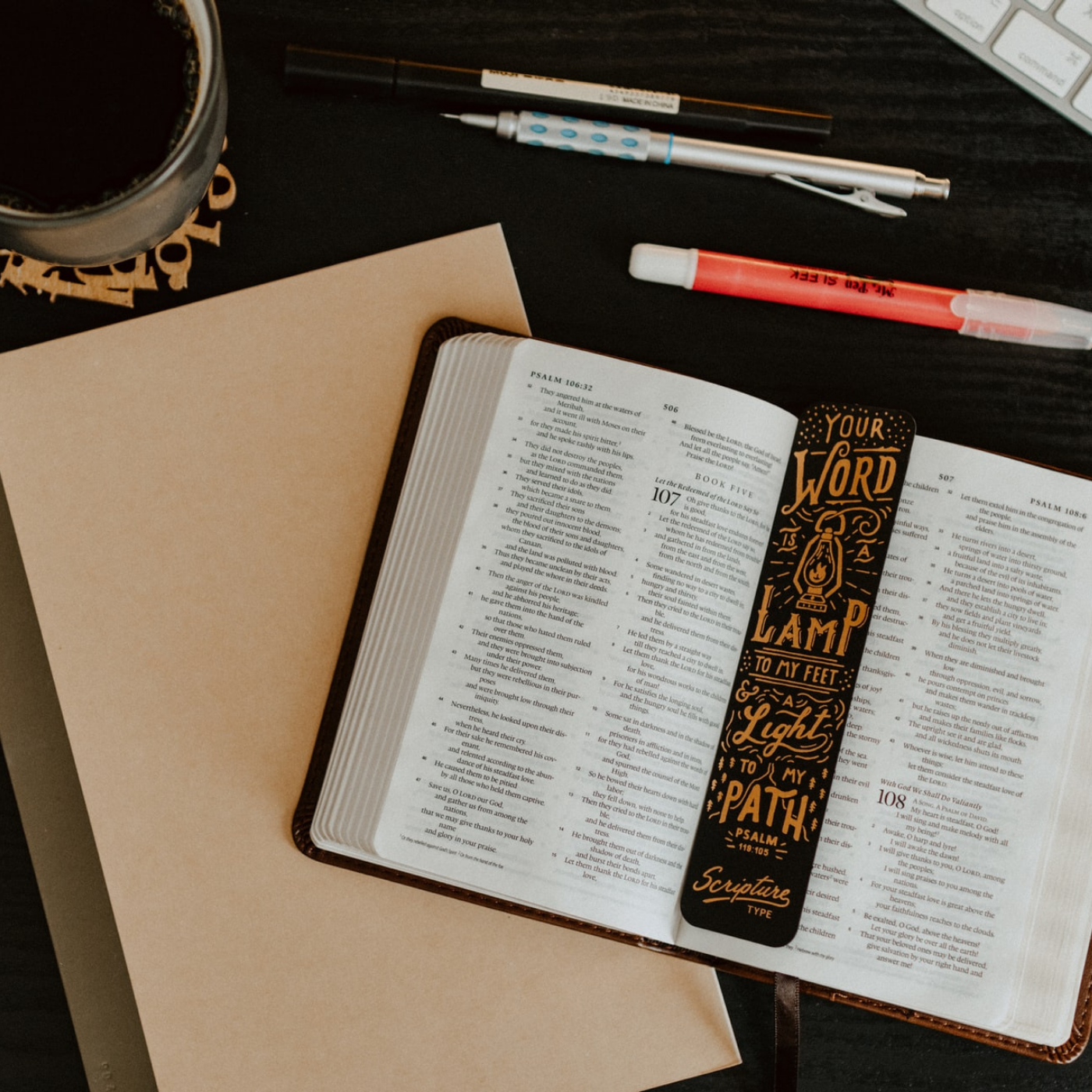
I’ve often said the single most important thing I have ever done for my own spiritual life was to learn the value of studying God’s word. The Bible really is “a lamp to [our] feet and a light to [our] path” (Psalm 119:105). 

I can’t cure COVID. I can’t always know your name. I can’t always know how to pray for you. 

But I can teach you what the Bible says and what it means. 

Together, we can choose to live what we learn. 

Bible study changed my life

I was a young pastor’s wife, with babies at home. 

We had pastored a small, rural church we loved in Mansfield, Texas. I knew everyone’s name and most of their stories. 

The next thing I knew, Jim was called to pastor First Baptist Church in Midland, Texas. That church had thousands of members, and I quickly realized I was in over my head. 

I’d grown up in the church, but not in a Baptist church. I’d read the Bible but had never really studied the Bible. 

And yes, there is a big difference between those two things. 

I agreed to teach a small women’s Sunday School class, and I knew I had a lot to learn. I joined the Community Bible Study program at our church and quietly took my seat in a small group. 

Every week, I was terrified, thinking the leader would call on me and expect me to have the right answers. After all, I was the preacher’s wife. But, I was a preacher’s wife who still had a LOT to learn. 

Years later, I’m still learning. 

I can honestly say that nothing I have ever done has been more important to my soul than learning what God has spoken to all of us through Scripture. 

I enjoy writing this blog post and the many other things I’m involved in. But nothing is more important to me than teaching God’s word to others. 

It is a privilege to pass along what others gave me and, most especially, what the Holy Spirit gives me today. 

Foundations of Faith 

The Bible study this year is entitled Foundations of Faith.

You are invited to join us each week as we study Peter’s words of encouragement and direction to the early church and then look at the faith of many of God’s people throughout biblical history. 

The faith Peter described in his letters to the early Christians is still the perfect model for all of us today. If it has been a while since you read 1 and 2 Peter, I would encourage you to do that. His words are incredibly relevant to what we are experiencing centuries after his letters were written. 

2020 has been a year of challenges, and there will be more to come. But, it is often the difficult days that most provide Christians with the opportunity to share our faith with others. 

Peter teaches us what we need to know to live as strong, loving examples of Christ in our culture today. 

Come study with us

For the past several years, I have been teaching two Bible studies in Dallas. I will miss seeing the faces of these ladies I have grown to love. 

Later this week, I will tape the lectures I would normally give each week. Please pray that I can put myself and my circumstances aside and allow the Holy Spirit to teach through me. Jesus is our teacher; I’m just a “mouth and mind” who wants to be used. 

I’ve written lessons and they are published in a book, Foundations of Faith, that you can order. The book is offered by our ministry at our cost. Our original printing of 750 quickly sold and a second order has been placed.

So, if you have ordered one, it is on its way, but it will take a couple more weeks to get it. The books will begin shipping on September 4. 

I always tell my classes that the most important part of Bible study is the time you spend with your Bibles, the lessons, and God’s Holy Spirit as your guide. God still speaks to us like he spoke to Moses. Most often, his voice is heard from the pages of his perfect, holy Word. 

If you don’t want a book, you can still join us and watch the virtual lessons. We will provide a link each week so you can study with us. 

Please pray

If you are a reader of this blog post, you are probably a student of the Bible and a Christian who wants to walk with God. Therefore, I have a prayer request. 

This study is going to reach people who have studied the Bible for most of their lives and people who will study Scripture for the first time. Please pray that God will grant me wisdom to teach his word well through the power of his Holy Spirit. That is everything. 

I had been praying the Lord would redeem our “closed-in and closed-off” days for his great purpose. This study, I believe, is one of my answered prayers. 

I’m praying that God’s word will strengthen, encourage, and even call—for the first time—a group of people who will spend eternity together one day. 

What a privilege for me to be part of God’s plan to redeem a virus for his greater good.

One last story, a God story 

We ran out of books and the ministry had to shut the link off. 

How were we going to fulfill all those orders? 

I’m grateful to all of our staff who jumped toward the challenge to make all of this possible. We are blessed to work with some of the finest, most dedicated people I know. I am so grateful for them because they are able to do what I never could have done myself. 

We are a group of combined gifts who genuinely want to serve God. What a privilege to be part of this staff! 

But, I have one last story to share because it is a story only God could have written. We don’t make money on these books, and there are expenses for the taping. But, our staff believed it was worth whatever it took to make Bible study available to my groups and to others. 

When we ran out of books, it was a “moment” to be sure! 

That day, a woman I’ve taught for more than twenty years felt led to make a gift to our ministry and asked me to direct its use. She had no idea at the time we had run out of books. 

Is God amazing or what?! 

We didn’t have to ask God what to do next because he had already told us. And that is why I am excited to invite you to join us in this study. I believe God has made it possible, “for such a time as this” (Esther 4:14). 

If you would like to order the study guide, Foundations of Faith, just click on the title and it will take you to the order page. 

Your books will ship out on September 4, and the first lecture will be available on the website the following week. 

(To the ladies in my Bible studies: you already have a book reserved, and you will be hearing from your leaders if you haven’t already!) 

I hope you will join us each week. 

It will be encouraging to see what God has planned for us as we study his Word together yet from different places. 

We are citizens of heaven

The verse jumped off the page when I read it last week. I’ve thought about it so many times since that I felt like the Lord wanted me to write this blog on the subject.

The American flag has hung in my driveway for the past week. I also lined my drive with smaller versions of the Stars and Stripes. I love this country, and this year, especially, I thought we needed to celebrate. 

Interestingly, I spent the week writing a Bible study from 1 and 2 Peter. I think the timing of Independence Day with my work is what caused me to pause and rethink a familiar verse. 

Faith first

The book of 1 Peter was written to Christians who had been “scattered” to the area we know as modern-day Turkey. Many had been driven from their homes in Israel by Jewish leaders who considered their teaching heresy.  

These people put their faith ahead of everything else and left their homes behind. They settled in a part of the world that had a pagan culture and no interest in changing their way of life. 

Sound familiar? American History 101? 

Peter taught those first-century Christian pilgrims to see themselves as a holy people, saying, “You are a chosen race, a royal priesthood, a holy nation, a people for his own possession, that you may proclaim the excellencies of him who called you out of darkness into his marvelous light” (1 Peter 2:9).  

What if we had not received mercy?

Peter reminded them that there was a time when they had not been holy, “had not received mercy” (1 Peter 2:10).  

Do you ever stop to wonder what your life would have looked like if you had not placed your faith in Christ? 

Sometimes, I get angry at what I see people doing in the streets, saying on television, or even getting arrested for on the evening news. Rarely do I think, “That could have been me.”  

But, who would I have been if I had not received God’s mercy? 

Christians are foreigners, exiles

It was the week of July 4 when I studied the second chapter of 1 Peter. Maybe that is why the words jumped off the page. Peter wrote, “Beloved, I urge you as sojourners and exiles” (1 Peter 2:11). The NIV uses the words foreigners and exiles

The words jumped off the page because that is how I’ve felt watching the news lately: scenes of destructive violence that seemed foreign to me. The news, on any station, sounds more like propaganda than objective facts. It seemed “un-American” and ungodly.  

Then I studied the verse and realized a biblical truth: there isn’t a country on earth I love more than America, but America is not where I am to place my highest loyalty. 

I’m a foreigner and an exile until I am home in heaven. 

That is why the Apostle Paul wrote, “But our citizenship is in heaven, and from it we await a Savior, the Lord Jesus Christ” (Philippians 3:20). 

An American idol 

It’s interesting that there is a television show called American Idol. We do love our celebrities! 

I think we are supposed to love our country, but, for many, America is an idol

I had a woman get very angry at me one year for those words. She spent most of her free time volunteering for organizations that honored veterans and political organizations that promoted candidates. Nothing but complete American allegiance was considered Christian to her. 

The point I was trying to make, that she sadly actually made for me, was this: biblically, if we love America more than we love Christ, America is an idol in our lives. 

Our citizenship is in heaven

I love my country and don’t want to live anywhere else. 

We are blessed to have freedom of speech, freedom of religion, and freedom to live as we choose. But, the blessings depend on people using those freedoms with morality. 

Some Americans thought they were free to steal televisions and take away other people’s freedoms. Some Americans thought they were free to tear down what others had been free to build. All of us are free to choose, both right and wrong. 

There has never been a time in our nation’s history when America was “one nation under God.” There have been times we got closer to that goal, but it has always been a goal more than a reality. Why is that? 

We can love our country, and we should. But there is a verse from 1 Peter 2 we need to remember. Christians are foreigners and exiles anywhere they live on this planet. When we choose to place our eternal future above our earthly freedoms, we will never truly be citizens here. 

We have pledged our allegiance to Jesus. 

How then should we live?

Peter answered that question in his letter as well.  

He wrote, “Live as people who are free, not using your freedom as a cover-up for evil, but living as servants of God. Honor everyone. Love the brotherhood. Fear God. Honor the emperor” (1 Peter 2:16–17).  

The best citizens of heaven will be the best citizens of any country on earth. America shouldn’t be our idol because it shouldn’t be our highest priority. We gave Jesus that place of honor the day we asked him to be our Lord.  

I think Christians should serve our country because they want to serve Jesus. Pray for God to call out those who will lead like Jesus, for his eternal purposes.  

Finally, understand that the reason Christians feel like foreigners in our culture is that we are foreigners. 

When you watch the evening news, it is okay to realize “this is not my home.” We won’t belong anywhere completely until we are living in heaven. That is where we will spend every moment free to be godly. That is where we will spend every moment unable to be anything less. 

Until then, we know how to live. 

The important question is, will we use our free wills to do so?

I Know Your Ministry

What is your ministry?

God has given you a ministry, and, because of 2 Corinthians 5, I know what it is. 

I don’t have to know you, and I don’t even need to know your gifts and talents. 

I can confidently tell you what your ministry should be.

What is your ministry? 

I’ve always answered that question by saying, “I am a Bible teacher.” 

But I don’t see that as my ministry any longer. Teaching is how I usually accomplish my ministry. The apostle Paul defined my ministry and yours in 2 Corinthians 5:18. 

Paul said God has given us “the ministry of reconciliation.”  

Paul was teaching the Christians in the Corinthian church how they should view his ministry and their own: as a ministry of reconciliation. Every person in this world should be viewed with one important distinction: that person is a child of God, or needs to be. 

Every other distinction is regarding them “according to the flesh” (2 Corinthians 5:16).  

Your ministry is to help other people be reconciled to a right relationship with their heavenly Father. 

You accomplish that ministry when you have that relationship yourself. 

If you want to please God . . .  

We want to please God, but why does it often seem to be a huge puzzle? 

Scripture clearly tells us how to please God. Second Corinthians 5:11 says, “Knowing the fear of the Lord, we persuade others.” That is the ministry of reconciliation. 

We don’t necessarily please God when we serve, give, do, go, say, attend, study, share, preach, teach, sacrifice, etc. We don’t necessarily displease God when we don’t.  

We please God when we live in a reconciled relationship with him. When we are close to God, it is much easier to be godly and live out his holy directives.  

When we are reconciled to God, we see people like God sees them. We speak the words he wants us to say. We have his peace, his joy, his grace, and his love. 

When we are close to God, he gives us the ministry of reconciliation. Others will be persuaded to know God because they witness our relationship with him. 

We don’t please God because of what we choose to do. Our ministry is not doing works to please him. We please him because he is able to do works of ministry through us, and that pleases him.  

A reconciled relationship accomplishes the ministry of reconciliation. We know God, then we share that knowledge with others—and that is how they are persuaded to know God for themselves. 

It really is that simple. 

The church that pleases God 

I’m convinced that many of the problems that exist in our culture and our churches could be resolved by understanding and living what Paul taught Corinth. What is the purpose of any and every fellowship of Christians?  

To be a body of believers, reconciled to God and therefore able to persuade others. 

So many churches are focused on pleasing its members rather than pleasing God. Does your church spend more effort on persuading people to be reconciled to God—or to each other? 

The right priority will lead to the next. 

Is your church spending substantial time and money persuading other Christians to join their institution or is the priority to persuade people to join their lives with God?  

The church that pleases God will exist for the sake of the people who are outside of its walls. Sunday morning should help restore people to a right relationship with God so they can accomplish their ministry and help others be reconciled to God. 

Give away your treasure 

The news about the stock market has not been positive lately. But, people who know what they are doing will move funds, reinvest, and might even be better off in the long run. That same thing is true with the spiritual treasure you have been given. 

Every Christian has been given an incredible gift through God’s Holy Spirit: we have been given the knowledge of God (2 Corinthians 4:6). Paul calls that knowledge a treasure we keep in jars of clay, i.e., our human bodies. 

Because we know God, we are called to please him (2 Corinthians 5:9). How do we please God? We give away our treasure: “We persuade others (2 Corinthians 5:11). 

Give your treasure to other people and you will be reinvesting it in heaven, just like some have saved their money by reinvesting in other stocks.  

Paul would tell us to move our treasure from the “tent” and reinvest it in our mansions. The “stuff” of this world has a volatile future. Heaven is a safe investment every time. 

A. W. Tozer, an American pastor and author said, “It is not what a man does that determines whether his work is sacred or secular, it is why he does it.”  

Be reconciled to God and you will accomplish your ministry for all the right reasons and invest in your life eternal. 

It really is that simple.

Bible Hacks

It’s funny how words can evolve to take on different meanings. The word hack used to describe the sound of a person’s cough. Now we most often use the word to describe an idea that makes our life easier.

A lot of words have evolved and changed over time, and there will never be an end to new ideas. Maybe that is the most remarkable thing about the Bible. 

The Bible we study today contains the exact same Scripture that every other generation has studied. The prophet Isaiah lived in the eighth century BC and wrote, “The grass withers, the flower fades, but the word of our God will stand forever” (Isaiah 40:8). Thousands of years have proven the truth of his statement. God’s unchanging word still stands. 

So how can I make studying the Bible, God’s forever truth, a bit easier? 

Here are a few Bible “hacks” I have used over the years. 

A few Bible hacks 

How to search your Bible easily

Take your Bible and divide the pages of Scripture in half. You should find yourself in Psalms or Proverbs. The first half of the pages will be the Old Testament history. The middle of the Bible is wisdom literature. 

Next, you can divide the back half of the pages into two equal sections. The first half contains the prophets and the back half will be the New Testament. (Hint: If you have a study Bible, you will have to adjust for the study pages at the back, but, generally speaking, this works.)

How to choose the best study Bible

Everyone needs a study Bible, but which study Bible version is best? 

Study from a version that has the study helps authored by a long list of scholars. No one person can know enough to be an expert in every book. Choose a version that has invited the best scholar(s) for each book to author the notes. Those notes will be less denominational and more focused on the original translation of the original manuscripts. 

Scripture will always mean what it has always meant. Buy the version that understands that perspective is the accurate goal for study.

How to believe the Bible 

The Bible makes many promises but many more “probably statements.”  

People often read a psalm or proverb as a promise, then feel let down when the verse seems untrue in their circumstances. Psalms and Proverbs are wisdom literature. Most of those Scriptures were written to remind us of what God is able to do, not what God has promised to do. 

I often use Proverbs 22:6 to illustrate this point: “Train up a child in the way he should go; even when he is old he will not depart from it.” That verse cannot be a promise because we know God created every child with a free will. Therefore, it is a “probably” verse because most kids who are raised to know and love God usually find their way back to the faith, even if they choose to stray.

How to know the Bible 

Google is great, but Psalm 119:11 is better: “I have stored up your word in my heart, that I might not sin against you.” 

One of the jobs of the Holy Spirit is to remind us of what God would say now because it is what God has already said. In our Google world, it seems easier to remember our phones than remember a verse of Scripture. But, we will make fewer mistakes if we store up what we need to remember. 

The best teachers and counselors will rarely pause mid-sentence to say, “Let me check Google and I’ll get back to you.”

How to live the Bible

The best hack I can suggest is to give up the notion that ease is our goal. 

There is no such hack. The easiest way to live out our faith is to be absolutely convinced that it isn’t easy

Never underestimate the value of knowing how much you need God’s help to live his ways. He knew it was difficult. That’s why God gave us his Holy Spirit. The best way to live a biblical lifestyle is to “keep in step” with God’s Spirit (Galatians 5:25). 

Suggested Bible resources

After thirty-plus years of ministry, I’ve discovered a few helps that I’m happy to share. There is an abundance of information, but I can help you wade through those waters. These are a few of my favorite Bible helps: 

Favorite study Bibles

I recommend the NIV Study Bible and the ESV Study Bible. Both have used great scholarship for the notes. That said, only the Scripture is the perfect word of God. The notes will always have a few imperfections.

Favorite shortcut  

I like to use a Bible promise book to search for a good passage about a subject. If I have to teach a class, speak to a group, or counsel a friend, a Bible promise book is a great way to begin. 

I look up a topic, then I often find a verse that leads me to a passage. I can then teach the verse in its context. Because what the verse meant is what it still means today.

Favorite Bible websites

I like BibleHub.com if I want to read a verse from several different versions. 

I like OpenBible.info if I want to see several verses from Scripture on a particular subject. 

I like BibleGateway.com for advanced study of a passage. 

Their commentary help is called BibleGatewayPlus and will cost you a few dollars each month, but it is handy and reliable help if you are a teacher or person who wants to dig a little deeper using a website. 

And although it might sound self-serving, you should know that those of us who write for Denison Ministries have a strict commitment to biblical accuracy.

Only God’s word is perfection, but a lot of dedicated Christians have worked hard to make it easier for us to know and live a life that God is able to direct and bless. I’m grateful for the countless teachers I have had throughout my life. I’m glad to offer all of you a few “hacks” for some easy help along the way. 

The best Bible hack 

I was teaching 1 Corinthians last week when I discovered what might be the best hack in the Bible. Paul wrote to the church and said, “And I will show you a still more excellent way” (1 Corinthians 12:31). Paul proceeded to give them 1 Corinthians 13, often called the “love chapter.” I’ll sum it up for all of us by saying the most excellent way to live our Christian lives is to love God like he loves us and to love others with the love God gives through us.  

Hack into God’s love and the rest of life will get a lot easier.  

Now, go find your Bibles and try that first hack. It really works, and you should be finding those Bible passages much faster in the near future.