
Spiritual Pilates

My husband and I just returned home from our much delayed anniversary trip. We spent ten days in Hawaii, and it was wonderful to relax, rest, and restore our souls. And then it was time to come home and get back to work. 

Honestly, after one week home I’m thinking I need another vacation! Several times on our trip, Jim and I talked about the “pace” of our lives and how much slower things seemed to happen in Hawaii.

Hawaiians walk slowly. Cars drive a LOT more slowly. And, at our anniversary dinner, I thought the coconut shrimp would never arrive. (More on that later.) 

We are back home and looking forward to the “lazy days of summer.” Will we slow down? 

Honestly, I hope not. 

RELAXED OR RESTORED? 

I’ve learned there is a significant difference between relaxed and restored. That difference is a great place to begin this month’s blog posts. We are going to spend the month of May thinking about the desert seasons of life and what we can do spiritually to move through those times. 

I think one of the great lies Satan likes to use when tempting God’s people is to convince us we need to relax, when what we most need is to be restored. 

The purpose of the Sabbath rest was so that people would focus on God. A good study of the Sabbath shows that God didn’t tell his people to “relax” their standards on the Sabbath. In fact, in many ways the standards were much higher for that day. 

It was good to relax on our vacation, but the real purpose of that time was restoration. When the ten days were over, it felt good to get back to work. 

A permanent vacation is not what God intended for our lives. 

NOW, ABOUT THOSE COCONUT SHRIMP 

There is a reason why I called this blog post “Spiritual Pilates. Every morning, Jim and I took a long walk on the beach. One of the resorts we walked past had an early morning Pilates class on the beach. There were people of all ages and abilities doing the morning routine, and I thought it looked interesting! 

I came home and found several videos I can use at my house. I’m interested in Pilates because I was a little too interested in those coconut shrimp! 

I won’t get in shape simply because I rest. I also need to rest from those coconut shrimp. God had a similar reason when he commanded us to have a Sabbath rest. Our rest is something to be worked at if we want to truly be restored. 

STRONGER IS BETTER 

I watched those people of all ages doing the Pilates class on the beach. The music was wonderfully quiet. Their movements were slow and focused. And they could modify the poses for their needs. The point of those exercises was stretching, balance, and strength. 

What would spiritual Pilates look like? 

• What area of your spiritual life needs to be stretched? If you do the same spiritual exercises all of the time, chances are you have stopped growing. Routine spirituality is good unless it has become just a routine.

• Does your life feel balanced? Sometimes work, family, stress, and health issues can throw our lives off. Our lives, this side of heaven, are imperfect. The whole point of Pilates is to counterbalance. When the things of this world pull us off-center, we need more of God in our lives as a spiritual counterbalance. We can’t keep the stuff out of our lives, but we can allow God to keep us in balance and prevent us from falling.

• Finally, all of us have a certain amount of muscle because God has created us to be strong. The same is true spiritually as well. When God gave us his Holy Spirit, he gave us his strength. But, the muscles we don’t use grow weak. No one is strong spiritually unless they consistently use the strength the Holy Spirit wants to provide.

Life is easier when we have strength. When the Pilates class ended, the people were tired—and stronger. If you need spiritual encouragement right now, that might be your answer. Tired isn’t a bad thing if what you are doing is increasing your strength. Stronger is better. 

IT’S TIME TO TRAIN FOR THE DAYS AHEAD 

COVID was hard on everyone and still is for many who haven’t had their vaccine. The hospitals are filling up again, but this time it is the younger adults with COVID. Counselors’ schedules are filled as well. For many in our culture, this past season has been their first spiritual season of living through a crisis. It was the first time their choices were limited and their freedoms were taken away. During an unhealthy season, spiritual health was even more important. In fact, I would say it was the most important counterbalance. 

Every life goes through seasons of change. One day, we will look back with understanding on the many ways God has brought good from the tough times. I think our vacation in Hawaii was made even more joyous because it became a celebration of much more than our marriage. We finally felt safe and were therefore joyful as we traveled, rested, and enjoyed the beauty of God’s world. 

When we go through a tough time or feel spiritually weak, think Pilates. We need to counterbalance. If we feel spiritually weak, we need to rest from the world and focus on God. Stronger is better. 

IN HIM WE LIVE AND MOVE AND HAVE OUR BEING 

If you read this blog post, I assume you wake up each day knowing you “live and move and have [your] being” in Christ (Acts 17:28). I can’t write a blog post without using God’s word, so allow me to close with this. 

Jesus was responding to Satan’s temptations when he told the devil, “It is written, ‘Man shall not live by bread alone, but by every word that comes from the mouth of God” (Matthew 4:4). Our culture has turned God’s truth inside out. Most are much more concerned with their daily bread, and too many actually disdain the words that have come from God’s mouth. There is a great need to refocus on the laws of God so we can enjoy his blessings. 

Christians should be ready to spiritually train for the days ahead and be stronger. Maybe that is why God allowed a season of COVID. It probably isn’t difficult to know if the tough times led you to focus on the Lord more often or less. So many in our culture need to wake up in the confidence we have in Christ. We need to share “every word that comes from the mouth of God.” 

What “exercise” will strengthen your walk with the Lord? 

With an army of strong believers, we can change the world. It’s happened before. I expect it will happen again. God always has a plan to restore his people to a place of strength. 

Let’s see God’s plan for the days ahead. It will be a spiritual workout. You will be stretched, balanced, and stronger. Spiritual Pilates will probably make you tired, but stronger is better. 

Will you start today?

The best time with God is any time with God: 4 steps to focus your day on him

A note from Janet: One of my great blessings in 2020 was the addition of Trace Kennedy to our ministry team. Trace is the Brand Manager for the JanetDenison.org brand and has been an invaluable asset as we expand the outreach of our ministry. Trace will be guest writing for my blog for a couple of weeks while I am away. I know you will enjoy her thoughts. Thank you, Trace, for everything you do!

All month Janet has been talking about making time for God to replenish your soul. His timing is perfect; it was a convicting reminder for me.

I have to be honest: since I’ve started working full time, my schedule has shifted significantly. I’m much busier than in recent years. As a result, my quiet time has suffered. I study God’s word a lot because it’s part of my job as well as part of my responsibility as a Bible study leader. 

But unencumbered, dedicated time alone with God? 

That has suffered. So has my soul.

What might be keeping you so busy that consistent, wholehearted time with God is suffering? 

You could be a mom committed to making sure your kids know the Bible only to find that you never seem to have time to read it for yourself. 

You may serve as a Bible study leader or Sunday school teacher who devotes hours each week preparing your lessons, but there just doesn’t seem to be enough time to be still and know God. 

You may even work for a ministry, getting paid to serve daily, yet, at the end of the day, you somehow never encountered your Boss.

Time with the Lord is essential to good spiritual health

Just like our bodies need consistent, quality exercise and nutrition to stay healthy, our souls need daily, quality time with the Lord. He created us for relationship with him. John 15:5 says, “I am the vine; you are the branches. If you remain in me and I in you, you will bear much fruit; apart from me you can do nothing.” 

We aren’t meant to do anything separate from God, but how often do we find ourselves too busy to spend time with him, and then, by default, we do most of our day without him?

Intention doesn’t equal action

A. W. Tozer said, “To desire revival . . . and at the same time to neglect prayer and devotion is to wish one way and walk another.” 

Said another way, while we may have great intentions, if our actions don’t match our intent, we won’t get the results we want. 

For example, simply knowing we need to make better lifestyle choices doesn’t get us in shape. It’s when we create a plan and follow through with it regularly and consistently that we begin to notice the positive changes occurring in our bodies. 

We can’t wish our bodies into shape, just like we can’t wish for our relationship with God to deepen into something meaningful and transformative.

We truly won’t reap the benefits of that relationship until we develop a plan that not only works in our schedules but is also something we can easily execute daily.

Make a plan you can stick to

For the past decade or so, I worked as a personal trainer. Recognizing that lack of time was the greatest excuse people made not to exercise, the fitness industry began exploring the benefits of shorter, more intense workouts. 

In “Why Efficient Workouts are Best,” Ryan Shepperd, MSEd says, “Keeping the time commitment low will help make the workout easily attainable, no matter how busy your schedule may be.”

Just like short blocks of daily exercise can add up to significant strength and health gains, short blocks of time spent with God in worship, prayer, and study can add up to significant spiritual growth and revitalized joy.

Build your plan

I’ve found that the following plan works for me. Feel free to use it as a model for your own plan:

1.  Morning: Simply rest in the presence of God (5–15 minutes)

Come to him with no agenda, no requests, and no expectations other than seeking his face.  Praise him simply for who he is. Then submit your day to him, including your calendar, your family, and your work—anything that consumes your time. 

“You will seek me and find me when you seek me with all your heart. I will be found by you, declares the Lord” (Jeremiah 29:13–14).   

2. Midday: Meditate on any Scripture, people, or sin he may have placed on your heart that morning (5–15 minutes)

Seek his forgiveness, pray for that person(s), or study his word. Then again, submit the rest of your day to his will. 

“Commit to the Lord whatever you do, and he will establish your plans” (Proverbs 16:3).

3. Any time you’re waiting: Give thanks, pray, and listen.

On your drive home from work, or as you wait in the carpool line for your kids, or while you’re preparing dinner or taking an afternoon walk, give thanks to him for anything he accomplished through you, pray for those he puts on your heart, tell him about any concerns, struggles, or needs you may have, and then be quiet and listen for his voice. 

“Do not be anxious about anything, but in every situation, by prayer and petition, with thanksgiving, present your requests to God” (Philippians 4:6). 

4. Before bed: End your day in gratitude.

Before you go to bed, maybe while brushing your teeth, straightening up the house, or while lying in bed, end your day in gratitude. Thank God for walking through the day with you, respond to anything he may place on your heart, and then go to sleep and rest in his presence.  

“Worship the Lord with gladness; come before him with joyful songs” (Psalm 100:2). 

For me, these four small, intentional blocks of time have added up to significant, transformative time with the Lord each day. The benefits? My days are less stressful, my joy remains consistent, and my desire to spend as much time as possible with God continues to deepen. 

Any time spent with the Creator of the universe will result in good fruit, “for he satisfies the thirsty and fills the hungry with good things” (Psalm 107:9).

For more resources to help you create intentional space for God, please click on the following links: 

Out of the desert and into God’s purpose

A note from Janet: One of my great blessings in 2020 was the addition of Trace Kennedy to our ministry team. Trace is the Brand Manager for the JanetDenison.org brand and has been an invaluable asset as we expand the outreach of our ministry. Trace will be guest writing for my blog for a couple of weeks while I am away. I know you will enjoy her thoughts. Thank you, Trace, for everything you do!

The evidence of spring is everywhere in central Texas, with a heavy emphasis on green and yellow. (As a Baylor parent, I like to think it’s a shoutout from God to the Baylor Bears’ basketball championship title.) 

I have to admit, I’m embracing this spring with a deeper gratitude than in years past. The weeklong winter storm of Texas was enough to make me beg not just for warmer temps, but hot temps! 

Soon enough, the mild temperatures of spring we’re enjoying will be replaced with the blazing heat of summer. Streets and sidewalks will appear wavy, the new, fresh foliage of spring will be limp and tired, and regular walkers will resemble their panting dogs. The once welcoming enthusiasm of summer will be replaced with the longing for more refreshing, fall-like temperatures. 

Inevitably, seasons outlast their welcome, and most of us are always ready for the refreshing or relief that comes with the season that follows. 

AN EMPTY NEST LED TO EMPTINESS 

Spiritual seasons are similar. 

In recent months, I have come through a summer, or “desert,” season in my faith walk. A few years ago, when God led me into it, I reveled in the “sweat” that was involved, knowing that the Holy Spirit was moving in me, changing my direction, and shifting my purpose. 

When my last child went off to college, and I became an empty nester, I suddenly found myself with a whole lot of time and not a whole lot to do from a meaningful standpoint. At first, I embraced it, excited to see what God was going to do with me. But then, the waiting and wondering led to wandering. 

It’s easy to get discouraged when it seems like God isn’t answering, doesn’t it? 

Where in your life do you feel like God may be stonewalling you? Maybe it’s in situations, circumstances, or relationships you have prayed about, yet it seems as if God isn’t answering, or really even listening. 

We’ve all had seasons that start out full of promise and new beginnings, only to stagnate and foster discouragement, impatience, and restlessness. 

JESUS NEEDED GOD’S RESTORATION, AND SO DO WE 

I’ve been studying Luke 4:1–13 extensively for the past several weeks, researching the temptations of Jesus for a work project. My initial thought was how easily Jesus fended off Satan’s attacks. Reading just those verses, resisting the devil genuinely seems like a walk in the park for Jesus despite his physical hunger from forty days without food or water, his emotional fragility due to desolation and isolation, and his spiritual battle to glorify God by remaining in his perfect will. 

But Matthew’s gospel reveals something crucial to Jesus’s desert experience that Luke doesn’t mention. Matthew 4:11 says, “Then the devil left him, and angels came and attended him.” Here, Scripture points out clearly that resisting the Enemy wasn’t easy for Jesus; in fact, it was so difficult he needed divine help to recover and be restored. God allowed the hard time in the desert to show us that Jesus was strong enough to withstand what the Enemy threw his way, but Jesus didn’t do it without being depleted. Before Jesus left the desert and returned to Galilee to begin his Spirit-powered ministry (Luke 4:14), God had to refuel and refresh him. 

Isn’t that a beautiful picture of God’s tender love for us? 

He wants us to know that when we walk through the desert seasons of life, experiencing scorching days where we become like wilted plants oppressed by the heat, we are going to need a divine refreshing—not relief the way the world relieves, which is temporary and unsubstantial, but Spirit-powered sustenance that strengthens and endures and readies you for what he is calling you to do. 

THE DESERT JOURNEY 

For over two years, God allowed me to walk, sometimes stumble, and oftentimes crawl through a desert season. Frequently, I took matters into my own hands, believing that my way was a more comfortable and convenient way to where I thought he wanted me to go, only to end up deeper in the desert and even more desperate for relief. 

Isn’t that just like human nature? We seek out our versions of a mirage, hoping it’s the oasis we are looking for. We pursue short-term solutions, make impulsive decisions, or seek worldly comforts thinking they will give us long-term relief and direction.

But, in reality, worldly resolutions fade quickly and can often leave us feeling unworthy, hopeless, restless, and frustrated. In desert seasons, it’s so easy to relate to Paul in Romans 7:15: “I do not understand what I do. For what I want to do I do not do, but what I hate I do.” When we are exhausted, thirsty for something satisfying, and hungry for genuine spiritual food, why do we tend to seek our own solutions instead of God’s? 

Much like the Israelites who wandered around and around in the desert, I felt like God had me in this holding pattern with no clear exit plan. After sharing this thought with a wise friend, she told me that I was perfectly positioned to receive God’s replenishment and ultimately his plan—not the world’s. In that moment, I realized I was doing the exact opposite of what Jesus had done in his desert time: focusing on the Father, trusting in the strength of his word, and relying on him to meet all of his needs. 

EXCHANGING MY WILL FOR HIS 

When I stepped into faith, humbly surrendered my will to his, and began walking obediently behind him, the Lord restored my soul. 

My former pastor has often said that the most miserable people he knows are believers living outside the will of God. Is it because we choose to settle in the desert, preferring temporary relief through worldly comforts? Relief and departure from the heat only came when I chose the restoration that only Jesus can supply. 

When we position ourselves to receive all God wants to give us, God is able to bless our lives and use us for his divine purpose and plan. My former Sunday school teacher and longtime Bible study teacher has continually instilled that truth in me over the last fifteen-plus years. And over and over, I have seen this truth played out in my life. 

Never would I have imagined that one day she would be my boss and that I would be working for a ministry that has been instrumental in my spiritual training and maturity. 

OUT OF THE DESERT, READY TO SERVE 

This last year of COVID has been a long and trying season. 

Many of us are probably weary from battling the extreme ups and downs, and we are parched for fellowship and hungry for anywhere but home! This year may have left you feeling anxious, lonely, depressed, or worried. Maybe you ate too much, drank too much, watched too much TV, or spent hours wandering on social media. In the moment, those solutions probably offered some level of comfort and relief, but they ultimately just created more dissatisfaction and a thirst for something more enduring. 

I pray that as you make plans to embark and enjoy this much anticipated season without all the restrictions COVID created, you will first allow God to tend to those places of your heart in need of refreshing. “Seek first his kingdom and his righteousness, and all these things will be given to you as well” (Matthew 6:33). 

Jesus walked out of his desert time, restored and replenished by his Father, and entered into his calling that changed the world. Because of his high calling, we as believers now have the very same power that God gave him indwelling us. 

When we surrender to his divine plan and choose to follow him in humble obedience, he truly is “able to do immeasurably more than all we ask or imagine, according to his power that is at work within us, to him be glory in the church and in Christ Jesus throughout all generations, forever and ever! Amen” (Ephesians 3:20–21).

Work and rest: God meant both for joy

If King Solomon wondered about something, we should too! 

If you have been reading my blog posts for a while, you know I am a big fan of King Solomon. I’m not unaware of his weaknesses; I am just a huge fan of his wisdom. 

King Solomon asked, “What gain has the worker from his toil?” (Ecclesiastes 3:9). Solomon wrote those words at the end of his life. Most people who have studied his life would probably wonder why he, of all people, would write those words! One article estimates that King Solomon would have a net worth today of $2.2 trillion!

Again, why would he write “What gain has the worker from his toil?”

BUSY WITH BUSINESS 

King Solomon answers his own question by saying, “I have seen the business that God has given to the children of man to be busy with” (v. 10). 

The best way to understand King Solomon’s words is to interpret them for the era in which he lived. I’ve often said, “I was born at the right time.” I earn a living with my computer. I fill my refrigerator by making a trip to the grocery store. If it gets dark, I flip a switch. If the clothes are dirty, I push a few buttons. If I want a cup of coffee, I reach for a coffee pod. I could keep going, but you understand my point. 

God’s children have always been busy, but we aren’t as busy today as we think we are! After the fall, God told Adam, “By the sweat of your face you shall eat bread, till you return to the ground, for out of it you were taken; for you are dust, and to dust you shall return” (Genesis 3:19). Adam and Eve had enjoyed the garden because, bluntly, they had it so good. Don’t you know there were days after the fall when they turned to God and said, “It was just one bite, Lord!” 

One of the results of the fall is that we will always be busy. Even with all the luxuries today, that is still true. Solomon said, “I have seen the business that God has given to the children of man to be busy with.” We will always be busy with business. 

Was that God’s judgment—or his provision? 

GOD’S PLANS ARE BEAUTIFUL 

Solomon’s next statement in Ecclesiastes is one of my favorites. He wrote, “He has made everything beautiful in its time. Also, he has put eternity into man’s heart, yet so that he cannot find out what God has done from the beginning to the end” (Ecclesiastes 3:11). 

All of us spend our lives working until we find we can’t work any longer. We get tired and we get tired of our work. Then we often miss the work, along with other things, when we get older. We are funny creatures, and God is good to put up with us! 

But then, God understands because he made it to be this way for a good reason. After God judged Adam and Eve, he caused us to work, to age, and to need rest. He had a good reason. Solomon’s wisdom provides a perfect perspective on the nature of our lives. This whole process of life is God making everything beautiful in its time. 

I’m going to try to remember that as I age. QVC was selling a potion that makes you look ten years younger and I told Jim, “If that comes in vats, I’m buying it.” What does aging have to do with this verse? 

God caused it, God made it, and God made it beautiful. 

Because, at the same time, God also “put eternity into man’s heart.” God planned our lives so that, as we age, we can rest from our busyness with business and more often consider the things of eternity. 

IT’S ABOUT JOY 

King Solomon wrote, “I perceived that there is nothing better for them than to be joyful and to do good as long as they live; also that everyone should eat and drink and take pleasure in all his toil—this is God’s gift to man” (Ecclesiastes 3:12–13). 

God made us to work and made us to be busy with the things of life. Our work is what earns us the ability to enjoy things we have worked for. I would love to hand some of our political leaders the wisdom of Solomon. The most important thing we can do for the self-esteem and for the souls of our citizens is enable them to work. Everyone deserves the chance to know the joy God wants them to have. It was his gift, and we should be careful to help people receive that. 

WHAT GOD DOES ENDURES FOREVER 

I love my work. I’ve just finished writing the Bible study for next year from the book of Romans. Many have asked if I plan to continue to do the video format. The answer is yes. Stay tuned and we will tell you how to download the study later this summer. I will also teach in person and continue to write this blog post, among other things.  

I love working with and teaching God’s word. I’ve spent some time during the past year listening to historical sermons from people like Charles Spurgeon. His messages are amazing! I’ve discovered a website that makes old sermons downloadable. (My podcast of choice!) 

King Solomon said, “I perceived that whatever God does endures forever; nothing can be added to it, nor anything taken from it. God has done it, so that people fear before him” (Ecclesiastes 3:14–15). The sermons I’ve been reading and listening to are just as remarkable today as they were when they were preached to congregations. 

“Whatever God does endures forever.” 

RESTORATION IS WORTHY WORK AS WELL 

As you might have read, I’m a big fan of home restoration shows. I love watching older, out-of-date homes become cleaned up and ready for a new family. That said, I also love that the people who lived in the home before it was all fixed up still called it home.

I’ve often told Jim that I cringe sometimes when the young people complain about the old carpet, parquet floors, and clamshell sinks. (That was a hint about my décor!) But, I’ve also learned that brass fixtures are coming back in style. If we live in this house for another decade, we could become officially “retro” instead of just “old!” 

But, keeping up a home is a lot like keeping up our lives. Everything needs restoration once in a while. 

I love my work and am grateful for this job. I stand in full agreement with King Solomon. My work gives me joy because my subject is God’s eternal word. But, my business is busy. That has been especially true this past year. Our ministry didn’t slow down during 2020. In fact, it grew a lot!  

That is a huge blessing, and we are grateful to all of you who have helped that happen. But, last year Jim and I celebrated our fortieth wedding anniversary with a takeout steak dinner in Styrofoam boxes! (I did light a candle, but that was about all I could do to fancy up our COVID anniversary.) 

Now, we are fully vaccinated and, for the first time in a long time, we are packing our bags! It’s time for our much-delayed anniversary trip. I’m leaving my computer behind, and I’m headed for sunsets over the Pacific Ocean. Because restoring our souls is worthy work as well! 

The Brand Manager for janetdenison.org, Trace Kennedy, will be writing this blog post for me for the next couple of weeks. I will be soaking up warm air and sandy beaches and reaping the joy of hard work and God’s blessings in our lives. I’ll come back to my parquet floors and clamshell sinks, and they will look good to me because I’m home. 

I hope all of you are planning that first, post-COVID break as well. We all need the restoration that God can provide. Thank you Trace for helping me to travel with joy. 

And to all my readers, I’ll be back to work in a couple of weeks. Until then, “Aloha!” 

Yep . . . sunsets, beaches, fresh pineapple, and joy! (At least we made it before we hit our forty-first anniversary!) 

Blessings to all of you . . .

Our souls need a good trim too

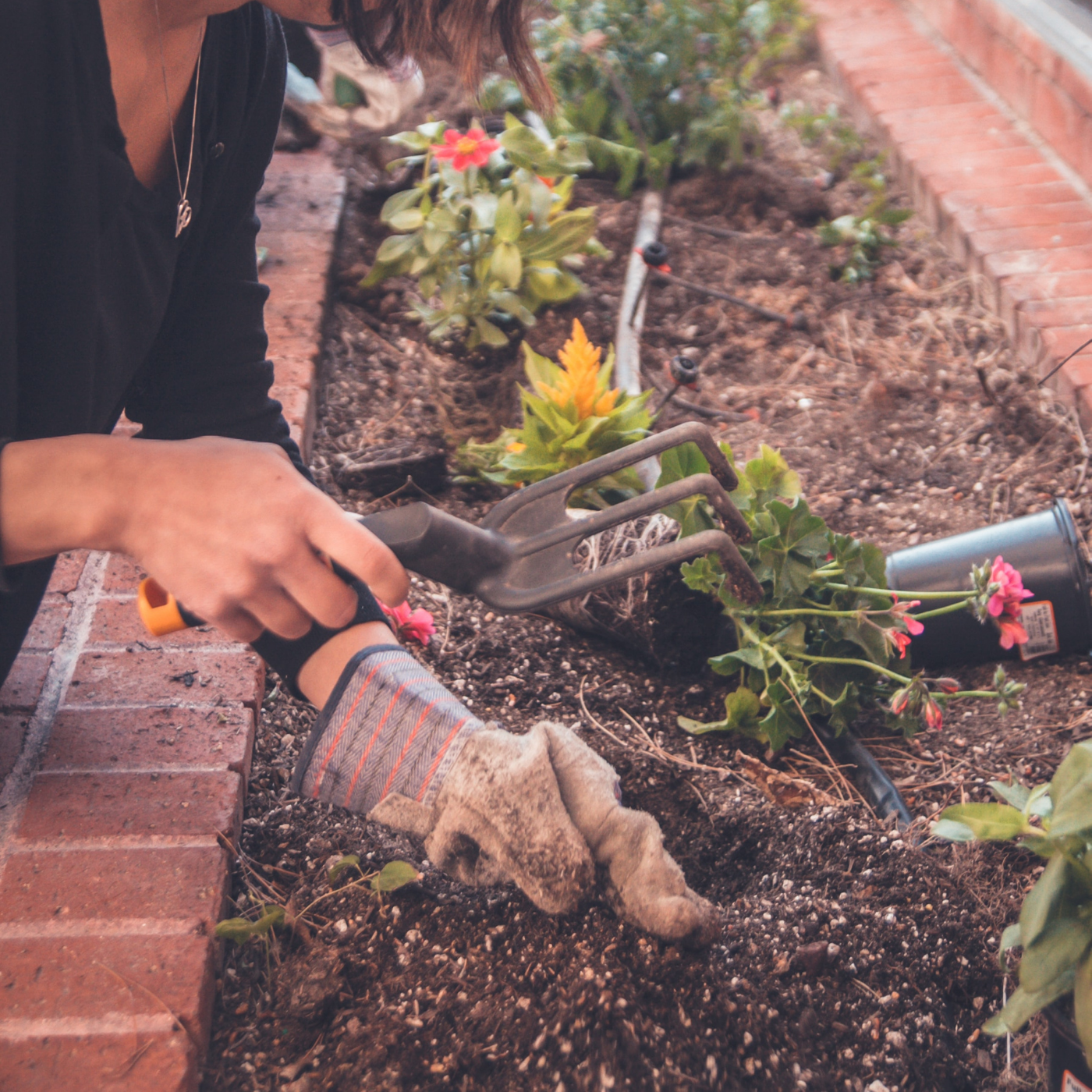
Our yards have needed some extra work lately. That’s especially true for those of us in Texas. We don’t usually get snow, but this past winter was record-setting. For most of us, there are some plants that just gave up! Most of them needed to be really pruned so that the roots would be able to do their job.

After the tough season we have come through, our plants can teach an important spiritual lesson. Sometimes it’s best to submit our souls to that same process of pruning we apply to our plants. 

IF IT’S NOT GREEN, IT’S NOT GROWING 

Several of our plants looked bad after the freeze, but I waited for spring to arrive before choosing to remove them. I had hope for all of them, until it was obvious they didn’t make it. I snapped off a branch and realized it was brown all the way through. It easily broke in my hand because it was attached to dead roots. 

Those of us who live in Texas have learned that once April rolls around, if it isn’t green, it’s not growing. And so it goes with our spiritual lives. 

Sometimes we attach our hopes, even our trust, to something other than the true vine. This past year, we learned that those things don’t survive. 

What was growing in your life that didn’t make it through to the spring season? 

What things did you place your hope and trust in that didn’t prosper? 

Is it time to do some pruning?

Because if something isn’t green, or evergreen, it’s not growing. 

John 13–20 are some of the most poignant chapters in Scripture. Jesus’ beloved disciple records the lessons Jesus spoke during his last days on earth. In chapter 15, Jesus said, “I am the true vine, and my Father is the vinedresser.  Every branch in me that does not bear fruit he takes away” (vv. 1–2a). 

This past year, I think our heavenly Father pulled his pruning shears out in order to do a lot of work. Everyone’s life was altered in some way during 2020 and the winter that followed. Truthfully, no one is really certain the changes are over. But, there is a lot of hope. God will always be at work in the world, even on the hard days. 

THE ROOTS MATTER MOST 

I don’t think spring has ever felt like such a blessing! It was such a joy to worship God surrounded by people again. Easter Sunday felt like a time of rebirth and renewal. Joy always returns in the morning. 

It has been amazing to watch a rebirth in some of our plants too. I was just about to pull out a plant when I realized it was sprouting at the base. All it needed was the dead stuff cut off. Now it seems like that plant looks different every morning! 

That plant is what prompted this blog post. It has served as a parable to me this spring. The rest of John 15:2 says that “every branch that does bear fruit he prunes, that it may bear more fruit.” Is that what God was doing in our lives last year? 

As I look back on 2020 and the winter of 2021, I realize I had put a lot of trust in things other than God. We all worried about politics, people, and possessions. There were a LOT of days it was tough to find anything that looked like it was going well. 

We had a year of quiet, and it was a great year to spend focused on him. Now, as spring returns, how will your life look different? 

Maybe it feels like you have been cut down to the roots. But under God’s care, your life could be changing daily, growing and becoming something changed and stronger than it was before. 

It’s the root of our lives that matters most. Jesus said, “I am the vine; you are the branches. Whoever abides in me and I in him, he it is that bears much fruit, for apart from me you can do nothing” (John 15:5). 

Everything we did last year that was Spirit-led will produce fruit. Everything that was born from a different root will not be worth keeping. A lot of artificial fruit looks really good, but, in the end, fake fruit doesn’t feed anyone. That’s a good metaphor for the fruit we produce in our lives. 

Real fruit is born from the real root, and Jesus said, “That’s me.” 

WATCH THE THINGS THAT COME TO LIFE 

Spring is a season of rebirth. How like God to make sure Passover, and then Easter, would be celebrated in the spring. Jesus died and rose again so that our souls could live eternally. The disciples thought Jesus had been “cut down,” but he was about to change the world. 

From the root of Christ’s work on earth, look at the branches! That growth is available in each of our lives as well. 

I’m still keeping my eye on a few plants. If they don’t grow, I’ll pull them. But, I have a new favorite plant now. It’s the plant that reminded me of an important spiritual lesson. We can come through hard times, better and stronger, if we just let our perfect vinedresser prune away the stuff in our life that is dead or dying. 

If the roots are good and the plant comes back to life, keep it. If there are things you have done during this past season that have strengthened your soul, keep those things and submit the rest, the lesser things, to the perfect vinedresser. 

SOMETIMES GOD USES SHEARS, OTHER TIMES IT’S THE LOPPER 

One last thought: the longer we let the bad stuff grow, the more difficult it is to cut. 

If God has come to you with his pruning shears in hand, be glad. He is just making sure your life can produce more fruit. But, when he has to reach for the loppers, pay attention. Sometimes we allow things to grow that never should have taken root in our lives. If God had to use the loppers, pay attention. Watch for the signs those things are starting to grow and weed them out early! 

I probably won’t replant the same plants that died this winter. They looked good, but they just weren’t strong enough for the tough times. The same is true in our lives spiritually. If God lopped it out of our lives, he didn’t want it there. On the other hand, nurture all that the Lord is pruning. 

Jesus said, “If you abide in me, and my words abide in you, ask whatever you wish, and it will be done for you. By this my Father is glorified, that you bear much fruit and so prove to be my disciples” (John 15:7–8). 

ENJOY THE YARD WORK 

I’m going to spend this month writing about replenishing our souls. After a tough winter, our yards needed a little help and so do our souls. 

I know I have had a good time this year cutting some things back. God is always at work in our lives, using everyday lessons for his greater good.  

He really is the perfect vinedresser.

The day “Hosanna” changed

It’s Easter week. 

Jesus rode victoriously into Jerusalem to the shouts of “Hosanna, blessed is he who comes in the name of the Lord” (John 12:13). 

Days later, Jesus was led out of Jerusalem, in agony, to the sneers and jeers of people who didn’t know they were slandering God’s holy Son. 

How could so much change in just a week’s time?

I saw a recent survey on our local ABC news. It’s expected that only 28 percent of our nation will attend church this Easter Sunday. 

A lot has changed about Easter week in my lifetime as well. 

AT FIRST, DISILLUSIONED 

The people were thrilled to see Jesus arrive in Jerusalem. The crowds incited shouts of joyful praise. They waved palm branches as they hailed their King. But, when he was arrested, they fled, disappointed and disillusioned. They misunderstood God’s plan. 

There are a lot of people in our country who will have a difficult time shouting praises to God this Easter. They have lost someone they loved. They have been hurt financially. They are disappointed in the politics of the day. And, the evening news reminds them that those who attend church on Easter are a minority. 

All of us have been disillusioned with God at some point. We thought he promised one thing, but he gave us something else. We are like the Easter crowds in Jerusalem. Sometimes we misunderstand God’s plan. 

But those who are disillusioned by a tough year should remember that Easter provided God’s eternal plan. We can still misunderstand his higher purpose. 

THEN, DISAPPOINTED 

The people thought Jesus would become a king. He was supposed to run Rome out of Israel and establish Jewish leaders on their throne. When Rome captured Jesus, the disappointment set in.  

It’s remarkable because they had seen his miracles. They had listened to Jesus preach. They had seen that he was no ordinary man. What they didn’t understand was that they wanted the ordinary but got extraordinary instead.  

The people wanted a king for their daily lives. God gave them a King for their eternal lives. 

It’s easy to be disappointed in God when we want him to fix things on earth. God’s plan has never made what is temporary more important than what is eternal. 

NEXT, HOPEFULLY CONFUSED 

When they hung Jesus on the cross, the believers were devasted. When they heard the tomb was empty, they were hopefully confused. 

Jesus had told them what would happen, and it did. He was raised to life again. The final sacrifice had been made for the sake of every soul that had ever lived or ever would live. They had shouted “Hosanna” and now they were blessed by the One who had come in the name of the Lord. The One who had blessed them was a King. But, Jesus was a King like no other. 

Jesus didn’t die so that people could have mansions on earth. He died so people could have mansions in heaven. His promises were filled with eternal hope and eternal priorities. 

Yet, many people have been hopefully confused about how it can all be true. Many of the people around you hope the Easter story is true but are confused about why it is true. They lack the faith to believe.  

It’s remarkable because there are still miracles. We have a Bible filled with the preaching of Jesus. We know he was no ordinary man. Is it possible people still want Jesus to be a king on earth? His throne has always been, and always will be, in heaven. 

Jesus didn’t come to make earth his home; he came to make heaven our hope. 

FINALLY, THE ANSWER BECAME CLEAR 

The tomb was empty because Jesus didn’t plan to make this earth his home. Jesus made his followers his temporary dwelling on earth. 

The disciples had gathered on the Mount of Ascension. They asked Jesus, “Lord, will you at this time restore the kingdom to Israel?” (Acts 1:6).  

Even after the resurrection, the people still wanted Jesus to come back and be an earthly king.  

Jesus answered them with a clear message. He didn’t give his life for the sake of life on earth. Jesus answered his disciples with their new priority. Jesus said, “It is not for you to know times or seasons that the Father has fixed by his own authority. But you will receive power when the Holy Spirit has come upon you, and you will be my witnesses in Jerusalem and in all Judea and Samaria, and to the end of the earth” (Acts 1:7–8). 

Jesus spoke to anyone who would be a disciple and told them he would transform their lives to be a witness to the world. The answer became clear. Jesus told his followers that their priorities and abilities would be changed by the coming of the Holy Spirit. 

And, for those who were filled by God’s Holy Spirit, that transformation occurred. The disciples had new goals, new priorities, and a new power indwelling their lives.  

HOSANNA WAS REDEFINED 

Scripture says that, after Jesus had issued their calling, “he was lifted up, and a cloud took him out of their sight” (Acts 1:9). Jesus, on the Mount of Ascension, redefined “Hosanna”: “Blessed is he who comes in the name of the Lord.”  

Jesus enters every city on earth today as a King through the life of every person who allows him to be King of their life. Hosanna. Blessed are the people who live life on earth, in the name of the Lord—because they will allow Jesus to bless others through their witness.  

We stand on the Mount of Ascension with every disciple, from every century. We, like them, still wish Jesus to occasionally be an earthly king and fix things in this world. But, his final answer to his disciples will always be our calling. 

Jesus told us to be witnesses through the power of God’s Holy Spirit. Every other priority is something less important.   

Only 28 percent of our population plan to attend church on Easter Sunday. How will you shout “Hosanna” to the world this week? 

We are called to be a witness to the true priorities of Easter week. Blessed are those who share in the name of the Lord.  I hope you and your families have a blessed and holy week!

It’s time to trust God more than before

I know some people have an easier time trusting than others. I tend to be a skeptic, and it takes me a while to trust a person completely. I like almost everyone, but trust is something I tend to give carefully. 

As I watch the evening news and read articles on trends, choices, and all things “popular,” I have needed to double down on my choice to trust God for the future. 

I really don’t trust those who are in control right now so I have to remind myself of what I know is true. 

Ultimately, God controls all the final outcomes.

A WORD FOR THE FRONTLINE FAITHFUL 

The well-known “armor of God” passage is from the sixth chapter of Ephesians. Paul taught God’s people that living a faithful life would require them to be tough, wearing God’s armor for the battle. Paul’s churches were established during a period of history that was openly hostile toward the gospel. The Jewish people thought of Christianity as blasphemy. The Roman government thought of the church as another danger to their culture. 

Sound familiar? 

I’m in my early sixties, and I don’t remember a time in my life when God’s armor was more important. It is increasingly difficult to openly believe the Bible in our current culture and express Christian beliefs about values, marriage, the sanctity of life, and many other important standards. 

Those of us in ministry are stepping into deeper waters right now. It didn’t use to be difficult to live as a Christian and be popular, or at least feel respected. It helps to remember that “we do not wrestle against flesh and blood, but against the rulers, against the authorities, against the cosmic powers over this present darkness, against the spiritual forces of evil in the heavenly places” (Ephesians 6:12). 

I consider most of my readers to be “frontline Christians.” You are interested in God’s word, applied to our culture today—or you would read something else. I’m not called to teach “Christian-lite” or soften God’s truth. 

I am called to stay behind God’s Spirit and never forget that it isn’t people I need to fight; it is the same “spiritual forces of evil” that Paul had to fight too. So, to all those on the frontlines of faith, I encourage you to work hard at discerning our real enemy. If we recognize the battle is spiritual, we will fight with the spiritual weapons Paul called our armor (Ephesians 6:10–20). 

WHY IS IT EASIER TO TRUST THE CHARIOTS AND HORSES? 

King David had a lot in common with the Apostle Paul. David lived during a volatile time for God’s people as well. He wrote Psalm 20 as a message from God, to be sung before a battle. The King wanted God’s people to remember that their victory depended on God’s blessings, not on their strength. 

I wish God’s people would sing Psalm 20 for our battles today. I wish we would trust our battles to God as we move forward to fight. It doesn’t matter if we think we are winning. It matters that God is able to win through our efforts. Psalm 20 is a good reminder of that. 

My favorite verse in the Psalm says, “Some trust in chariots and some in horses, but we trust in the name of the Lord our God” (Psalm 20:7). I’ve thought a lot about that verse in recent days. 

A good friend made the point that America was going to have four years of Republican, then four years of Democrat. The wisdom at the end of those eight years should be that Christians have no business trusting either political party to make things right spiritually

We have had a chariot and a horse. (I’ll allow your politics to decide who is which.) As God’s children, we aren’t allowed to trust in either. But it sure is easier to focus on the powers we can see rather than what is unseen. 

We can never forget who is named in Scripture as the ruler of this world. Satan is celebrating some cultural victories these days. That should have always been expected. Our goal is to make certain he has no victories in our personal lives. In my opinion, Satan is having a heyday in the lives of God’s people right now. 

My words and attitudes haven’t always honored God. I’ve allowed fear and anger to control my choices and opinions at times instead of God’s word. I’ve momentarily trusted in a few chariots and horses for my future happiness. Meanwhile . . . I knew what God wanted. 

MAY THE HEARERS BECOME DOERS 

I wonder what King David would write to us as preparation for the days ahead? 

I wonder what advice the Apostle Paul would teach the church today? 

I wonder what wisdom Jesus would give today’s disciples for future needs? 

I wonder, but I don’t. 

We already have everything we need to know in the perfection of God’s holy Bible. The problem isn’t knowing God’s wisdom; it’s doing it. 

I love the book of James and have taught it many times. James, like Jude, was a half-brother of Jesus. James told his church and all of us today, “Know this, my beloved brothers: let every person be quick to hear, slow to speak, slow to anger; for the anger of man does not produce the righteousness of God. Therefore put away all filthiness and rampant wickedness and receive with meekness the implanted word, which is able to save your souls. But be doers of the word, and not hearers only, deceiving yourselves” (James 1:19–22). 

If the only spiritual lesson you consume, trust, and live by is the truth James wrote above, you would live a strong, valuable, effective witness for God in this world. We should read and memorize those words before we open our mouths, make decisions, and step out of our doors. 

Living by those words would change everything. 

THE DISCIPLES THOUGHT THEY HAD LOST 

When Jesus was arrested, tried, and hung on the cross, the disciples were terrified of the days ahead. I’m sure many, if not most, thought they had aligned their lives with Someone who had let them down. They just didn’t know what God was about to do. 

Neither do we. 

We aren’t to trust what we can see. We are to trust the One we know, just not yet face-to-face. We don’t know what chariots and horses will look like in the days ahead. But we do know this: The final Easter is coming. We don’t know how many Easters will pass before that one, but what if April 4, 2021, is the last one? 

I don’t think we have lost. I know we have won. I just know there are still battles ahead. And, I know there are joys, victories, hardships, and everything else that life this side of heaven brings. 

But, my last Easter here will mean the next resurrection day is the only one left. Jesus rose again, and so will everyone who has trusted in his name. So, let’s trust God with more of our lives than ever before. 

Most of the world trusts the chariots and horses. Let’s face it: we would like to trust some of them too. But, King David would remind us that God’s people are to trust in the name of the Lord our God. 

Paul wrote in Romans 10, “Everyone who calls on the name of the Lord will be saved” (v. 13). 

Does anything else seem more important to you today? 

If so, pray . . . until it isn’t.

I might have been a Pharisee

Except for the fact I’m a woman, I might have been a Pharisee. 

I’m a big fan of rules, but one of theirs was “no women allowed.” 

Other than that, there is a lot about their lives I might have appreciated. But Jesus didn’t appreciate much about them at all, and that gives me food for thought this week.

This article comes out on St. Patrick’s Day. St. Patrick wouldn’t have been a great Pharisee, but he was a good friend and disciple of Jesus. 

WHO WERE THE PHARISEES? 

I read an interesting article on the Pharisees. They are mentioned ninety-eight times in the New Testament. The name Pharisee probably is related to the idea of being separate or detached, similar to the meaning of the word holy

The article described the religious leaders by saying, “In many ways, the Pharisees were the worst people in the world. They were cold and legalistic. At the same time, the Pharisees were the best people in the whole country. They were the holy men who kept the law; they pursued purity with a passion and wanted nothing more than to live lives that pleased God. They were sincere, albeit sincerely misguided.” 

So, where did the Pharisees go wrong? 

They wanted to please God but did the opposite. They took their eyes and thoughts away from God by idolizing rules as their god. It was the most prevalent sin throughout Scripture and remains a significant temptation for God’s people today. 

You have to admit, it is confusing. God told Moses to, “Speak to all the congregation of the people of Israel and say to them, You shall be holy, for I the Lord your God am holy” (Leviticus 19:2). The entire book of Leviticus is full of rules for God’s people. The Pharisees took God’s rules and turned them into thousands more. 

God gave us a framework of laws and standards in Scripture so we would know right from wrong. God’s people have always wanted to know what rules to follow because we want to make sure we are following God. The problem: it’s tempting to start following rules instead of God. 

God told Hosea, “For I desire steadfast love and not sacrifice, the knowledge of God rather than burnt offerings” (Hosea 6:6). At some point, the people began to think God wanted the lamb or the wheat instead of their repentant heart and their love. 

That’s one reason Jesus was angry at the Pharisees. He told them, “Woe to you, scribes and Pharisees, hypocrites! For you tithe mint and dill and cumin, and have neglected the weightier matters of the law: justice and mercy and faithfulness. These you ought to have done, without neglecting the others (Matthew 23:23). 

ST. PATRICK GOT IT RIGHT 

An interesting article on St. Patrick said that, as a boy, Patrick was kidnapped and taken to Ireland. He was forced to work in the fields under terrible conditions. 

One night, in a dream, God led Patrick to escape to the coast, where he was rescued by some sailors and returned to his home. Years later, after becoming a Catholic priest, God called Patrick back to Ireland as a missionary. Patrick is credited with bringing the gospel to that country. He converted thousands of souls and started hundreds of churches throughout the country. Tradition says that he used the Irish clover to teach people about the Trinity. 

In his book The Confession, St. Patrick wrote: “The love of God and his fear grew in me more and more, as did the faith, and my soul was rosed, so that, in a single day, I have said as many as a hundred prayers and in the night, nearly the same. I prayed in the woods and on the mountain, even before dawn. I felt no hurt from the snow or ice or rain.” 

Patrick learned to love God, and that priority enabled him to love even those who had once enslaved him. 

IF YOU WANT TO PLEASE GOD . . . 

Do we serve God hoping to appease him or because we love him? 

We can try to please God like the Pharisees, or follow the example of St. Patrick. 

Why did the Pharisees fail to please God while Patrick was named a Saint? 

The Pharisees served the letter of the Law and St. Patrick served the Lord of the Law. Pharisees felt like they grew spiritually as they learned to understand and obey more laws. St. Patrick wrote, “The love of God and his fear grew in me more and more, as did the faith.” 

If we want to please God, we need to examine our motives. 

When last did you obey a law simply because you loved and trusted the Lord of the law? 

TRUE LOVE IS NEVER AN ACT 

Jesus called the Pharisees “hypocrites,” the literal word for an actor. Jesus told them they only acted like they loved God. Jesus knew their hearts and said, “Woe to you, scribes and Pharisees, hypocrites! For you clean the outside of the cup and the plate, but inside they are full of greed and self-indulgence” (Matthew 23:25). 

I confess there have been many times I have worried more about the outside of the cup too. There were many Sunday mornings I got ready for church and spent more time thinking about what I would wear, who I would see, and what I would teach rather than Whom I was to worship. 

I might have been a Pharisee in the past, but I don’t want to be one now. 

There is a reason Easter is my favorite holiday and my least favorite day at church. The church was filled with new clothes, fresh flowers, a live orchestra, and a lot of people who only came that day because it was a holiday. 

In a way, I think I felt about Easter Sunday like Jesus felt about the Pharisees. It was more an act than an act of love. 

THIS EASTER, IF YOU WANT TO PLEASE GOD . . . 

Last Easter, we were stuck at home, with churches shut down. A lot of people felt like we missed Easter. But, I think God enjoyed much of last year’s Easter worship. There was no reason for people to act like they had Easter joy. Those who worshipped did so because they truly loved the God they sang to, prayed to, and were grateful for. 

It is the Lenten season, the days to prepare spiritually for Easter worship. It isn’t our “works” that please God; it’s our love and devotion. When last did you kneel at the cross and gratefully grieve the sacrifice Jesus made for our redemption? 

We can spend Easter acting like we love God or actually loving God for all he has done. The difference between a Pharisee and St. Patrick is that one knew how to please God, the other loved to please him. 

I might have made a good Pharisee, except for Easter. It is easier to serve God’s rules, but Jesus said, “Whoever would be great among you must be your servant” (Matthew 20:26). Let’s remember the example of St. Patrick and make this a great day.

It’s time to get out of the boat

Don’t you feel like you are almost to the end of a very long tunnel? 

It’s been a tough journey, but we expect it will be lighter, warmer, and easier very soon. 

Texas had a week of Snowmageddon and the next week it was spring. Now, there are early flowers blooming and patches of green. 

It feels like the year of the virus is mostly in the rearview mirror. There are still reasons to be careful, but it just seems like it is time to move forward with joy. 

There are a lot of people discussing their need to shape up for this new season. There are articles about diet, exercise, meditation, and makeovers. QVC had their spring fashion day and, I have to confess, I have a few packages scheduled to arrive. The comfy clothes from this past year need to be packed up and donated. In fact, a few things just need to be tossed! 

That’s true of our closets and our lives. 

UPPING OUR GAME 

I think it has been interesting to hear people talk about what the year of COVID has done to their relationship with God. It is almost always one of two conversations. 

Some talk about the fact they haven’t been in church and have drifted from God. Many just haven’t been as dedicated to read and study their Bibles as they were before. 

Another group talks about this past year providing extra time to read, pray, and think about God. The year of difficulty has stretched them spiritually and they have grown stronger as a result. 

No matter where we are in our spiritual journey today, we haven’t yet arrived. 

If the year of COVID made your faith stronger, is it because you chose to do something new in your spiritual life? 

What did you learn that you want to continue to learn? 

LITTLE FAITH CAN GROW 

Everyone knows the story from Matthew as Peter walked on the water toward Jesus. 

Peter has been the illustration for many sermons because he took his eyes off of Jesus and sank. But we can look at it another way too: Peter was the only one in the boat who walked on the water. 

He could have kept walking if his focus had remained steadfast on Jesus, but, let’s give the apostle some credit. He is the only one who asked for the opportunity to get out of the boat! 

Jesus reached out his hand and caught Peter when he started to sink, saying, “You of little faith. Why did you doubt?” (Matthew 14:31). I wonder if Jesus felt proud of Peter for taking those first steps. 

We usually look at those moments in Scripture as Peter not having enough faith. But, maybe we should think about the fact that he had faith, albeit small. And look what Peter’s faith grew to become later in his life. Peter exercised his faith by doing something new: walking on water! 

What new thing might Jesus allow you to do if you simply ask? 

Is there a new commitment your church needs you to make as things reopen and people return to worship? 

Is there a new Bible study you are supposed to attend or maybe teach? 

Has your faith grown to a place that you can step out of the boat and walk where you never imagined walking before? 

Jesus and Peter would cheer you on! 

The boat is safe, but it can also be a missed opportunity. 

LITTLE FAITH OR BIG FAITH, THERE IS ALWAYS ROOM TO GROW 

One of the most difficult things about growing older is I can only do most things I used to do. I can still get out of the boat; it just might take a little longer to do it. But, I never want to stop trying or learning to do something new. 

The older I get and the more I study, the less I know. I recently spent a morning working in my husband’s office. I looked around at his library of eight thousand books. (No, I’m not kidding!) All of those books have something to do with our faith. And those are just a small fraction of the books that exist on the subject. 

I thought about King Solomon’s wisdom when he said, “Of making many books there is no end, and much study is a weariness of the flesh” (Ecclesiastes 12:12). I will never learn enough, know enough, or teach enough Bible. 

There is no end to growing in the knowledge of God until we know him face-to-face. 

ONE YEAR LATER 

All of us changed a bit this past year. Let’s make sure we keep changing next year too. It’s time to exit the tunnel and get back to normal. But we should choose to live a little less normally than before. 

Paul prayed for the church in Colossae, asking God that the people would be “filled with the knowledge of his will in all spiritual wisdom and understanding, so as to walk in a manner worthy of the Lord, fully pleasing to him: bearing fruit in every good work and increasing in the knowledge of God” (Colossians 1:9–10). I think Paul would pray that prayer for all of us, especially now. 

There are a lot of things to remember about the past year, and there are some things to just forget. But, in many ways, the past year was like getting out of the boat to walk on water. It was new. It was scary. But, Jesus was there every day. 

There were times of little faith, for sure. 

But this past year we also discovered some new spiritual muscles. 

Let’s keep them strong. 

EASTER REBIRTH 

Peter displayed his little faith again on the night the rooster crowed three times. But, the greatest crisis of his life would later become his great joy. The stone was rolled away, and the same Jesus who reached out to Peter from the boat stood in front of him again. It’s comforting to know that Peter’s little faith eventually grew to an enormous faith in Jesus as his Lord and Savior. 

Like Peter, we all have moments of little faith. Thankfully, we have a God who is always more focused on where our journey is going than where we have been. 

Is it time to up your game and get out of the boat? 

God has a plan to use our moments of little faith to make us stronger. In fact, he plans for our faith to be completely perfected one day. 

The resurrection still changes everything, and it always will—especially for those who get out of the boat and walk with Jesus.

What do you hope for?

I was able to get my first vaccine, and I drove home with a scheduled date for my second shot—and lots of hope. We have a lot to look forward to in the months ahead—probably. It is a unique joy when an unknowable hope becomes a reality.

I’m thrilled that I will be vaccinated and look forward to better times ahead. However, I am too often concerned about the trajectory of our culture. I can’t tolerate what I see happening on my television that God would never condone. I cringe when I see the abnormal being normalized. 

Sometimes hope is waiting for what we know will happen. At other times, we hope for things because we can’t know what the future holds.

DID JESUS HOPE? 

I just finished a long conversation with my theologian husband. I was writing this blog post on hope when I wondered, “Did Jesus ever hope for anything?” 

That question does not have an easy answer. At the end of a lot of research and a lot of thinking, we could only come up with one moment in Scripture that Jesus might have hoped like we hope.

Jesus was God incarnate. He knew God face-to-face. Jesus knew his purpose and knew God would fulfill that purpose. Jesus didn’t need hope for the future; he knew the future. 

Jesus never worried about an early death. Jesus never worried about losing his job. Jesus didn’t worry that his prayers wouldn’t be answered by God. Jesus didn’t ever worry or wonder about the future, so he didn’t spend time hoping

The only time in Scripture Jesus comes close to hoping and praying like we often do is in the garden of Gethsemane when he prayed, “Father, if you are willing, remove this cup from me. Nevertheless, not my will, but yours, be done” (Luke 22:42). 

Was Jesus hoping God would do something different? Was Jesus hoping those torches he was watching from the garden would turn and go another direction? Was Jesus hoping God would do for him what he had done for Abraham when he provided a ram on Mount Moriah? Did Jesus hope he wouldn’t have to be the sacrificial lamb? 

When we considered the entirety of Scripture, as best we can tell, that moment was the only time Jesus hoped for something else, something different. 

But, even in that hope, what Jesus most wanted was that God’s will would be accomplished.

THE DIFFERENCE BETWEEN FAITH AND HOPE 

I hung a poster in my room when I was a teenager that read, “‘Faith is the substance of things hoped for, the evidence of things unseen’ —Hebrews 11:1.” I remember I liked those words but always knew I didn’t really understand their meaning. I’m not completely sure I do today, but I will try. 

I guess you could say I have faith that I will get my second vaccine shot. The evidence is there. But, I hope the vaccine will mean I won’t ever get sick with COVID-19. We don’t have enough evidence yet for us to have complete faith in the shot. 

My faith in Christ’s resurrection is the reason I have the assurance of eternal life. Grace and forgiveness are gifts, guaranteed by Christ, because my faith is in him. I trust God’s word on the subject of salvation. But, I hope God gives me a long life and ministry here on earth. I have faith that God will grant me eternal life. I have hope that God will grant me a long life. 

WHEN WE HAVE TO SAY “IF” 

Jesus prayed in agony to his Father, saying, “If you are willing, remove this cup from me.” Jesus knew what was going to happen. Did he hope God would spare him the agony of physical pain and spiritual separation from God?

When we say to God “if you are willing,” it is a hope, not a promise. Paul understood the difference between hope and faith and explained it by saying, “Now hope that is seen is not hope. For who hopes for what he sees? But if we hope for what we do not see, we wait for it with patience” (Romans 8:24–25).

Jesus hoped God would be “willing” but had faith in the perfection of God’s will. That is our example for hope in prayer and faith in God’s answers. 

WHAT DO YOU HOPE FOR? 

I hope COVID-19 will soon be eradicated. I hope my family will live long, productive lives. I hope that the power grid won’t ever fail again and leave us in the cold. I hope that God gives us cures for cancers and other diseases. I hope that the world will be a kinder, more thoughtful place. 

I hope the people I love will all choose Jesus as their Lord and Savior, and I hope that for others as well. And, I hope Jesus returns soon so that I can stop hoping for other things. 

But, my faith in God tells me that none of those hopes are promises. I know there is a difference between the things I hope for and the things I hope for in faith. I hope Jesus will come again soon. I have faith that Jesus will come again. 

FAITH—UNTIL HOPE ISN’T NEEDED 

I don’t know what you are hoping for today. I imagine there are some reading these words who hope the chemo will work or the surgery will be a success. I imagine there are some who have lost hope in God’s promises and others who are comforted by those same words.

Don’t ever allow anyone to tell you that the Christian life is easy. Christ didn’t come to make this life easy; he came to make eternal life possible. He came so that our faith could be more than hope. He came so our faith could become sight. Christians will spend eternity in heaven with hope fulfilled. 

Paul wrote, “May the God of hope fill you with all joy and peace in believing, so that by the power of the Holy Spirit you may abound in hope” (Romans 15:13).

Never feel bad for hoping and praying that things will be easier. Jesus did that too. But, the next time “easy” isn’t God’s will, walk with faith in Jesus. He remembers his prayer in the garden and understands. 

Some hopes are unknowable. Faith knows what hope cannot.